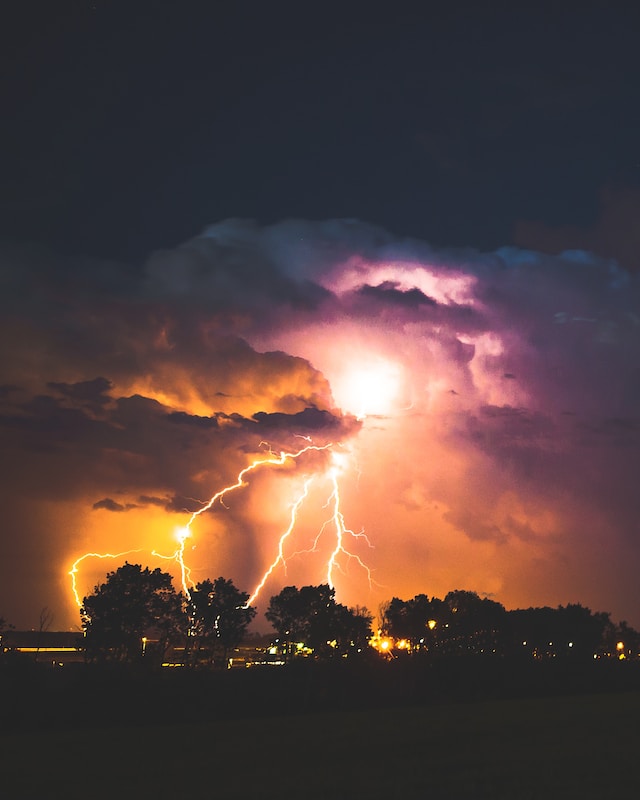
“The Last Tour” by Chrissy Hicks

 
Saturday

8:32AM

Lonnie had worked too damn hard to end up this way—jobless, homeless. Five years ago, he relocated to Cali, chasing glory. When his plan crumbled, a few B-list celebs convinced him to tag along in Vegas, promising auditions. Turns out, they only wanted the cocaine he could get. Worse, they’d scapegoated Lonnie, discarding him like a used tissue. Without wages, meager as they were, and hefty fines for drug possession, he’s lost everything.

His stomach rumbles for food he can barely afford. Lonnie’s family labels him a failure; his therapist, a lost cause; the justice system, another burden. So much for the American dream. Or any dream. He’s sure by now his probation officer is fuming. They’ll search, but they’ll be too late. He tosses an empty pill bottle in a nearby trash bin. The prescription remained unfilled for weeks, not that it helped. With his remaining funds, Lonnie buys a Grand Canyon tour bus ticket.

“That’s our last one,” says the too-cheerful cashier. Lonnie only manages a grimace.

The previous day

Eve decides to celebrate her 50th birthday with a Grand Canyon excursion. She doesn’t research companies or pricing. She knows exactly which trip she’ll book. The last tour on Saturday, leaving from Boulder City, Nevada. She secures her ticket, then finishes packing her late husband’s effects. After Phillip’s death, she’s found it harder to let things go.

But today, Eve’s ready. She loads the car and drives to Goodwill. As she pulls away, she denies herself a second glance at the donations she’s left behind.


Saturday

11:30AM

The bus station lobby is hot, overwhelmed with people. Eve settles on a cushioned bench, fidgeting with her wedding ring. She wears her 20th-anniversary earrings and the flowy dress Phillip adored. Overhead speakers declare a thirty-minute warning for the West Rim Canyon tour. At departure time, she dons sunglasses, avoids eye contact, and displays her ticket. The uniformed attendant welcomes her aboard.

11:45AM

Lonnie’s seated in the last row. Back here he’s invisible. Forgotten. Like he’s been his whole life. But not for long, he assures himself, relaxing on the padded chair. Ten minutes into the drive, the enormous concrete arch of the Hoover Dam Bypass appears, resembling a stone rainbow in the callous blue sky. For one rash moment, Lonnie considers the steep drop into the Colorado River. He plants his feet and breathes deep through his nostrils. The bus safely passes the bridge. Less than two hours to Guano Point.

12:12PM

“A canyon tour, Mom? Sounds awesome. I’m super jel.” Eve’s daughter sounds distracted. She’s walking her dog and New York City’s racket thunders through the phone.

“It’s nice.” Eve gazes at the desert, where the earth feels tainted and numb.

“Sorry I can’t be there. Work’s keeping me busy and…” Her voice trails off, as it often does mid-sentence.

“I understand.”

“It’s been a year since…are you doing okay?”

 Eve pauses, then: “I’m fine, honey.”

“Okay. I gotta run but, call you later?” A car honks. She must’ve picked up pace because she’s panting.

“Of course,” Eve lies. This will be the last conversation they’ll have. She swallows sadness like essential medicine.

They echo “I-love-you’s” before disconnecting.

“Good afternoon, ma’am.” The attendant smiles brightly. “You ordered the pasta?”

“Yes, thank you.” Eve accepts the plate. Spaghetti and meatballs, Phillip’s favorite. Tears moisten her eyes.

1:16PM

Lonnie’s devoured the herb-roasted chicken, side salad, and fudge brownie. An hour later, he’s still hungry. He asks the attendant for a snack.

“We have some snacks for purchase,” she says.

“That’s ridiculous. Your so-called meal was a snack.”

“I’m sorry, sir. We offer complimentary mints at the end, but I can get you some now.”

He glares. “I’ll pass.”

She offers the fakest smile he’s ever seen and continues tending customers. He can’t wait for the trip’s end.

 1:40PM

Eve’s pulse jumps at the announcement they’re fifteen minutes out. She didn’t think she’d be so nervous. Humans survive days without sustenance, but a year without Phillip is worse than starvation. She can’t go on. At least, this way, when people question “why,” their anger won’t be directed at her. Eve clings to this scrap of solace as the bus veers onto Diamond Bar Road.

1:50PM

Lonnie shuts his tray and stands. Ahead, the canyon’s rusty walls are in full view. He slides out, the aisle before him like a red carpet. Struts past oblivious passengers marveling at the scenery. No one pays him any mind. And this time, it’s exactly what he wants. He digs into his pocket.

1:51PM

A skinny young man brushes past Eve. His jeans are torn, but not stylishly. His coat’s inappropriate for the weather. Though he’s not facing her, she recognizes him. The deadpan expression, the empty eyes. Guilt pricks her heart. Eve knows what’ll happen next, and she’ll do nothing to stop it.

1:55PM

The driver peers at Lonnie in the rearview.

“We’re almost there, sir,” he says. “Please take your seat.”

Lonnie spies the attendant in the mirror. She’s halfway to him. When their eyes meet, he pulls out a knife. Sunlight glints off the blade. She screams.

1:57PM

Clairvoyance is a gift, Eve’s mother said. All her life, she’s been told it’s her duty. But despite lifesaving power, this ability feels meaningless after losing Phillip to cancer. Eve will no longer bear the world’s burdens.

The hijacker tosses aside the slumped driver and jerks the wheel, racing to the open-mouthed cavern. Panic erupts. People try breaking windows. Some careen toward the maddened driver who aims for the edge and shrieks with primal rage.

But it’s too late. Eve’s vision showed no survivors. Her buying a ticket and taking a ride won’t change that. There’ll be no blame. They’ll suppose she never saw it coming.

As the bus dives into the chasm, Eve’s leftovers crash to the floor. A meatball splatters. Then, Eve’s body lurches upward. Her head slams the ceiling, rendering her unconscious. For her 50th birthday, Eve decides to join her husband; she doesn’t believe in death do us part.

 2:15PM

A heavy dust cloud settles at the bottom of Guano Point, under the pitiless sky.


Chrissy’s work has appeared The Broadkill Review, SUSIE Mag, and The Storyteller. One of her unpublished novels, “Foul Play,” was a Suspense Finalist for the 2022 Claymore Award. She’s not sure why her writing gravitates toward the macabre. Aside from thinking up ways for her characters to die, she hikes, runs, reads, and drinks dark wine. She resides in Tennessee with her family, their talkative Husky, and a frenetic cat.

“The Soulless” by Alex Finch

              “Thank you for calling the Federal Bureau of Investigations. Can I get your name, please? And your phone number? Thank you. How may I help you today? Uh huh. 17 people? Really? Oh… they’re not? Of course, I trust your medical expertise. A bioweapon?”

              I sat forward in my chair, suddenly interested. I heard tips every day, most of them nonsense, but bioweapon reports, true or false, were highly unusual.

              “Dr. Travis, please try to relax. I understand, sir. We’ll send someone out if we can. Do you have a police report? Thank you. Can you fax it to us? Thank you again, sir.” He hung up and spun around to face me. “So, Sigrid…”

              “Bad news first, Dex.”

              “Colorado, 17 people, in… it’s hard to explain, he said it’s not a coma, but like, not dead either. And we should be getting the police reports in-“ The sound of the fax machine printing cut him off.

              I took the first few pages and scanned through them. The local police had investigated 17 different scenes in Aurora, Colorado, and the surrounding cities. Each event took one victim. I skimmed the descriptions; ‘Victim found alive but unconscious with bloody hips with small lacerations. No forced entry. No witnesses, security footage had been edited.’ ‘Victim found comatose with blood on left hip and small wounds. No forced entry. Body was discovered by the victim’s son.’ ‘Victim found comatose with blood on right hip and arm, very thin wounds on hip. No forced entry, security footage tampered with, one witness, unreliable.’ I stopped reading. “Anything better in those pages?” I asked, seeing Dexter flipping through the rest of the reports.

              “Comatose victims, damaged security footage, only one witness, and she’s a 5-year-old girl who said she saw a monster. What’ve you got?”

              I sighed, putting the papers down. “More of the same.”

              “Same pattern, same area, a few days apart, and the police haven’t found anything. I’ll start the paperwork; you finish looking over those reports. I get the feeling we’ll be needing your eye for detail here.”

              I nodded picking up the papers he’d been holding, looking for any details I could’ve missed in the efficient wording of the police reports. Dexter’s typing became white noise as I kept reading. I made a mental note to ask for medical reports, autopsy reports, witness statements, and any other data that could help. All the victims were found at night, found by their children, and all the houses with cameras described the footage as ‘edited,’ ‘tampered with,’ or ‘damaged.’

              “And how long are you going to pretend to wait for approval before packing your bag?” I asked, trusting his 6th sense for when a tip would end in deployment.

              “I’ve already planned our first day.”

              True to Dexter’s world, within hours we were sent to Aurora to investigate. Neither of us spoke much on the flight, he refreshed his email repeatedly, searching for any updates, and I couldn’t stop thinking about the words he’d used. ‘Not in a coma, but not dead.’ The threats of war and terrorism were nothing new to an experienced agent, but a chemical agent like this raised some questions. Why didn’t it kill? What did it do instead? Who created it? Who’s administering it? And why? The longer I thought about these questions, the less sense it made. Hopefully the evidence would clear everything up. A strange feeling was settling its way into the back of my mind as we landed, a feeling that something wasn’t quite right.

              When we landed, a police car, a cop, and a man in a white coat met us. Dexter and I grabbed our bags from cargo before making our way over to the car. The man in the white coat held his hand out for a handshake. “Hello, thank God you’re here. I’m Dr. Malcolm Travis, neurologist, I spoke with your organization on the phone earlier. You two are the agents, right? They told me to wait here and then drive you to-“

              Dexter cut him off. “Yes, we’re the agents. My name is Dexter Davis, and this is my partner, Sigrid Kelly.” We showed our badges, already in our hands out of habit.

              I scanned Dr. Travis. His hands were fidgeting with the hem of his coat wearing it to threads. The nails of those hands were short and ragged, bitten nearly to the nailbed. His body, outside of his hands, was strangely still, with straight posture and unshifting feet. His voice was deep, but panicked.

              I cleared my throat. “So, doctor, you said you were instructed to drive us to the hospital, to take a look at the victims, is that correct?”

              “Yes, ma’am, of course. I-“ He turned around fast, bumping into the cop cruiser behind him. “I’m so sorry. You… you guys can choose where you sit, I can sit anywhere.”

              The police officer nodded to us silently from her seat in the front of the car. I turned to Dexter. “You take the front seat and I’ll sit in the back with Dr. Travis?”

              “Sounds good.” Dexter sat in the front seat. I opened the back door and gestured for Dr. Travis to enter first. He did, fumbling slightly with his seatbelt as I climbed into the car. The inside of the cruiser was spacious, on the better side of cop cruisers I’d been in. The officer in the front seat started driving slowly, presumably to the local hospital. According to Dexter’s itinerary, we had about a 10-minute drive from the airport to the hospital. I turned to Dr. Travis.

              “So, Malcolm, can I call you that?” I made my tone as friendly and nonthreatening as I could hoping I wasn’t scaring him. I knew federal agents could scare anyone, guilty or not.

              “Yeah, of course.”

              “Great. You can call me Sigrid. Before we enter the hospital, I have a few questions. You didn’t really give us much background. I know we didn’t talk much on the phone, but you seemed certain the victims aren’t dead but also aren’t in a coma. Can you tell me a little bit about that? I just want to know what I’m getting into.” I tried to sound friendly, conversational.

              “Well…” he hesitated. “I’m not sure how to describe it. I mean, of course, there are the medical basics, their hearts are beating, their lungs are moving, we’ve done brain scans of all the victims, but they’re just… gone. There’s nothing in there. They’re alive, technically, but they don’t respond to anything. Their eyes don’t move. There’s nothing in their brains except the most basic survival needs.”

              “I see… now, I’m no medical expert, of course, but can you tell me how it’s different from a coma? Because I’ve seen people in comas before, they’re completely unresponsive.” Dr. Travis seemed to get even more nervous as he talked about the victims. Up close, I could see that his eyes were rimmed with dark circles, and bloodshot, as though he hadn’t slept in days. His outfit seemed wrinkled, as though he’d been wearing the same clothes for days. My watch buzzed with a message from Dexter. ‘Suspect?’ it read. I considered it for a second. Nervousness, the medical expertise to create a biological agent, and access to a lab. I couldn’t rule it out.

              “Well, for starters, people in comas have more electrical impulses in their brains, beyond the basic ‘heart, pump blood. Lungs, expand’ impulses. Their internal and subconscious thoughts are still active, if on a lower scale, and about 20% of coma patients can hear and comprehend stimuli around them, even though they can’t respond. None of these patients have any internal activity outside of basic bodily functions. They’re not hearing anything, thinking, dreaming, nothing. It’s quiet in there. Silent in there. And none of them have woken up. It’s like brain death, but the body’s still technically alive.” He shuddered, his skin turning pale. “You just… you have to see it to understand.”

              We finished the ride in silence, Dexter nervously refreshing his texts and email for updates, Dr. Travis de-threading the frayed hem of his coat, and the driver nervously tapping the wheel. I made a mental note to figure out her involvement in the case. The car pulled to a stop in front of the hospital, a building that looked borderline ominous in the afternoon light, a morgue filled with victims of terrorism. I took a deep breath before getting out of the car. Dr. Travis stayed there, staring at the doors through the windshield. “Malcolm, are you coming with us?” I called.

              After a moment’s hesitation, he climbed out of the car, pausing to do the Sign of the Cross before entering. He led us down the labyrinthine hallways, talking as he went, seeming slightly more at peace inside the hospital. “We originally kept them in the ICU, but we moved them to the neurology wing for testing. And because they were scaring the patients and their families. Now we keep them in the back corner of the hospital.” We had paused at a blank door, one with security cameras on the outside, they seemed recent, like a new installation in light of current events. I instinctively shifted my hand to rest over my gun. Why would a hospital have cameras to guard a door that held only comatose victims?

              Dr. Travis opened the door, holding it as though he expected Dexter and I to walk in first. I took the door slightly forcefully. “Please, lead the way.” I said, waving him inside. With a deep breath, he walked in, followed closely by Dexter and I, into a roomful of beds surrounded by curtains, one that smelled faintly of antiseptic and was filled with the asynchronous beeping of various heart monitors. “Can you direct us to the first victim?”

              “Of course.” He led us to the back of the room, pulling the curtains apart to reveal a woman in a hospital gown hooked to monitors with a tube down her throat and a fluid drip in her arm. I felt a strange chill as her blank eyes stared at me, not following my movements, not perceiving. She’d become a shell of a person, her heart still beat, feeding a thoughtless brain that didn’t dare to respond. She was empty, alive without living. I suddenly understood what Dr. Travis meant when he said, ‘you have to see it to understand.’ There was something wrong with this patient, one that went beyond the comas I’d seen. She was alive… in the technical sense alone, her vitals completely stable, but everything within her gone. She was gone. I remembered her name from the files I’d read, Anna Leatta. It didn’t fit her anymore. I stepped back, almost involuntarily. My mind cleared slightly as I looked anywhere but at the victim before me. “How long…”

              “3 weeks. Total.” Dr. Travis seemed, if possible, more nervous after being confronted with this sight. Dexter, mercifully, pulled the curtains shut, his face pale and his hands shaking slightly.

              “And why aren’t they under quarantine?” My FBI training came back to me biological agent containment procedures running through my head, like an old routine, something that calmed me slightly, and I desperately latched on to it.

              “Because when the victim was first brought in, we thought it was just a coma. We didn’t put her in quarantine or anything along those lines, and nobody who’s come in contact with her or anyone in this room has gotten…” he paused “has wound up like this. We don’t think it’s contagious. And the dead one, no abnormal signatures, nothing strange in the bloodstream, I assure you, we tested every inch of the body, there’s nothing coming out of it, nothing strange moving through it. Whatever it is, it’s taken its’ toll and gone.”

              Dexter interjected. “What do you mean by ‘the dead one?’”

              “Oh, they didn’t tell you? We had one victim come in with a DNI order, and without the nutrition and fluids, they passed. We ran an autopsy; I can get you the reports if you need them.”

              “I’d like to talk to the coroner directly, if you don’t mind, now if possible.” Dexter’s expertise in forensic pathology would be useful here, no matter how strange I found his fascination with the dead, I had to admit, it was helpful in most cases.

              Dr. Travis nodded. “Of course.”

              I checked my watch. “Dex, we’re supposed to meet with the police and interview the witnesses-“

              “Right, yeah, can you take her to… wherever the witnesses are and then take me to the coroner?”

              Dr. Travis nodded. “Of course. Just follow me, Ms. Kelly. Mr. Davis. You can follow us or wait outside here.” He didn’t even mention staying inside as an option. I didn’t blame him; those hauntingly empty eyes were burned into my brain.

Dr. Travis walked me to a light wood door covered with pictures of smiling cartoon animals. “This is our secondary pediatrics wing. Our primary is handling all the patients, and this room has essentially become our command center. The children are being kept here with parent permission, and they’ve all undergone questioning and are currently undergoing psychological treatment. The kids were, understandably, traumatized. Severely. Officer Luca will take it from here.” He opened the door, revealing what was clearly once a waiting room turning into a makeshift command center, with a large table in the center covered in paper. 2 officers sat at the table, the woman who’d driven us to the hospital, and a man who looked like he hadn’t slept in days.

The woman looked up at us and smiled. “Hi, Ms. Kelly, I’m so glad you’re here. Before we begin, any initial questions?”

Only about a thousand, I thought. Instead, I said “No, not yet. I want to hear what you’ve uncovered so far.” I glanced at the table, seeing the spread of papers, written words and pictures, none of the pictures clear, and the words ‘monster’ and ‘demon’ scattered across the written sections.

“Well, we’ve been looking over the footage, frame by frame. Looking for anything the killer couldn’t erase. The strange thing… whatever software he’s-“

“They’re.” I corrected automatically. “Could be a person of any gender, could be a group, could be a country. Never limit your suspects”

“Right, okay, whatever software they’re using, it leaves no traces of editing. It’s almost perfect. The footage didn’t even look tampered with, except for a few obvious things.”

“And what are those?”

“For starters, the killer isn’t in any of the frames. Not fully anyway. It’s like the victim is being attacked out of thin air.” She handed me a still frame of a woman screaming in obvious pain with nothing near her to cause such a reaction.

“Are they using a greenscreen suit?”

“We thought that might be the case. No, they’re not. They’re wearing a black bodysuit with colorful facial features drawn on, and yellow yarn hair. You can see a bit of the black glove in that one, around her wrists, and I’ll get you some of the other still, give me a second…” She shuffled though the papers on the desk, coming up with 3 stills.

I glanced at them, seeing a jet-black creature that looked about a mile from human with blue and green bulging heterochromatic eyes, bright orange lips, and yellow hair that stuck out like the killer had been electrocuted. They looked like they’d been drawn by a child who wanted to use all the crayons in the crayon box, with a frame that looked borderline starved and fingers that would make a pianist green with envy, almost as green as the killer’s left eye. The other stills showed similar images, one with the Crayola-orange lips pulled back into a smile over sharp yellowish teeth. “So, they’re using multiple suits?”

“No. Those two stills were taken in the same video, the mask is shifting, somehow. And this is what makes us think it could be digital erasure software, see how thin they look? The software must’ve cut out the outer edges of the body and left the center. Sure makes them look creepy though. Like they’re not human.”

I sighed. “Don’t even say that. I’ve heard enough ‘aliens live among us’ crap for a lifetime. No, there are no aliens in area 51. No, the FBI isn’t hiding aliens under our desks. They’re human. This is a human, and quite probably a terrorist. Can we agree on this?”

Officer Luca nodded. “I’m going to hold off on that for just a little while, if you don’t mind. We have 4 videos, all from child monitors. And this is where it gets even creepier. In 2 of the videos, the killer enters from offscreen, out of sight, scaring the victim as they turn around. Now, that’s not too weird, but the other 2… You know, I think I’ll just show you. Mike, can you queue up the first video?”

The officer at the table nodded, turning a laptop to face us and pressing play. The video was of somewhat grainy quality and showed a man checking on his kid. There was a soft thump sound, and the man turned around to open the drawer of a nearby dresser. He muttered something quietly as he opened the drawer. The camera flickered, showing a thin black line rising out of the drawer to a height that couldn’t possibly have fit in there. The man backed away from the black line, eyes wide with horror. The line moved, changing in thickness as it did so. It moved inhumanly -no, edited to look inhuman- quickly, shifting with flashes of black and green and yellow and orange as it moved what appeared to be its head over the victim’s hip. In a flash, with a sound of pain, the man keeled over, eyes still open, blankness obvious even through the bad quality camera. The black line stayed still for a second, I heard a faint high-pitched clicking, and it seemingly returned to the drawer, which closed with a bang.

I was silent for a second. “Where did they go?”

“Into the drawer, apparently.” The officer at the table, officer Micheal Williams, if his badge was any indication, offered this answer as though it was the only possibility.

I refused to accept that answer. “No, that’s not even possible. Have you researched everyone in the area with experience with animation and special effects? Amateur filmmakers, anyone along those lines? Even professional software engineers?”

Officer Luca nodded. “We’ve looked. Nobody we’ve checked on has that sort of skill. Let alone the skill and speed required to edit this much work this fast. And… you should see the second video. It gets worse, unfortunately.”

I raised my eyebrows as she clicked on the next video. Two adults, stood in the middle of the room, both female. One of them shuddered and wiped her hand on the side facing away from the camera. Her hand was covered in blood. She turned towards the other woman, holding up her bloody hand and revealing a thin, almost invisible cut, a look of terror on her face. She shuddered again, convulsed, and then went still. She smiled, not a normal smile, a smile like a tiger about to devour its prey. She lunged towards the other woman and then collapsed, the thin black line appearing to step partway out of her body towards the other woman. It appeared to bite her hip, the woman dropping to the ground much like the man in the first video. The black line snaked back into the body of the first woman, her body moving with lurching, jerky movements towards the door.

“Was she questioned?” My instincts kicked in clearly the bioweapon had affected her and… made her act strange… but where had the person in the suit come from? No, clearly the black suited man was cgi, meant to throw us off, and the real culprit was the bioweapon that made ordinary people do it’s bidding, and somehow turn the victims comatose through… biting, so it must be bloodborne. A bloodborne pathogen that allows a strange form of partial mind control in some victims, but a coma in other patients. Yes, that has to be it.

“She was, but she’s in no state to answer questions. She kept saying ‘it made me do it, it forced itself into my body and forced me to move, it made me do it’ over and over again. She died a few hours later, her body was cleanly severed down the middle. Even the bones, cut in half so smoothly, yet with less than a hair’s distance between them, stopping just shy of the opposite side. I’ve never seen anything even remotely like it.”

My mind went blank, unable to come up with even a remotely rational explanation for this, other than large-scale hallucinations. A psychoactive drug? But one that affected so many people? Across multiple days? No, there had to be an answer, there always was, even if my faith in finding one was dwindling by the second. I filed that information away and made a mental note to have Dexter check the autopsy reports on the… accomplice? Victim? The other woman. I sat down before my mind burst and left me curled up in a little ball on the ground. No. There was a rational explanation for this. Somehow. I had to move on, the walls of the room seemed tighter than before, the room suddenly stifling. I changed the subject. “And there are 2 witnesses, to this, right? Can I speak to them?” I took a breath, trying to clear my head. I’d find the answer, I always did. This was just another brilliant murderer with a heart of stone and the mind of a machine.

“Of course, their names are Cassie and Henry, and they’re in rooms in rooms 8 and 3, respectively. Take all the time you need.” Officer Luca sat back down at the table, going over something on the laptop.

I walked towards the door, only to be stopped by Officer Williams. “Here,” he said, handing me notecards with hastily scribbled notes and pictures of the children. “I’m terrible with kids, this is my cheat sheet. Good luck.”

“Thanks.” I glanced at the first card, Henry, a 7-year-old boy. It had notes like ‘very religious, pray with him’ and ‘has lots of siblings, they all play video games together, ask him about video games.’ I walked through the door, scanning the room numbers before entering room 3.

The room was tightly packed with toys, portable game systems, and crosses. Henry was sitting on the floor, using the seat of a chair as a little table to put together a puzzle. I sat down across from him. “Hi, Henry,” I said, trying to imitate how my sister always spoke to kids. “I’m Miss Sigrid, from the FBI, do you know what that is?”

He nodded. “Federal something of investigations. You look into crimes and stuff.”

“Look, Henry, I need you to tell me what you saw. I know you’re probably tired of that, but I need to hear it from you. Can you do that for me.”

He didn’t look up from his puzzle, but I saw his eyes turn glassy with tears. “They live in the closet. I’ve seen them for months, every night. I have to close the door, or they stare at me all night with their big glowing green eyes. They’re like walking shadows, and they can turn invisible. One of them came out of the closet and bit my mom. It said it ate her soul. Then it went back into the closet with the rest of them.” His voice was full of fear and sadness. I reached to give him a hug before pausing. Would he respond well to that? I settled for patting him on the shoulder.

“You’re a very brave boy, Henry. Thank you so much for cooperating with me.” Useless testimony, unfortunately. The kid had nightmares about the event, clearly, and interpreted the killer as a monster in the closet. The only useful piece there was the possibility that the killer spent time hiding in the victim’s homes. I turned to leave.

“Wait!” Henry called out, standing up and wiping his eyes. He rustled around in a drawer and pulled out a set of rosary beads. “Please take these. I don’t want them to get you, too.”

I held my hand out hesitantly, my rational mind telling me to refuse, to just ignore the superstition, but my gut told me to take it, if only to make him feel better. I rolled the wooden bead between my fingers before slipping the beads into my pocket. “Thanks, Henry.” I walked out, scanning for room 8, Cassie’s room. I read her card ‘Age 5, possibility of trauma induced psychosis, loves dragons and Bigfoot.’ Great. Another unreliable witness. I took a deep breath and then pushed the door open.

“Cassie?” I stepped into the mostly empty undecorated room. Unlike Henry, who had toys on every surface, Cassie only had a backpack full of thin paperback books.

She looked up from the book in her hand, reading as she sat on a table. “Are you here to look at my brain again?”

“No, I’m from the FBI.” I sat in the chair near her, as she seemed quite comfortable on the table. “Is it alright if I ask you what you saw on the night your dad was…”

“Oh, when his soul was taken?” She spoke as though giving a fact, casual as you please as she talked about her dad’s murder.

“Ah… yes, Cassie, on the night your father was attacked, did you see anything?” Words moved through my head, instructions for interrogating the psychotic don’t call them crazy, don’t tell them they’re wrong, filter the truth from delusion, stay calm and upbeat, use their names a lot…

“Do you want to see them? You can meet my dad, too, after. But they don’t like it when I talk to my dad too much.” She sniffled. “I really miss him. I wish they’d let him visit me.” She started crying, like any normal kid, blotting her eyes and nose with a tissue. She probably had a picture to share or something.

“Of course, Cassie. I’d be more than happy to see them. And maybe then you could tell me what you saw?” She hopped off the table, her head barely coming up to my chest. It occurred to me for the first time just how young these kids really were, to be dealing with something so painful.

“Close your eyes,” she ordered with the bossy determination of an eldest child. Feeling a little stupid, I closed them. She grazed her fingertips over my eyelids, gently. “Now, this is going to be… strange, okay. Don’t worry, it’ll wear off soon.”

“Of course not, Cassie. I’m sure it’ll be fine.” I opened my eyes and recoiled in horror. An inhumanly slim jet-black figure stood in the corner of the room, with a wide orange smile and blue and green eyes that seemed somehow more grotesque in person. From up close, I notice that the figure’s skin glimmered like obsidian, as though it was carved from cave rock. A series of high, sharp clicks rang out, the walls of the room suddenly shifting into a writhing mass of black and bright colors, crawling out of the shadows. The clicking noise came from what appeared to be the leader, its’ smile never faltering, not for a second. “What the hell are you.” I whispered, mostly to myself, my mind still reeling from the horrifying sight. This was no hallucination. This was real.

“We? We have many names.” The leader spoke in a high voice, like the voice of a young child. The figures on the walls clicked in response, some of them peeling off the wall to take their place beside the leader, calling out words as they did so.

“Devil.”

“Rakshasa.”

“Jinn.”

They continued to call out names as the leader leaned down to Cassie. “You shouldn’t do this so often, kid. It’s dangerous.” The demon spoke in a whisper, shadowy hand reaching for her. I grabbed her by the shoulders, pulling her towards me as she wrapped her arms around me.

“You stay away from her!” I screamed to the monster, barely noticing that its hand was invisible from the side, like a paper doll, 2-dimensional. “What do you want?”

The creature stepped back, cruel bulging eyes level with mine, although I could’ve sworn it was taller just seconds ago. “Souls. Yours. Hers. Everyone’s.” The high voice stayed level, calm. “And we won’t stop until the world is ours. Tell them what you saw… Sigrid.” The demons said my name in a strange way, giving it a sharp edge.

I didn’t stop to think as I opened the door and pulled Cassie out with me, dragging her down the hallway, trying to find my way out the way I came. The officers saw me walk through the doors. I didn’t hear a word they said, all I could say was “they’re everywhere, evacuate now. Everyone has to leave.” The world blurred around me. I had to leave.

Outside the building, I saw Dexter leaving the doors looking confused. “Sigrid!” he called. “It was so weird, all the hearts stopped beating at once, and then we got this evacuation code-“

“Burn it all. It’s… it’s all contaminated. We need to get everyone out of here. We need to burn it.” Dexter trusted my judgement. Within days we’d have the area cleared out, evacuated, and the demons would be gone. They’d never kill again. They’d burn with everything else. And they could never follow me.

It was strange, though, as I walked away. I’d never noticed that my shadow… glimmered.


Alex Finch is an American author with a love for horror, from the lighthearted satirical kind to the darkness that haunts their deepest nightmares. Alex enjoys cryptography and daydreaming in their spare time.

“Growbag” by Philippa Tyler


‘Send the worm up,’ Sam said. His voice had an edge to it. Although he was a people pleaser, he’d had enough of the apple tree’s company for now.

He concentrated on relaxing as his airway reduced in capacity almost imperceptibly. He breathed slowly and deeply, forcing himself not to panic. He started to feel slight movements up his gullet. He made a tiny, low gargle.

‘No gagging!’ came the instruction, with an echoing giggle. After some minutes of this yogalike performance, Sam reached into his mouth and pulled out a curling, stretching, pale pink invertebrate.

‘Let’s go left shoulder today, fella,’ the worm requested. ‘I spy a spot of sunshine for us’.

‘Want any Factor 50?’

‘Wa, ha, hoh – bleurgh,’ Worm spewed then cleared their throat. ‘That’s better’. They tilted their head upwards. ‘None of our avian comrades around?’

‘Nope.’

‘Perfect.’ And Worm stretched out on their back, giving small grunts of satisfaction as they flexed each segment in turn like a salsa dancer. There was a loud CRUNCH and they sat up. ‘You’re never eating an apple, are you?’ The irony made them chuckle.

Sam was a chomper. Always had been. He ate the skin and the flesh of all fruit and veg where possible. He’d eat right down to the anus. Chomp, chomp, chomp. He said it made him healthier and for a while it seemed he was right: he hardly aged at all. Instead he’d gotten fitter and slimmer, and it was declared a minor miracle when the optician told him he no longer needed glasses. But how many times had he found miniscule twigs irritating his auricles? It left him perplexed in the midst of his concrete surroundings.

Then the itching started. He itched for months. First it was prickly nostrils and ears. Then his teeth started to feel sensitive, right along the gumline. His armpits developed a severe reaction to deodorant. Next thing he knew, his arsehole itched like a bastard. Scrubbing bloody fingernails became part of his bedtime ritual, after absentmindedly scratching his scalp raw while bingewatching tv. For the first time since puberty he contemplated buying dandruff shampoo. Then, feeling like his mother, he reluctantly purchased medicated talc (online).

He knew for sure that something was really off when he found strange, thin strands in the toilet bowl, reminiscent of corn silk.

‘Shit. Oh god. What the hell is that?’

When tendrils were unmistakeably extruding from every one of his orifices, Sam plucked up some courage. He looked himself sternly in the mirror and selected one that looked like the longest nosehair. Wrapped it carefully around his forefinger and pulled, gently. He could feel tugging somewhere behind the back of his throat. It was a curious sensation, and not unpleasant. He did it again, harder.

Each strand felt somehow attached to a nerve ending in a different part of his anatomy. After much exploration it turned out that if he concentrated, with the merest squeeze he could identify its bodily link: this one was connected to his inner thigh, this one to somewhere in his lower gut, this one along his left jaw. Some were connected to places he didn’t want to reach. He left those well alone.

If he pulled more insistently at the thicker, hardier ones, Sam knew he’d be ripping his insides out. He began to wake from sweaty visions of his liquefied brain being dragged through his nose by a hook as the ancient Egyptians did their worst. One night he awakened fearing he’d been castrated while playing with himself. The next he dreamt of his guts spilling out and woke to find he’d been clawing at his now red raw belly button.

He tried to keep it in check at first through new bathroom-based rituals: trimming his beard, pruning nosehair, scrubbing at his brown stained fingernails. He dug out a nail buffer left by an ex to smooth his undulating nail ridges. He used cotton buds to mop up orifice ooze while holding his breath.

‘Watch it!’ wailed a pleading voice when he tried to pluck baby leaves emerging from his ears. ‘Would you mind? Please. I need those to survive’.

Sam looked around the bathroom, went over to the window that was slightly ajar. Peered down the empty street. He went back to the mirror, and raised his hand to his ears.

‘Honestly, I can’t make any food unless my leaves are intact.’

This went on every time he tried to remove any leaves. Sam thought he was hallucinating. Had he become schizophrenic? He rang the NHS helpline about voices in his head, but he didn’t meet all the criteria for a diagnosis. Was the Devil torturing him?

One anxious evening, Sam opened a red wine. After a couple of glasses, he went back to the bathroom mirror and shakily introduced himself.

‘I think it’s time we met.’ He drew another breath. ‘I’m Sam.’ And waited.

He got a reply. It was softly spoken, like a butler.

‘It’s a great pleasure to meet you Sam. My name is Malus. Malus domesticus. Mal for short.’

‘What are you? Where are you?’

‘It seems our fates have become entwined sir. I found myself sharing your rather luxurious body, for which I am most grateful.’

‘You’re, you’re INSIDE me?’

‘Well yes. You know that. Do you not.’

Sam needed to sit down. He covered his face. What fresh horror was this? Mal broke the silence.

‘I’m truly sorry for your predicament, sir. It must be a lot to take in.’

‘I just don’t understand. Oh god. What the fuck does this mean?’

‘I don’t fully comprehend it myself.’

Sam reverted to his lockdown joggers and XL t-shirts and barely left the house. His days were filled with remote working and online shopping, with intermittent root tugging. He systematically identified which root was connected where. He took to sitting in a shallow bath of an evening, devising his own horrific adaptation of a Vitruvian man map.

He felt parched all the time. His throat began to feel striated to his touch and his voice became raspy. His hearing became muffled. Once the site for teenage spots, pores had darkened and enlarged. Here and there they oozed yellow, stinking liquid as new branches broke the surface then the pore’s circumference crusted over. He smelt sweaty and earthy, having minimised his cleaning rituals to lessen new discomforts, since silky roots had become entangled in his body hair.

Soon Sam and the apple tree incubating inside him were having regular conversations. They became friendly, like siblings. Mal regularly apologised for their collective situation, he worried about Sam’s fate and, after a few whiskies, would hesitantly suggest they get out the weedkiller and do shots.

Mal’s knowledge of natural remedies did wonders for any ailment, even those that don’t appear in any medical textbooks. They’d seek out calendula and rosemary, chamomile and dock leaves. They both feared aphids the most, after a terrible few weeks of infestation. Sam still dreamed of aphids in his hair, on his scalp, nibbling, burrowing, laying their eggs on his pink skin.

Sam started to understand the tree’s needs for healthy growth, and Mal seemed to understand Sam – even when he couldn’t express himself, the tree knew how he was feeling and what comforting things to say. As their trust built, Mal even volunteered for haircuts.

‘Now sir, I’m feeling a little lopsided. Can we talk about a little selective, careful pruning?’

‘Here?’ Sam tugged gently at a few leaves.

‘Not so fast! No fingers, please. We need the pruners, otherwise I’ll be exposed to infection. Now, don’t go mad. Just where I tell you. Up a bit, to the left a little, up, no down, left, LEFT, LEFT!’

‘I can’t reach that Mal. Can’t you move the branch a bit closer?’

‘I’m not so flexible as you imagine.’

‘Well what can we do then? Shall I get the neighbours out?’

‘No. No! Don’t even joke about it. They’ll chop us both down if they see us now.’

He realised later that along with the tree taking root inside his torso, a host of small organisms were along for the ride. He slowly got used to the strange shifting sensations inside himself. He liked the worm the most, who liked to come out for a breath of fresh air from time to time. Worm had a passable sense of humour, while Mal was preoccupied with getting enough nutrition or the right conditions to nurture his fruit.

‘What do you call a man with a tree growing inside him? The perfect host!’ Worm guffawed, spewing soil over Sam’s jacket. Sam brushed it off, laughing along.

Once, in a panicky drunken state, Sam started clawing all over his body, sobbing and scratching ‘til he bled and fell asleep in a mess on the sofa. The next day he felt like death, and poured away all the alcohol in the house. Nobody mentioned it.

By the time he faced the truth of it, it was too late. The sneaky roots had penetrated his whole body seeking space and nutrition. They ran the length and width of his extremities. They wrapped around his organs. His muscles felt permanently taut and his kidneys bruised. His curves became rounder. His joints became more pronounced as they accommodated the growth.

With disgusted fascination he examined his naked, matted body before the full length mirror. He despaired at his dry, greying skin and angry stretchmarks without a baby to blame. He looked like a cartoon version of himself. He was a beast. There was no way to eradicate the apple tree he was hosting without killing himself at the same time. Then oh! He was momentarily distracted by the discovery that he now had an outie.

Sam continued to modify his behaviour to protect the apple tree, torn between getting through the day without negotiation, and perilous, unimaginable long term consequences. He took care with how often he moved his body while developing fruit was delicate and easily damaged. He developed a taste for earthier flavours, he stopped shaving or cutting his (increasingly sensitive) hair, and wore a beanie hat to protect his hairy roots.

As Sam withdrew from his limited social networks, his dependence on Mal grew for companionship. Their conversations revolved a lot around food, and what combinations they might both find palatable. Sam found himself on the garden bench lining up different brands of organic feed from the garden centre.

‘Go on, move a bit closer. Come on. Oh, I can smell it. It’s going to be delicious. Lick it. Now just a little sip. Ooh my sap is running amok here Sam! That’s it, load it up – ah – nearly – you can do it, quickly now, you’ll barely taste it, I promise.’

Sam paused, smiled wryly and put the spoon down. 

‘I can’t do it with a running commentary.’

‘Of course, apologies. It just looks – so – good. Do take your time.’

Sam raised the spoon and held it at the back of his mouth. His facial muscles contracted.

‘Happy now?’ he winced.

‘Wooooop! Wa-hey! Tomorite City! Oh very good sir, it feels wonderful. Delectable. Did you get a taste for it? How about a smidge more?’

‘It’s utterly revolting, Mal.’

‘Oh. Yes. Imagine if you threw up. How about we soak your feet instead? Like a foot spa!’

‘Send the worm up.’

Sam wondered how long he’d got, and who would expire first. He feared the deterioration more than he resented an early death. He tortured himself with an exponential list of possible side effects of being a growbag for an apple tree. Worm obliged in ramping up the scenarios. Would his ear canals explode? Would his branching ears become too heavy to carry? Would his belly harden into bark or burst open like the Glutton in Seven – or more like Ripley’s Alien? This debate precipitated a film night to get Mal on the same page.

He talked himself around to reasoning that environmental justice demanded he support as much life as possible – one man for the multitude that lived in and fed on him. Mal concurred – maybe subconsciously Sam had devoured those fruit cores for a reason? Worm carried out an unreliable census, visiting every nook and cranny of Sam’s inner vivarium. Despite himself, Sam was keen to know the results: how many species, how many of each species? Were they evenly distributed? Did they live in social groups?

Over time, compromises and negotiations turned into an aligning of preferences for quiet, sunny places, a diet dominated by pesto pasta and green tea, and a slower pace of life. Sometimes they would rise before dawn and take a slow walk, delighting Worm (‘Chuffing marvellous! Wait til I tell the kiddies about it, they won’t sleep in their beds tonight’). They wandered in the local nature reserve where Mal felt close to his own kind and Sam could dodge any dog walkers. It brought a fascinated terror out in Worm (‘Are you keeping an eye out for the winged terrors? The deadly death grippers? The tweeting manics? The scourge of my species?’).

It was the breathing that ended it. Sam could tell the leaves were breathing a little for him, and it felt cleaner, healthier air somehow, purified by the greenery first. It wasn’t enough though. He was struggling to take deep enough breaths through the multitude of leaves blocking his nostrils. His lung capacity had diminished since roots had eventually spread to his alveoli, seeking every possible space. The conditions needed tweaking.

One afternoon he collapsed into an old garden bench where he spent most of his time these days, and never got up again. As roots made their way through the soles then shoe seams, his feet soon literally rooted him to the ground. Not long afterwards, the rotting seat collapsed and the roots that had circumnavigated this plant pot were happier that gravity had brought them closer to a more natural position directly on the ground. One day, years from now, passers-by remarking on an unusual specimen in the orchard would never know a man had provided this shady spot. Maybe man’s best friend would notice when visiting.

At some distance, General M swivelled to face the junior officer and barked an evaluation: ‘Befriender variant shows more promise than the hostage model. Particularly with solitary males in middle life. Pursue this sampling strategy.’ The biologist soldier nodded furiously and scuttled off to implement the orders.

After the Great Fall Worm emerged in the dappled sunlight, more quickly than usual.

‘It’s done then?’ they asked.

‘Indeed.’

‘Well there’s a whole load of one-liners I’ve been storing up for this moment,’ Worm began. ‘Have you heard the one about – ’

SQUISH! Mal brought up his branch and inspected the mess underneath.

He quickly adjusted to this new stage of life, a celebrity, reminiscing about the adventures he’d had roaming the lands carried by his human host. Worm’s descendants thrived for infinite generations, and Pippin folklore was passed on by the natural world for a thousand.

Enjoy your dinner. Go about your day as usual. No need to peer down the toilet bowl next time you go. Don’t lose sleep over all those apples you’ve chomped yourself. Each with what, half a dozen pips? Sam was just unlucky. And don’t scratch! I mean, it’s probably nothing.


Pip Tyler aches under the weight of middle management by day, but by night she loves to craft unsettling short stories. Pip lives in a beguiling corner of North Yorkshire, UK, with a mischievous man and three hilarious black cats: Saffy, Shadow and Spot.

“A Beating Heart to Beating Heart  Conversation” by Bryan Grafton

    
A diminutive young woman, age eighteen, sat on a hard straight back armless cushionless chair, in the waiting room of a doctor’s office. She tried to read a smudged up limp paged old magazine but she just couldn’t. Her mind was elsewhere.

    Just then another woman came in, closed the door with a deadening thud, plodded over to the receptionist, and mumbled her name. This woman was big boned, in her late thirties, and she had been ridden hard and put up wet, literally, many a time over the years by many a man. Life had been hard on her, most of it from her own making, and her aching drooping body showed her mileage. She took a likewise hard back chair directly across from the young woman.

    They both knew why they were here so there was no point in them carrying on a conversation. But there was someone there who wanted to be heard. It was the fetus of the younger woman.

    “What are you in for?” the fetus of the younger woman asked the fetus of the older woman.

    “Rape and you?”

    “Incest. By the way, I’m Charisse. The woman carrying me refuses to give me a name so I chose Charisse for myself.”

     “I chose Lavinia,” said the rape fetus victim. “Nice to meet you Charisse.”

     “Nice to meet you too Lavinia.”

      “I know,” began Charisse then she stopped, composed herself, and then began again, “I know that we live in a state that bans abortions but makes exceptions for incest and rape but you know those legislators of ours never ever once looked at it from our point of view. They don’t realize that we’re victims here too. Can we help it who are fathers are?”

     “I know. I know what you mean Charisse. They must think that since my father is a rapist, I’ll grow up to be one too. You ever hear of a woman rapist? Rape that’s a man thing.”

     “Well in my case they must think that I’ll be a retard because I’m a victim of incest and I know for a fact that isn’t true.”

     “How do you know that?”

     “From the Bible. The woman carrying me became a Bible freak after her ‘incident’ as she calls it. Reads it all the time now trying to redeem herself and get back in the good graces of God. By osmosis I learned a few things. Like he Bible is full of incest and it didn’t hurt the Jews any.”

     “What are you talking about?” asked a nonplussed Lavinia.

     “Bear with me here, okay.”

      “Okay.”

      Take that story of Abraham and Sarah for example. They’re in Egypt. The Pharaoh sees Sarah and he wants her for his lustful purposes. So he asks Abraham about her. Abraham knows that if he tells the Pharaoh that Sarah is his wife, she’s fair game, that the Pharaoh will take her from him, and there’s nothing he can do nothing about it. But if he tells him that she’s his sister, she’s off limits for some reason or other under the Egyptian code of ethics. So Abraham tells the Pharaoh that she’s his sister and the Pharaoh leaves her alone. Old honest Abe wasn’t exactly lying here. He was just sidestepping the truth. Sarah was his wife and was his half sister. They had the same mother.

     “So what’s your point?”

      “So my point is that later Abraham and Sarah begat Isaac and the whole Jewish race is descended from him. The Jews you know have produced some pretty smart, intelligent, even genius people over the years like that Einstein fellow. Lots of them have won all kinds of awards. Lots of them are doctors, lawyers, writers, actors, movie producers, statesmen, senators, etc. and  they’re all descended from a child of incest. But oh no, not me, I’m stereotyped as a retard and have to be put down like a mad dog. And oh yah speaking of lots, don’t forget about Lot and his daughters. They all got drunk, had sex, and offspring resulted.

    “Well all that’s kind of stretching it some isn’t it Charisse. But now that you’ve  got me thinking about all this, as to my case anyway, a lot of famous talented people have been born as a result of rape.”

    Her case was that she was drunk. He was drunk. Such was her lot in life.  She said no but when a man’s lust and another part of his body is up, that other part of his body is not to be denied its full and final consummation.

    “You know when they suck me down the tube they might just be killing off the next Ethel Waters or Eartha Kitt.”

    “So what. They don’t care. It isn’t about us Lavinia. It’s all about them and their right to a woman’s health care decision. Like thousands  of women die each year from the disease called pregnancy. Yah right. These women groups view us as a cancerous tumor that has got to be cut out of  there before it grows and screws up your wonderful life, which already is. Give me a break. Abortion is killing, plain and simple, but legal.”

     “Well slavery was legal once and they abolished it. Maybe someday they’ll abolish abortion too.”

     “Maybe but we won’t live long enough to see it. That’s for damn sure. I hope to hell that God will get these two women but good for what they’re going to do to us.”

     “Oh don’t you worry about it, Charisse. I’m sure She will. I’m sure She will.”

     The  door next to the incest infected young woman burst open and a nurse with a broad smile plastered across her face came out and nodded to the young woman that it was her turn now. She smiled not to put the young woman at ease but rather because she enjoyed her work for she was a fierce women’s lib advocate, especially when it came to abortion, each abortion being another victory for womens’ rights, and she was homely as a mud fence.

    The young woman got up, straightened herself out. She mustn’t go to her abortion all  wrinkly like she should now. After all, the reason she was here in the first place was to iron out  this wrinkle from her life as if nothing had ever happened.  So she stuck her chin out and she feared no evil as she entered into this Valley of the Chamber of Death. And as she did so Charisse hollered back over the woman’s shoulder, “See you on the other side Lavinia.”

    To which Lavinia responded, “See you on the other side Charisse.”


Author is a retired attorney who started writing for something to do in his rusting years.

“Burnt Sacrifice, or, The H-word” by James B. Nicola


A term used figuratively at first and coined
becomes in time an apt description
You learn this when you listen to The Dead

What did they do with the carcass once it had burned for days in sacrifice to Yahweh or Jehovah
or of the people burning that long decade in sacrifice to the Third Reich
or of native brothers and sisters burning for a century of gold in sacrifice to the Greater Glory of Spain
or of my own brothers and sisters still burning to the core NOT BREATHING (hear them: “I can’t breathe”) hung up on display for half a millennium in sacrifice to Making Money in America
Listen to The Dead and you will know

Ancient Palestine I have begun to realize must have held a public barbecue
and fed the hungry poor of Israel with the inferior flesh of the ram or ox or steer
like alms to honor Yahweh or Jehovah
But there the analogy ends at least for me
for the poor have feasted and the poor feast yet on meals other than semi-sapid mammals
both quadripeds and bipeds
on the grill
O listen to The Dead please my friend

Still notwithstanding that the name of Whom To Propitiate has changed over millennia till today
Holocaust
seems an accurate description
And what else can a poet do but grab the aptest word
and what else should a poet do but share it now with you
For if In the beginning was
in fine in fact
the word
a right word might invoke a right reaction
which might in turn make for a good beginning

I say this with all confidence and hope knowing full well you may call me fool
But now you know that I at least have learned to listen

to The Dead


James B. Nicola is a returning contributor to Black Works and the author of eight collections of poetry, the latest being Fires of Heaven (2021), Turns & Twists (2022), and Natural Tendencies (2023). His nonfiction book Playing the Audience won a Choice magazine award. Born right before Halloween, he is used to black birthday balloons (just for the “hell” of it, so to speak).

Previously published in Lowestoft Chronicle.

“Nocturnal” by Lindsay Robertson


There is no light
In the street
No beacon
To show the way
No lantern
No flame
No maple leafs
Glowing
Yellow, violet and amber
Like the gold leaf halos
Around the saint’s heads
Emanating planets
And moon beams
There are
No midnight ushers
Aiming small
Floodlights
No reflecting moon
There is only
The vision
Of those
Those see in
The dark

“Dust” by Amy Grech

Jack had been dead for less than a year when his widow spotted something gray in a corner of the cellar that resembled a heap of dust and throbbed like the heart of a dying man.

            A sudden heart attack claimed him nine short months ago…

            She had his body cremated.

            Ashes to ashes, dust to dust.

            Sara passed the heap whenever she brought her filthy clothes over to the washing machine. She couldn’t avoid it. The first time the heap moved, Sara bit her lip and shrugged it off, along with a sudden chill that crept through the open cellar door.    

            Hastily, she dumped her dresses into the washer ¾ all of them were black ¾ and slammed the lid. Sara passed the heap again on her way upstairs and shuddered. She didn’t stop shaking until she bolted the cellar door. In thirty minutes, she had to venture back down to put her dresses in the dryer. She dreaded the imminent ordeal.

            Sara wore her wedding dress, which she dyed black for Jack’s funeral. 

            Until death do us part.    

            His final resting place, a black urn with JACK etched in gold letters, occupied the mantle, right next to their wedding photo. Two feet taller than she, he resembled a gentle giant. His enormous arms held Sara tightly. She lifted the cold, gold frame gingerly and recalled the splendor of their wedding day twenty years ago, immaculately preserved for all the days of her life.

            As she cradled the photo against her chest, Sara closed her eyes and pictured herself hugging Jack. She held her new husband. He held her as tightly in his strong arms as he did on their wedding day, and whispered words she would never forget: “I will always love you. I will never leave you. I want to make love to you forever.”   

            She inhaled and smiled, seizing the moment, yearning for his tender touch. In her mind’s eye, Jack still smelled as fragrant as an orchard full of oranges. His eyes were as light as the sky, his hair as bright as the sun, and his ashes as gray as the heap of dust in the cellar. Sara’s gray eyes snapped open as the cherished memory faded to black.

            Jack’s ashes and this photo were the only tangible mementos she had left to have and to hold. She set the picture down. Sara lifted the urn’s lid carefully and peered inside, seeking that familiar, fine powder; a void appeared where grayness should have been.  She winced, remembering the heap of dust in a corner of the cellar.

            How did his ashes end up in the cellar?

            The lid slipped through her trembling fingers and shattered on the hardwood floor.

            Sara shuffled over to the couch and collapsed. She never thought keeping Jack’s ashes close to her heart would pose such a burden.

*          *          *

            Did I meet him when we were college sophomores or juniors?

            Jack and Sara strolled across campus somewhere…she tried to recall but drew a blank. It didn’t matter though because he wore a University of Michigan sweatshirt. They paused in front of a sign that read: Psychology Laboratories. He practically lived in that building junior year, perfecting intricate experiments, a bold effort to unlock the root cause of a damaged psyche.

            Jack waved, a dramatic motion with his left hand. Sara returned the gesture enthusiastically with her right.

*          *          *

            Did he ask me out on our first date, or did I ask him?

            They sat on a twin bed in a small but neat apartment. Jack’s place had always been a mess, so Sara immediately knew it had been her place, her bed.

            “I’m glad you came over.”She smiled, edged closer. 

            He took his black leather jacket off and tossed it in a corner. “I never mind spending quality time with pretty girls.”

            Sara blushed. “Do you spend a lot of your time with pretty girls?”

            “None of them are as pretty as you.” Jack took her hand in his and squeezed it hard enough to let her know he cared. 

            She brushed black locks away from her face. “I don’t believe you.”

            He kissed her for a long time to prove his point.  

            The image lingered deep within the confines of her mind, like their first kiss, but it didn’t last nearly as long.

*          *          *

            Did we make love the first time in his apartment or mine?

            They were at her place again. Candles bathed the room in an ephemeral luminescence. Jack kissed her deeply. She held him tight. Their shirts, jeans, and underwear were scattered throughout the room, along with a mound of throw pillows.

            Jack loomed, trembling above her, his breath hot and quick in her ear. “I love you,” he murmured. Sara caught a whiff of oranges on his breath from the drinks concocted with Absolute Vodka and Minute Maid orange juice they affectionately called Absolute Minutes.

            “Then show me.” She pulled him on top of her and guided him in. 

            Their movements were awkward and unsteady at first, but neither one of them minded much; desire bound them together. Sara wrapped her legs around his. Jack wrapped his arms around hers and squeezed tight.

*          *          *

            Sara began to cry.

            Did Jack get down on one knee when he proposed?

            They stood in front of a slate blue, two-story house. His arm was draped across her shoulder; her arm was wrapped around his waist. Sara’s mother looked on from the front stoop, while her father snapped pictures of the happy couple. Jack and Sara smiled for the camera and tried not to blink.

            They walked to the restaurant holding hands. He always squeezed harder than she did.

            Joe’s Bistro was just around the corner. Their usual table, secluded in the back, made the candle between them romantic because it was the only light source. Jack ordered a bottle of the finest red wine and a plate of spaghetti with meatballs for them to share.

            After dinner he got down on one knee, opened a small, black box, slipped a diamond ring on her finger, and said: “Marry me, Sara.”   

            She admired the ring, as it sparkled in the candlelight. “Oh, Jack, I thought you’d never ask!”   

            Suddenly, the moment was snuffed out in her mind as if it were the candlewick that had burned so brightly between them dying.

*          *          *

            She reluctantly ventured down to the cellar. The stairs looked foreboding, even with the cellar light overhead. She grabbed the sides of her dress and held them up to avoid a fatal fall that would leave her sprawled out on the floor next to the — harmless? — heap of dust, Jack’s last hurrah.

            When she neared it on her way back to the washer, Sara clenched her fists and stared defiantly at the dust. As she passed, the heap began to beat faster and faster.

            Sara lifted the washer’s lid and tossed her wet, black dresses into the dryer. Her haphazard beeline back upstairs suddenly hindered by the sweet, fragrant aroma of oranges.

            Sara looked around.

            The dust had vanished!

            She went over to the spot where it had been and touched the cold concrete with her fingers; not a speck remained. Sara ran upstairs, without looking back, and bolted the cellar door.

            She found herself hovering over the topless urn on the mantle, glancing inside once more.  Grayness prevailed where blackness used to be; Jack was back.

            Sara held the urn with sweaty, trembling hands and shut her eyes. Jack danced with her again, but he kept stepping on her toes. That didn’t happen on their wedding day. Sara was sure of it!

            Cautiously, she opened her eyes, startled to see her husband standing next to her. She placed her hand on his shoulder. This time it rested there, instead of passing through thin air.

            Sara cringed at the gentle touch of a warm hand that smelled like oranges touching hers; she screamed. Suddenly, the hand squeezed hers hard ¾ so hard her hand unexpectedly became warm, aching until the pain evolved into an uncomfortable pins and needles sensation, then perpetual numbness. 

            Jack let go of Sara’s hand long enough to hug her harder than he ever hugged her before.  He whispered in her ear as he had done before ¾ over and over ¾ but the words were different now: “I have always loved you; I will always love you. I have never left you; I will never leave you. I want to make love to you forever; I will make love to you forever.”

            He squeezed so hard that Sara’s whole body throbbed so fast that her heart could hardly keep up.

            And the harmless heap of gray dust in the corner was the only thing, the only thing she remembered.     


Amy Grech is an Active Member of the Horror Writers Association and the International Thriller Writers who lives in Forest Hills, Queens. You can connect with Amy on X: https://twitter.com/amy_grech or visit her website: https://www.crimsonscreams.com.

“… And Then There Was One” by E.P. Lande


Adam looked at his caller ID. As he didn’t recognize the number, he let it ring. A moment later, his iPhone rang a second time. This time he answered it.

“Is this Adam Herz?” the caller asked, “… the real Adam Herz?” Thinking the caller was a joker, but being somewhat amused, Adam said,

“Yes … but who are you?”

“John Newman. You may not remember but we were in the same cabin at Camp Wannatoo in 1952,” the caller explained. Adam remembered being at that camp, seventy years before, but couldn’t recall someone in the cabin by that name.

“I took a photo of our group and would like to send it to you, — that is, if you want it,” the caller offered. “Do you want the photo?” the caller asked.

“Sure,” Adam said, “… send it.”

A moment later, Adam received an email from John Newman and attached was the photo of a group of young boys in front of a cabin, and another attachment that read as though it were part of a newsletter. Sitting in the front row, Adam recognized himself. He called John Newman.

“Thanks for the photo,” he said. “I recognize myself. Who are the others?”

“Standing in the back are Tommy. Next to Tommy is Irwin, then Eddie, and next to Eddie is Bobby. Sitting in front are Gregg, you, and Billy. I’m not in the picture as I took it,” John explained.

“I remember some of the names but not the faces,” Adam said. “Where are they all now?”

“Dead; they’re all dead,” John told him. “You and I are the only ones still alive.”

On hearing this, Adam was a little disturbed, by the blunt manner by which John Newman conveyed the news. But then, realizing that his cabinmates of seventy years before would have been, like himself, over 80, that they were all dead was perhaps natural.

“When did they die?” Adam was fascinated, that out of the eight boys in his cabin, only John Newman and himself were still around.

“It’s a long story — actually, six long stories,” John said. “Why don’t we meet? I remained in touch with each of them, so I can fill you in on the details. Where have you spent your life?”

“Soon after I graduated from university, my late wife and I moved to France. When she died, I decided to spend the rest of what was remaining of my life, here, in Vermont.”

“Well, let’s you and I get together.”

“When do you want to meet?” Adam asked … hesitating … but he was intrigued.

“Well, how about next week? I spend my summers at my cabin on the Maine coast. Why don’t you drive over and spend a few days. We can catch up.”

“Sure; send me your address. I could come next Monday.”

After he hung up, Adam sat back in his chair, looking at the photo John had emailed and mused about his cabinmates of seventy years before. Was Tommy the swimmer? Or had it been Gregg? Irwin had been a baseball player, he recalled. Who had been good at archery? Eddie? One of the boys had been an adventurer, reading up on caves in the area, always trying to find ones that no one had ever discovered. And then there was …. He looked at the photo closely. One of them had been associated with the theatre; the camp put on plays every summer. Was it … yes, John himself. Adam looked, but couldn’t really attach an activity to their faces.

During his drive to Maine, Adam continued thinking about his cabinmates. He seemed to recall that John had been the camp track star. He wondered what John looked like now? Had he kept in shape over the years? Adam looked forward to hearing John tell him stories associated with each of the boys. As Adam’s days were more or less free now, his visit would be like reading a good book — or perhaps he could turn it into a decent book.

Where John lived was quite isolated and rather barren, Adam thought as he pulled up to the house. The cabin sat almost at the edge of a cliff with a view of the Maine coastline that was breathtakingly dramatic.

“You found me,” John exclaimed. “Here, let me help you,” and took Adam’s overnight case. Adam followed John into the cabin and out onto the porch.

“Your view is quite spectacular,” Adam remarked, looking at the ocean perhaps a couple hundred feet below the cliffs

“It’s my sanctuary,” John replied. “I stay here from May until October, and often take long weekends from time to time during the other months, just to relax. Will you join me for some chardonnay?”

Adam watched John as he left to fetch the wine. He still couldn’t remember him from their summers at Camp Wannatoo. But seeing him was a bit of a shock. While they were more or less the same age, to Adam, John looked a good twenty years older. He walked stooped, with a slight hesitation. As the camp’s track and field star, Adam had expected John to have retained a somewhat solid build, but he was scrawny. What was left of his all-white hair, he wore closely cropped, and though he sported a tan, his complexion was splotchy. John had on a flannel shirt, open at the collar, but missing a couple of buttons, and his grey flannel slacks were stained in places. Instead of shoes or loafers, he wore a pair of well-worn slippers.

“Here you go,” John said as he handed Adam a glass of wine. “To us — the remaining two — and to memories of Camp Wannatoo.”

They sat, chatting about camp. Adam was intrigued by John’s enthusiasm about his experiences at the camp over the summers.

“For me, it opened up a new world,” John said.

“What do you mean?” Adam asked, then added, “I never really liked camp. Living in a cabin, eating camp food, scheduled activities. None of that was for me. I told my parents they were wasting their money, that I would be happier simply staying home ….”

“Doing what? At camp, I picked up that you weren’t a joiner, Adam.”

“I preferred to do things by myself — and I still do. But you said that camp ….”

“It gave me the opportunity to explore the world around me as well as my inner being,” finishing Adam’s question. “It was the theatre.”

“Now I recall that you were always quoting stuff none of us had ever heard of.”

“I was rehearsing the lines of the play I would be acting in. You remember, the camp put on one, sometimes two plays every summer, and I made sure I was in each one. But let’s have dinner, shall we?” Adam followed John to the dining room table.

The cabin consisted of three rooms — the two bedrooms and a central room, part of which was the living space, part, the kitchen, and next to the kitchen, John’s dining room table made of a single hand-sawed wood plank that resembled maple, its pedestal being the root of a dead — but cured — apple tree, John told Adam.

“You must have read about Irwin; it was all over the news,” John told Adam during dinner. “Suicide,” John said, as he cleared the salad plates.

“I remember something about it in the International Herald Tribune. I read the paper religiously when I lived in France, as it was my primary source of news from home,” Adam told him.

“Irwin was a complicated person,” John said when he returned from the kitchen with the roast chicken. “I can still hear him boasting to all of us in the cabin, about the car his father drove — as if a car was something to be proud of.”

“Yeah, he was always telling us that what he — or someone in his family — had was better or worth more than anything any of us had,” Adam said. “It got to be annoying. The chicken is excellent, John. But tell me, how did he commit suicide? I don’t recall that part in the article in the Tribune.”

“We would visit each other from time to time. On my last visit to his place, he began telling me how he regretted all his boasting; Irwin had always been a braggard, even after we left Camp Wannatoo. We were sitting in his living room when he began sobbing and asking me to forgive him.”

“Why would he do that?”

“I guess he thought of me as a close friend. As I said, we would see one another, as old friends do, but I never confided in him and I always thought that whatever he told me was a stretch from the truth. I would read his daily postings on Instagram and Facebook and laugh; I knew they were far from his reality, but that was Irwin.”

“I don’t believe in social media, so I never read any of his postings,” Adam said. “I hope you’ll share your recipe for this chicken; it’s simply the best I’ve ever eaten.” John cut Adam a wing and a leg and placed both on Adam’s plate.

“From his postings, the world must have thought Irwin to be the most generous, loving, considerate, and charming individual on this planet,” John continued. “But I knew better. You know, he had to leave the University of Pennsylvania for plagiarism, and his first wife took him to court for nonpayment of child support? Do you like the wine?” John asked, pouring Adam another glass.

            “From what I remember of Irwin at camp, he wasn’t all that smart, and definitely not generous,” Adam recalled. “He would never share any of the packages of candy he received from home, unlike the rest of us.”

            “As I was telling you, he invited me to his home, principally to absolve himself of his boastings over the years. I felt I was being asked to act as his father confessor.” John sat back in his chair, and watched as Adam sipped the wine. “Irwin also liked his wine — and his whiskey, too. I think that all his boasting caused him to drink.”

            “What do you mean?” Adam asked, placing his glass of wine on the table.

            “Drinking, to Irwin, was his penitence. He drowned his boastful pride so that he didn’t have to hear himself. Over the years, he became an alcoholic. He married several times, and each wife divorced him. His children would have nothing to do with him. I was probably the only friend he had left.”

“He must have been miserable,” Adam said.

“He was, and that was probably the reason for him to commit suicide. I knew that he took morphine ….”

Morphine? That’s a pretty powerful drug.”

“He told me sometime earlier that he needed to take a small dose to sleep. To me, he took it to forget. The last night I was with him we had a couple of drinks with our meal and afterward he told me he just wanted to get some sleep. I said goodnight. That was the last time I saw him alive. The following morning when I got up and went to his room, I found him sprawled across his bed, an open bottle of morphine pills on his night table next to a glass of water. I called an ambulance immediately. The doctor in the ER at the hospital pronounced him dead and an autopsy confirmed my suspicion that he had overdosed on the morphine.”

“I’m driving to your place for the weekend” John texted Irwin.

“Great. I’ll stock my wine cellar and have plenty of booze on hand,” Irwin texted back. Afterward, Irwin speculated about John’s reason for his visit. It was true that over the years they had been accustomed to see one another, but somehow John’s text seemed rather strange — abrupt; he wondered what his friend wanted.

“Glad you stocked up,” were John’s first words when they greeted one another on his arrival.

“I had Sherry-Lehmann ship me a case of Kistler Chardonnay, and I have the Macallan triple cask 15-year-old Scotch you always drink. They were out of the 18-year-old,” Irwin told his friend.

“Let’s have a starter, shall we?’ John suggested as they walked into Irwin’s home.

“Excuse the clutter,” Irwin said. “My housekeeper didn’t come in this week; family emergency. Neat?” he asked.

“One rock; it’s the first ….”

“Since breakfast,” Irwin added, mirthfully.

“Okay; since breakfast. Anyway, you know I always have it on one rock before noon.”

Soon the two friends were drinking the Kistler Chardonnay, John having had three shots of the Macallan, Irwin nursing his first to which he had added a fistful of ice.

“What brings you here?” Irwin asked, refilling John’s wine.

“Nothing special. I needed a first-hand fix of telling you about my life. Instagram isn’t the same as hearing it directly from my mouth,” John laughed.

Irwin smiled, for he knew his friend. He himself liked to boast, but John’s Instagram postings gave pride a bad reputation. They spent the remainder of the afternoon bragging, John recounting about his investments — double-digit returns on the stocks he purchased; about his travels — he recently returned from fishing in Bariloche where he landed the largest fish ever caught in Argentinian waters; about his art collection — he just bought the finest Fauve Derain. Irwin told John about the latest addition to his rare automobiles — the Lamborghini SC18 Alston he picked up for a ‘song’; the George 1 flatware service for 12 with the king’s monogram — until Irwin told John he needed some sleep.

“Can you let me have a few of your morphine pills,” John asked? “I think I need one. I’m all hyped up.”

“Help yourself. They’re in the medicine cabinet in my bathroom,” Irwin told him.

“Let’s have a nightcap,” John said when he returned to where they were having their drinks. He went into the kitchen and brought back two glasses of Macallan, handing one to Irwin.

“Here’s to us,” John said and drank his shot. “Drink up, my friend.” He watched as Irwin tilted his head back and drank.

“Wow, this stuff is strong,” Irwin said. “I feel woozy, like I’ve had a few ….” He didn’t finish. He tried to rise but sat back down. “What did you give me?” he asked, his head in his hands.

“You just had 250 milligrams of morphine,” John told him.

“Whaaat?” Irwin slurred.

“You heard me. I’ve had enough of your bullshit. All you ever do is talk about yourself, filling your fuckin’ Instagram postings with garbage. Boasting is a sin that is rooted in pride.”

Irwin slumped in his chair, unconscious. John dragged him to his bedroom, undressed him and placed him sprawled across the bed. He brought Irwin’s glass and placed it with the now empty container of morphine pills on the bed beside him wiping them both clean of his own fingerprints. He then left the room, shut the door, and walked into his own bedroom and went to sleep.

“I’m not sure I’ll be able to sleep, after what you just told me,” Adam said. “My heart is pounding in my chest. But I’ll not ask you for morphine. Good night, John.”

The following day after breakfast, John suggested they take a walk.

“I still can’t get over what you told me yesterday about Irwin,” Adam said as they were walking along the cliff on which John’s cabin was built. “It kept me awake.”

Stopping, John said, “Adam, Irwin was a drunk and wallowed in self-pity. It was a coincidence that I happened to be there when he did it, otherwise I, too, would have found out by reading about it in the New York Times.” They continued walking in silence. 

“Ed — do you remember him?” John asked. “Ed left camp early one summer.”

“I vaguely remember. Something about his grandfather.”

“Ed’s grandfather had become rich lending money to recent immigrants,” John began, “charging them exorbitant interest ….”

“Are you saying his grandfather was a loan shark?”

“Ed wouldn’t have called him that, but that’s what his grandfather was. One of his clients couldn’t pay. Ed’s grandfather had his men threaten the guy — you know, break his legs, that sort of thing. I guess the immigrant lost it. He walked into the office when he knew Ed’s grandfather would most likely be alone and killed him.” John said this is such a matter-of-fact tone that Adam thought he hadn’t understood what John was telling him.

“Ed’s parents took him out of Wannatoo. I didn’t hear from him until a few years later,” John continued. “We had both graduated from university by then. He invited me to have lunch with him. During our lunch, Ed told me how he had taken over his grandfather’s business and was now making so much money he didn’t know how to spend nor invest it — other than by expanding his moneylending, but some of the immigrants had made a little and were lending to one another, cutting in on his turf, as he put it. When I told him about a pasta company I was considering to buy, he offered to help me.

“I borrowed the money … reluctantly. I didn’t really need it, but he insisted, almost throwing it at me. I knew Ed was somewhat of a sociopath, making money without thinking of the harm he was causing those who borrowed from him, but he was insistent.” They stopped and admired the waves crashing against the jagged rocks below. “About six months later, Ed came here to visit. By this time, I had just about repaid the loan as the pasta company was doing phenomenal business.

“He probably came to thank me and ask if I had another deal that could use his financing. He said he was still making a fistful off of the immigrants, despite the competition. We were walking along the cliffs, like you and I are now. It was drizzling, making walking a little slippery. I told him to be careful, but Ed was so into telling me about the money he was making, that he wasn’t paying attention. He slipped ….”

“You’re not telling me he ….”

“I’m afraid I am. I tried to grab him, but our hands were wet and I couldn’t hold on. They found him, his head bashed in, on the rocks below.”

“Ed, let’s you and I get together and have lunch,” John suggested in a text. “I have a business proposition I want to discuss with you.”

“You say there’s something you want to talk to me about?” Ed asked when he and John were having lunch the following day. “If I can make a buck, why not? That’s my trade. What do you have in mind?”

“We both have done pretty damn well ….”

“If I’m not for me, who will be? is my motto,” Ed said as he dug into his steak.

“You and I are the same, Ed. One never has enough. Before my parents died in that automobile accident, I made sure I was their sole executor. They trusted me, the poor bastards. Anyway, I’m thinking of buying US Pasta ….”

“That’s a big enterprise, John. Do you have the dough?”

“That’s where you come in. I hope you’ll lend me ….”

“How much?” Ed asked.

“$5 million,” John told him.

“You know my terms.”

“Yeah, but I hope to make a lot on this deal, so I expect to repay you within a year.”

Six months later, Ed called. “John, we need to talk. That loan you begged for; you haven’t made any effort to repay. I’m coming to your cabin this afternoon.”

“Ed, just give me more time,” John asked when they were walking along the cliffs in front of John’s cabin that afternoon. It had been raining but had stopped.

“You know the deal, John. I haven’t made my fortune waiting to be repaid. Either repay the loan ….”

“I’m not one of your immigrants, Ed,” John told him. “No one but you and me knows about our arrangement. Without that loan hanging around my neck I’ll be able to make a hell of a lot more. What are you to me?” John moved closer to the edge, pulling Ed with him. “All you have is an insatiable desire to gain and hoard wealth,” he told Ed … and let go.

Adam said he needed to return to the cabin, that what John had told him was causing him to feel dizzy. They walked back in silence. While Adam wasn’t hungry, John insisted they eat something and suggested he make an omelette. John didn’t appear be to disturbed in recounting the history of their friend’s death while Adam ate without appetite.

“Gregg was a ball of fire,” John said as he helped himself to another slice of the omelette. “Remember the socials the camp put on with the girls from Camp Andrascoggan?”

“Vaguely,” Adam said, but his mind was still on what John had told him that morning.

“Gregg would spend the entire afternoon preparing. He went to the dances all dolled up,” John mused. “He did the same afterward.”

“What do you mean?” Adam asked, returning to the conversation.

“We attended the same university; pledged the same fraternity. We even shared a room together our junior year. While I studied, Gregg talked about girls. It was like he had a perpetual hardon. Lust, pure and simple. More omelette?” he offered.

“No thanks, but I will, a cappuccino,” Adam told him. While John was making the cappuccinos, Adam tried to recall what Gregg looked like; all he could picture was a scrawny kid with hair growing out in every direction. Definitely not the sexy person John was describing.

“He got one of those diseases, the kind you get when you don’t use condoms. I never met a hornier guy.” John went to the kitchen and brought back some shortbread biscuits. “Have one,” and handed Adam the plate. “But his appetite didn’t stop at women. Gregg craved almost everything, but it was mostly his appetite for women that did him in.”

“What do you mean?” Adam asked.

“He wanted to come here, he said to get away for a few days. I thought it would be fun, so I agreed. When he arrived, he had a woman with him. Given his history, I didn’t say anything, but suggested — strongly — that the woman take his car and drive back to Boston, that I would bring Gregg with me as I had to return there that Monday. She agreed, and left.

“We had a few drinks with lunch and then Gregg announced that he wanted to take my kayak and tour the shoreline. I told him I didn’t think it a good idea as the kayak was to use in the nearby lake, not in the ocean. But Gregg insisted. I watched as he carried the kayak to the cliffs and down the stone steps to the inlet below. That was the last I saw of him … until his body washed up the next morning.”

“Gregg, this is John. D’you want to join me this weekend? The weather is beautiful. I guarantee you won’t regret it … you know what I mean.”

When Gregg arrived later that afternoon, he was greeted by a stunning woman wearing nothing but 6” red stilettos and a single strand of pearls.

“Hi,” she said as she opened the door of Gregg’s car and lifted him out into a bear hug., her ruby-red lips planted firmly on his.

“Nice to meet you, too,” Gregg gasped when she released him.

“John said I should entertain you until he returns.” She took Gregg by the arm and brought him into the cabin and straight to the guest bedroom, closing the door behind them.

Two hours later, when John returned from his shopping expedition in the village, the lady opened the bedroom door — still dressed in stilettos and the pearl necklace — walked to where John was standing, held out her hand into which John placed the keys to his suburban … and left.

“Did you have fun?” John smirked when Gregg — naked — emerged from the bedroom, looking a little bedraggled, staggering to the kitchen.

“That was one hot lady,” Gregg managed to say between gulps of water.

“I told you you could expect a good time,” John said. “I had her during the night, so I know exactly what you mean. Do you feel like taking the kayak for a spin?”

“I think I came three times,” Gregg gasped. “It was amazing; I stayed hard the entire time. She’s dynamite. I wish she’d stayed.”

“When we go back to Boston, I’ll ask her to join us. It won’t be the first time you and I shared,” John told him.

Gregg put on shorts and followed John along the cliffs and down the stone steps to where John left his kayak.

“Get in the bow,” John instructed Gregg. “You don’t look steady ….”

“After what that lady put me through? You’d still be prostrate on your bed,” and Gregg howled with laughter.

They pushed off, John paddling in the stern while Gregg spread his legs and basked in the sun. A couple hundred yards off the shore, John rested his paddle on his thighs.

“A man who uses his body for lechery wrongs the Lord,” he said.

“What are you talking about? Now you’re sounding like a self-righteous minister,” Gregg told him, still stretched out with his eyes closed. “Are you speaking about yourself?”

“When a person seeks sex for pleasure, he’s sinning with lust.” Saying this, John rose to his feet and, with the paddle, smacked Gregg on the side of his head. Then, rocking the kayak, tipped it over, sending Gregg into the swirling waters.

“What the fuck are you doing?” Gregg gasped when he surfaced.

John swam over to a flailing Gregg and, with force, pushed Gregg’s head under the water and held it there until he felt no movement in Gregg’s struggling body. He then dragged Gregg’s lifeless body underneath the overturned kayak and swam to the shore.

“Would you like another cappuccino?” John asked.

“No thanks. If you don’t mind, I might take a walk in your garden,” Adam told him. What John had recounted about Gregg had shaken Adam. He wanted to be alone with his thoughts.

“Why don’t we meet for drinks, say, around 5:00?” John suggested.

Strolling in the perennial garden, John’s recounting about Gregg and how he died hit Adam like a cold gust. He pulled his sweater closer around his body. Actually, thinking back to Camp Wannatoo, he thought Gregg was gay, but given what John had just told him, that must have been one of the other boys. He couldn’t imagine anyone having such a strong sexual desire that it controlled his life — and, eventually, his death. Poor Gregg, — but then, he died a happy man, Adam imagined.

“What do you think of my roses?” John asked when they met for drinks later that afternoon.

“Beautiful, and somewhat unusual,” Adam told him, “… especially the deep lavender ones.”

“Yes, those I had a difficult time getting. Wine?” John asked.

“Red, please.”

“There was this woman — a rose aficionado — who belonged to the same country club as I did. We would talk about gardens and flowers, and one day she invited me to visit her place. There I saw the deep lavender rose for the first time. I wanted it.”

“Did she tell you where to buy a bush?”

“No, she changed the subject, but I pursued the issue, because I simply had to have it. I knew her husband was in a bit of a financial bind, so … I offered him a deal that I knew he wouldn’t — couldn’t — refuse … and part of my offer was the rose that you saw in my garden. Let’s have dinner.” Adam couldn’t blame John for wanting the rose; it was unique.

“Shall I continue telling you about the others?” John asked. Adam understood he was referring to the boys in their cabin at camp, but after hearing him tell Adam how Irwin, Ed, and now Gregg, died, he wasn’t as keen as he had been after he received his initial email, — but he was still curious.

“Remember Billy?”

“Was he the camper who seemed envious every time one of us received a package from home?”

“Right. Billy received more packages than any of us, yet he was always there, right beside whoever was opening a parcel. It was as though he felt he should have been the one receiving the package. Talk about feeling entitled. More potatoes? As we lived in the same city, we would each other occasionally — perhaps more than I saw the others — so I witnessed his behavior. He knew I collected handguns — some exceedingly rare — and asked if I would show him my collection. Shall we continue on the porch? I’ll bring our coffees.” Adam followed him and, while they drank their coffee, John continued.

“I agreed, and Billy confided in me that he, too, had started collecting handguns — to me, he was jealous of my collection — and was always looking for one that no one else owned. When he arrived at my home, he couldn’t wait to see what I had. I felt he was too anxious. Some people collect Fabergé, some, Impressionists, others, vintage wines; I collect rare handguns.

“I keep them in drawers in a vault in my basement, and only I know its combination. Billy’s eyes were brighter than the evening stars and his hands trembled as I opened drawer after drawer. He asked if he could handle them. I was a little embarrassed by the manner in which he touched their surfaces, almost caressing them.” John got up and walked to the edge of the porch, then turned.

“I hesitated before letting him handle the guns, as his hands were trembling, but he assured me that it was nothing but excitement. He was admiring my Colt 1849 pocket revolver, telling me he never seen one like it — it’s gold-inlaid — when my phone rang. I left him and went upstairs to answer it. As I was putting back the receiver, I heard a shot. I raced down to the vault, and there I saw Billy. He must have been fondling the Colt and it went off, hitting him in the forehead.”

“Billy, come on down to my place this weekend. I bought a revolver at auction recently that I know you’ll drool over,” John suggested when he spoke to his friend.

Later, when they were talking in John’s living room, “I noticed how you touched the Holland & Holland Royal Deluxe in my collection,” Billy told John. “You were obviously so envious that I knew you would find one even rarer, just to be one up on me.”

“I deserve to have the one I’m going to show you,” John said.

“What is it?” Billy asked, becoming excited at the prospect of handling John’s latest purchase.

“It’s a Colt ….”

“John, a Colt is a common handgun.”

“Not this one. Come, I’ll show it to you.” John led Billy down the stairs to the basement vault where he kept his collection. Inside the vault, he opened a drawer and took out the handgun, handing it to Billy.

“Wow. This is beautiful. I wouldn’t mind owning one like this,” Billy said, caressing the gun’s gold-inlaid handle.

“Check the barrel; it’s as smooth as silk, the inside too,” John told him. Billy raised the gun to eye level and peered into the interior of its barrel.

“Ever since we met at Camp Wanatoo, I felt you envied me,” John said with contempt.

“This gun is amazing,” Billy said, not listening to John.

“You’ve always felt entitled and deprived ….”

“The interior of its barrel is as beautiful as its exterior,” Billy said, closing his left eye and peering inside the barrel of the gun.

“I could never understand your reason for feeling someone — God? — owed you something ….”

“What are you saying?” Billy asked, the barrel of the gun almost touching his eye.

“You know, Billy, envy is ugly and destructive ….” and with one quick step, John was in front of Billy with both hands wrapped around Billy’s hands that were holding the gun. John pulled the trigger. Billy fell to the ground.

“Where jealousy and selfish ambition exist, there will be disorder and every vile practice,” he preached, looking at his dead friend. John then went upstairs and called 911.

“You didn’t know it was loaded?” Adam asked.

“I had only recently purchased it at auction, so I assumed it wasn’t.”

Adam was shocked by what John had told him, but John continued to drink his wine, looking off in the distance. Adam felt his heart racing and started to have difficulty breathing. Since he arrived, John had told him that four of their cabinmates had died tragically, and there were still two more histories to recount. Adam began hoping that the two had died of heart attacks, — even cancer would be more acceptable than how Irwin, Ed, Gregg, and Billy had met their ends.

“I think I’ll take a nap,” Adam told John.

“Do you take naps often?” John asked.

“I do, just not every day. This visit has been trying for me.”

“If I remember, at camp you would go to our cabin after lunch while the rest of us played softball or went swimming. Did you nap then?” John’s tone appeared to Adam to be judgmental, as though it were indolent to nap other than at night. Adam decided to ignore John’s comment and went to his bedroom.

“How was your nap?” John asked as Adam came out of his bedroom two hours later. When Adam didn’t reply, John asked,

“Shall I tell you about Tommy?”

“Can it wait ‘til later?” Adam asked. “I need some time to fully take in what you told me about Billy.”

“Okay, if that’s the way you feel. We’ll talk about Tommy over dinner.”

While Adam really didn’t feel like having John tell him of another tragic ending, he needed to close the book on the fates of Tommy and Bobby. “Why don’t we walk along the cliffs; you can tell me while we stroll,” Adam said.

“Tommy died in a truly tragic way,” John said as they were walking. “If you remember, he loved food ….”

“I recall he was always the first one in the dining room,” Adam said, still not having fully recovered, but the breeze felt refreshing.

“Not only was he the first one, he piled his plate so high he couldn’t see over it when we all sat at the table to eat,” John continued, smiling at the memory.

“We all thought it funny, at the time.”

“But you see, Adam, it wasn’t at all funny. It was gluttony, pure gluttony.” John’s voice had become deeper and he seemed, to Adam, to be making a point — of what, Adam didn’t understand, then. In Adam’s memory, John vied with Tommy for who could eat the most. They continued walking in silence, with only the water of the Atlantic slapping the boulders below.

“Over the years, I would see Tommy, usually for a dinner. He knew I owned a pasta company and at one of our dinners he asked if he might visit as he was curious to observe how pasta — real pasta — was made. So, I invited him.

“When he arrived, he immediately asked to visit the factory where he made a beeline for the machine into which we feed the pasta dough, extruding it in different widths, depending on the type of pasta we’re making.” As John told the story, Adam gazed out into the sea, admiring the seagulls flying.

“I was explaining to Tommy the steps from which dough is fed into the machine, when one of my workers called me away to ask a question. That’s when it happened.” As John said this, Adam turned and looked at his friend.

“What happened?” Adam asked, an uneasy feeling in his stomach.

“Tommy must have leaned over the machine and lost his balance ….”

“You’re not saying ….”

“He lost his balance, and reaching for something with which to hold himself, his arm slipped in front of the grinder, pulling his body into the machine.”

“John, I need to rest; the drive here was very tiring,” Tommy said as he got out of his car in the parking lot of US Pasta, John’s company. John had insisted he visit the pasta factory that John had recently purchased.

“Come on, Tommy; you can rest after we visit the factory.” As it was noon, all the workers were having their lunch in the factory’s cafeteria.

“I wanna see how you make the dough,” Tommy said as they entered John’s factory.

“We’ll see that later. Come, I want to show you the extruder. I think you’ll enjoy watching the strands of pasta created from a mountain of dough,” John told him.

As they stood in front of the extruding machine, John turned on the machine, then placed a hand firmly in the small of Tommy’s back.

“Why are you pushing me?” Tommy asked.

“You’re a fuckin’ glutton, Tommy. You were always the first in line for dinner and you ate like a pig.” John’s hand pushed Tommy closer to the machine. “I hate gluttons,” and he pushed harder, until Tommy’s body was bent over the extruding machine.

“Fuck, John, stop pushing me. I’ll lose my balance.”

“This is what gluttons like you deserve,” and John pushed so hard that Tommy fell into the conveyor that was moving the dough into the grinder.

“John, stop …” were his last words as the claws of the grinder caught Tommy’s arm and pulled his whole body into the machine.

“He must have died instantly. When I heard a scream, I turned, but there was nothing I could do. My foreman turned off the machine immediately, but it was too late. Tommy was pronounced dead by the nurse in our infirmary.”

“What an awful way to die,” Adam said, feeling nauseated by the image. “You must have been shaken, — after all, it occurred in your factory.”

“I can tell you, Adam, I was paralyzed. I closed the factory, of course. But let’s talk about more pleasant things.” They continued along the path back to the cabin, trying to make chitchat, but all Adam could think of was the vision of Tommy being sucked into the pasta grinder.

“Do you remember Bobby?” John asked as they were walking back to the cabin.

“Bobby? Was he the boy that always appeared to be angry?” Adam wondered.

     “Bobby and I attended the same grammar school and high school in Philadelphia,” John continued, “… so I had witnessed this kind of behavior before and after. Bobby was kicked out of our high school for trying to blackmail a teacher. It seems Bobby compromised this teacher, and when the teacher wouldn’t give him an ‘A’ in some course, Bobby told him he’d tell the principal that the teacher had been sexually harassing him. The teacher hauled Bobby to the principal who believed the teacher and expelled Bobby. In those days, people believed teachers and priests, not like today.”

They returned to the cabin. Adam told John he needed to lie down. They decided to meet for dinner. Adam wasn’t sure what it was, but, to him, John always seemed to be there when something happened. While what John just told him about Bobby could be true, he was having doubts. He decided to spend the night and leave in the morning.

            “Bobby enjoyed exploring, especially caves,” John told Adam while they were having drinks before dinner. “I’m not the adventurous type, but he insisted that I join him in France, to visit and explore some the caves in the Dordogne. I. knew not to refuse; agreeing to accompany him was, to me, easier than having him rage at me for not being there for him.”

            “Jeanne and I also visited caves in the Dordogne, as it wasn’t a long drive from where we were living on the Côte d’Azur.”

            “A few years later, Bobby heard of some — to his way of thinking — really interesting caves in Thailand.”

            “Is that where the school boys and their leader got lost and had to be rescued?”

            “Yes, and I was against it because of the risk, but Bobby persisted. When we arrived in Bangkok, the rains had stopped, so we set out for the first cave on Bobby’s list, Mae Hong Son. Then, we visited the Phi Phi Islands where there are cliffs — like mine — and clear coves. All was going well, and I didn’t feel any tension or fear. Then Bobby insisted that we explore the Tham Luang Nang Non cave; it’s between Thailand and Myanmar. I looked it up. I said I would go with him but would not enter the cave.”

            “Why” Adam asked.

            “It’s over six miles long, with deep recesses, narrow tunnels, boulder chokes, collapses, and sumps. While I was fascinated by the stalagmites I’d seen in the Dordogne caves — and there were even more in the Tham Luang cave — my interest stopped when I read about the dangers this cave presented, especially as we would be there in the off-season when guided tours had stopped. But that’s what drove Bobby; he loved danger.”

Adam listened, fearing what might come next. John appeared to be relaxed, as though he were telling Adam about his last golf game.

“We parked at the entrance to the cave. Its entrance is really out of this world — vast, high ceiling, many crevices. You could get lost just exploring the entrance. I told him I’d wait for him there, that he shouldn’t stay exploring for more than a couple of hours. He’d checked where the master switch was for the lights that had been installed after school kids had been lost in 2018, and turned them on.

“While he explored, I sat and read a book I’d brought with me. After about an hour, I started to worry, but we had agreed that he could take a couple of hours, so I took up my book and tried to concentrate on reading. Suddenly, the lights went off; I wasn’t left in total darkness because the entrance to the cave was close by. I waited. I couldn’t read; I worried. From time to time, I called out, but Bobby didn’t answer. When it started to become dark outside, I decided to drive back to the nearest town and ask for help. The local police said they couldn’t look for Bobby that night but would form a party and begin the search the next morning.”

Adam was becoming extremely uncomfortable. He silently wished he had the guts to tell John to stop, that he didn’t want to hear any more.

“The local people were very considerate, offering me a place to stay and encouraging me to remain hopeful, but as the days went by, I realized that, given the complexity of the cave, they probably wouldn’t find him. After a week, the chief of the town told me that there was little chance Bobby had survived and he was ending the search. Bobby was never found.”

     One day, when John and Bobby were throwing a ball after school, “Why do you hate Mr. Notkin so much?” Bobby asked John.

     “He’s gay,” John told him.

     “So? I’m gay too, and you don’t hate me,” Bobby said, catching the ball and tossing it back.

     “You’re different” John caught the tossed ball and put his arm around his friend. “I like you,” and he brought Bobby closer. “I’ll give you my baseball signed by Joe Dimaggio if you suck Notkin’s dick,” John told him in an offhand manner.

     “You would?” Bobby said, disbelievingly; he had coveted that baseball ever since John had shown it to him.

     “Notkin wants my ass,” John said, and began whistling. “He more or less told me one day after gym class when he came into the locker room as I was undressing. You and I will meet him after class tomorrow and we’ll ‘do’ him together.” John bent his head and kissed his friend.

     The following day, when Bobby walked into the classroom after classes had been dismissed for the day, he saw John talking with the teacher who was sitting on his desk; with John between the teacher’s legs.

     “He’s all ready for you,” John said as he unzipped the teacher’s pants. Bobby went over and knelt down, reaching for the teacher’s exposed crouch with his mouth. John leaned over his friend and, reaching in back of the teacher’s head, brought the teacher’s face to his and kissed him.

     “You fuckin’ faggot,” John hissed in the teacher’s face. “I’m going to report you to the principal,” and he turned to leave.

     “Hold on there, John,” the teacher said, leaving the desk and pulling up his pants.

     “You’re nothing but a fuckin’ faggot,” John repeated.

     “I’ll take you there myself,” and the two of them left the classroom with Bobby wondering what was going to happen. He followed them to the principal’s office and waited outside. A little while later, John opened the door, his face red, and marched past Bobby and down the hall. Bobby ran after him, catching up as John left the school building.

     “What happened?” he asked, jogging to keep up with his friend.

     “You’re a fuckin’ faggot, Bobby. If it weren’t for you, I wouldn’t have been expelled. The fuckin’ principal believed that fuckin’ teacher, that’s what happened.”

     A few years later, while the two friends were lunching in the Four Seasons Restaurant, John suggested they explore some caves in Thailand.

“I want to go,” John told his friend.

     “It’s risky, John,” Bobby told him. “I don’t.”

     “You’re such a faggot. What can happen?” John called the waiter over.

     “What kind of crap do you serve in this establishment?” he asked. “Take my steak back to the kitchen and bring me one that’s eatable.” Turning to Bobby, “For the prices they charge, they ought to please their customers,” he said. Over the years, Bobby had accustomed himself to John’s abrupt — some would call it rude — manner. “I’ve bought the plane tickets, so you’re coming with me,” John informed his friend.

Arriving in Thailand, John and Bobby drove up to the entrance to the Tham Luang cave and parked. No other cars were there, which John had anticipated as it was the off-season when guided tours had ended. They entered the cave and John, who had inquired as to the location of the light switches, turned on the lights, illuminating the vast entrance and the crevices leading to the tunnels that he intended to explore. After they spent time walking around the chamber, John decided to take one of the tunnels and begin.

“Are you coming?” he asked.

“You go; I’ll wait for you here,” Bobby told him.

“My ass, you will; you’re coming with me,” and he put his arm around Bobby’s shoulders and kissed him. “There will be more of that later. Come on,” and he brought his friend with him as they entered one of the tunnels.

Using a map that he was given by one of the locals, John led them down a very narrow passage, passing openings to other tunnels and finally entered a chamber that was much smaller than the one at the entrance to the cave.

“You stay here,” he told Bobby. “I need to go back ….”

“What for? John, I don’t want to be left here without you,” Bobby said.

“Don’t worry your sweet ass; I won’t be but a few minutes,” and he left. Twenty minutes later, John was at the entrance of the cave.

“Ever since I was expelled from school because of you, I’ve been resentful and full of rage,” he ranted in the void. “I wanted revenge, and now I have it. Goodbye, Bobby.” He walked over to the electrical panel and switched off the lights. Everything went dark. He stood in the entrance for over an hour, listening. At first, he heard muffled shouts, far off, but they became less and less distinct … until … nothing. Silence.

John then left and drove to the city. The next day, he took a flight back to Los Angeles.

“If it’s okay with you, I’ll turn in,” Adam told John. “It’s been a long day and I want to get back home; I’ll be leaving tomorrow.” Adam needed to get away, away from this place and away from John. John’s telling him about how Bobby had died convinced him that Bobby’s death and the deaths of others weren’t accidents. He was beginning to suspect that John had something to do with how each had died. John hadn’t appeared disappointed or distressed that they had died leaving the two of them as the sole survivors.

“Stay for lunch and leave afterward. I’ll make the chicken again, and for dessert, what about rhubarb pie? I grow it in my vegetable garden and it’s ripe now.”

Adam decided there would be no harm in John’s suggestion and said goodnight. He entered his room and locked the door.

During the night, he had numerous dreams — really, nightmares — relating to his cabinmates. He would wake up thinking that he had been present when each had died. Throughout the night he had a presentiment, why? He couldn’t say, except that Irwin, Ed, Gregg, Billy, Tommy, and finally Bobby had all died under suspicious circumstances. Feeling as he did caused him to sleep fitfully.

When he left his room in the morning, John was in the kitchen.

“Eggs?” John asked. “I’ll fried a couple and you can eat them outside on the patio.”

Adam didn’t argue with him; he was still too worn down emotionally to object. Perhaps the cool morning air would revive him, he thought.

“If you need anything, I’ll be in the kitchen preparing our lunch. I said I would roast a chicken and we’ll have a fresh rhubarb pie for dessert. I hope you like spinach because that’s what I’ll make to go with the chicken.”

“All sounds good to me,” Adam told him. “I might take a walk.”

After he left, Adam’s mind reverted to thoughts of the boys in their cabin at camp. Was it purely coincidental that each had died in a bizarre way and that John always seemed to be present? John did tell him that he had remained friends with each of them, and that they had visited one another periodically over the years — until they died. But what was his reason for looking Adam up? They were never close, even as cabinmates.

These thoughts went through Adam’s mind over and over, as he walked along the cliffs. Two hours later, he returned to the cabin.

“Lunch is ready,” John said as Adam entered. He sat down, but wasn’t hungry. He couldn’t wait for it to be over and leave.

“I’ve enjoyed your being here, Adam. Breast or leg? I’ll give you a little of each. The spinach is quite good. I doctor it with an excellent sherry. Hope you like it,” and he served Adam from one bowl, serving himself from another bowl. Perhaps Adam was being a little too suspicious, but he asked himself why John had served him from a different bowl than he had served himself? Why two bowls?

“Excuse me a moment; start without me.” John got up and went to his bedroom.

To Adam, something was strange. The bowls looked the same … but were they?

“How’s the chicken?” John asked when he returned. “And the spinach? I cooked up this recipe based on one I found in an early Martha Stewart cookbook.”

Adam watched John who appeared to be enjoying the meal.

“You never told me what you and your late wife did in France. Eat up, Adam; there’s fresh rhubarb pie for dessert.”

“We helped Jeanne’s parents ….”

“They lived there?”

“They were French, our reason for settling in their village.”

“Where was that? Eat, don’t let me distract you.” Adam felt John was watching him.

“A village perché on the Côte d’Azur, just north of Nice. They owned a country inn in the village.”

“Did it keep you busy?” John coughed and wiped his forehead with his napkin.

“As much as we wanted; I spent most of my time cycling in the region, and sketching.” John was looking decidedly uncomfortable. “Anything wrong?” Adam asked.

“I seem to be having a little trouble breathing; it’ll pass.”

It was not only John’s breathing that was giving him trouble; Adam noticed that John lifted his fork with difficulty.

“John, are you okay?”

“I think I’ll lie down, but you go on eating.” John got up and began walking, but stumbled. Adam rushed over and helped him to the couch.

“It must have been something I ate; I’m finding it hard to … get my breath. Have you eaten your spinach?”

“John, you have to tell me what’s been going on. Was there something in the bowl of spinach you served me?”

“I need … a … doctor.”

“I won’t call anyone until to tell me.”

John couldn’t move; to Adam, he appeared paralyzed.

“Spinach…,” John said, and fell back, coughing, making harsh sounds when breathing.

“What are you saying?”

“I gave you … cough … cough … spinach … cough …,” he whispered.

“John, whatever you served me, you ate. I suspected you have been lying to me. When you went to your bedroom, I switched bowls. You have to tell me what was in the bowl you meant me to eat, because you ate it.” Adam looked at the man. John’s mouth was open and drool was oozing from both sides of his mouth.

“Rhubarb,” John whispered. “I … cooked … rhubarb leaves ….” John’s head rolled to one side; his breathing had become heavy and labored.

Adam googled rhubarb: After WW 1, some people in England died from ingesting the green leaf of rhubarb believing it to be edible, not knowing it contained toxic levels of oxalic acid and anthrone glycosides.

Suddenly Adam understood. John had eaten the green leaf of the rhubarb he had meant for Adam to eat. Unless Adam called for help, John would fall into an irreversible coma and eventually die, like the people had in England after WW 1. John had intended to kill him.

“Why did you want to kill me?” Adam asked, bewildered.

John turned and stared at Adam. “You … the others … cabin … behavior … sinful ….” John raised himself, to help his breathing, but slumped back. “Please … my doctor,” he pleaded.

“Not until I know the whole story,” Adam told him, watching John struggle.

“Same … behavior … myself … I … hated myself ….”

“You killed the boys in our cabin,” Adam told him.

“Killing them … would exorcize … me ….” His breathing became more sporadic, his voice, a mere rasping. “…  free me ….”

“And I was to be the last, was that your plan? You meant for me to eat the green leaf of the rhubarb?”

“You died … I … only … left; I … free.” John was barely breathing and his chest heaved.

 “John, you’re a bastard and don’t deserve to live. You’re nothing but a sloth. You thought eliminating others would release you? Killing our cabinmates, including me, you chose the easy way, instead of working on your problems.” Adam paused, to see if John was hearing what he was telling him.

John started coughing spasmodically. Adam handed him a napkin. John coughed into it — blood. “I told you … everything; … a doctor,” he gasped.

“No. You want release from what you tell me has been bothering you a lifetime? I’m going to set you free. I’m leaving. You’re going to die — and gain your freedom.”

Adam cleaned up the lunch dishes and put away all signs of his having been there. He heard John moan and scream from his prone position on the couch. Adam didn’t have to restrain him because John couldn’t move. The poison in the rhubarb greens was doing its job.

Adam packed his things and went over to the couch to see John one last time. He saw a pathetic creature, not a man worth saving.

He walked to the door and left.


E.P. Lande was born in Montreal, but has lived most of his life in the south of France and Vermont, where he now lives with his partner, writing and caring for more than 100 animals, many of which are rescues. Previously, he taught at l’Université d’Ottawa where he served as Vice-Dean of his faculty, and he has owned and managed country inns and free-standing restaurants. Since submitting less than two years ago, more than 60 of his stories have been accepted by publications in countries on five continents.


“The Window Washer” by Paul Smith


As dentists go, Doctor Hopf was OK in Moriarity’s book. And Moriarity had a book on everything – the nature of coincidence, fate, phlebotomy (the replacing of an old phleb with a newer, better one), psychopaths. As he sat down in the dentist’s chair he noticed that Doctor Hopf was a rather quiet, reserved dentist – a clam in the lexicon from where Moriarity came from. Not that that was a bad thing – just abnormal.

“Open wide.”

Moriarity’s jaws went wide open and he closed his eyes. He did not like looking into eyes that were scrutinizing him. Darkness was better. Moriarity preferred darkness most of the time. Darkness for him, darkness for whomever he had dealings with. That included Doctor Hopf, who was now scraping his teeth with what felt like a wood rasp, starting in the lower rear right side and working his way from right to left.

This was normal.

Then there was a sound that didn’t belong. A squeegee. Moriarity tried to duplicate the sound of a squeegee in his mind in case somebody, maybe Victor, maybe Carmine might ask him in the future for him to describe it. He couldn’t, but he did open his eyes. First there was Doctor Hopf’s large hands in front of him, working right to left. Then there was the window,

And in the window was a window washer, squeegeeing the window overlooking Davis Street to an immaculate transparency. A window washer with a bulge in his pocket.

Moriarity tried to remember how many times he’d seen a window washer when he sat in the dentist’s chair in Carmine’s place. Never. So this was a coincidence, something he knew lots about. Moriarity didn’t trust coincidences. They were bad luck. They meant something. Maybe this was the reason Doctor Hopf was so quiet – he and the window washer were possibly in cahoots like Carmine said. The likelihood that they were in cahoots was much greater than the probability that a window washer would magically appear when Moriarity was sitting here plotting. He had a theory, and set out to prove it. He waved.

Outside, hanging from two ropes from some sort of contraption on the roof was a young, skinny guy in a harness with a squeegee and the thing in his pocket. He waved back. Moriarity’s eyes went to the good doctor, who did not wave back. That confirmed his suspicions. They were in cahoots.

“Turn toward me a little.”

Moriarity turned towards the dentist, keeping his eyes open. The rasp stopped going up and down. He still tasted blood in his mouth. The doctor’s hands were no longer in front of him, and Moriarity felt them firmly on his shoulders, holding him back.

“Rinse.”

Moriarity leaned over the sink and spit out what was in his mouth. It was all red and yucky. Moriarity knew blood. He stared into the sink after he spit out. All the phlebs and hemoglobin and yuck swirled around, some of it clinging to the porcelain sink, not wanting to get swept away. It reminded him of a book he read once about how yucky blood was and how hard to clean up. Maybe it wasn’t a book at all. Maybe it was a TV commercial. There was a big strong guy in a tee shirt. He had bald head that made him look a little like Yul Brynner. He smiled. Moriarity remembered his name might have been Mister Clean. Mister Clean said blood is composed of protein suspended in plasma. There is also water and this sticky stuff called hemoglobin, which sticks to basement floors, alleys, bathrooms and wherever you knife someone and just let him lay there. Get Mister Clean and you’ll never have to call the police.

Never was a long, long time. Almost as long as this teeth cleaning was taking. The window washer hung there suspended. Moriarity watched one of his ropes go taut while the other got slack. Then he heard a scream.

At first he thought the window washer fell onto the pavement of Davis Street. Then he looked down, down at the foot of the dentist’s chair, where Doctor Hopf lay in a pool of blood. What had he done?

Moriarity knew blood, psychopaths (the path a psycho takes on the way to his doom), fate, the existential nature of boredom and how it inspires some psychos to flip out and ice people with whatever is handy – a buzz saw, a wood chipper, a wood rasp, an ice pick. He shrugged. Carmine would understand. But that damned window washer was in cahoots with the good doctor. Moriarity would have to act quickly. He was probably on the fourth floor, and from what Moriarity could remember, Curly worked pretty fast, just like the good, dead doctor.

The nurse/assistant/receptionist appeared in the doorway of Moriarity’s little room. “Is anything the matter?” she asked.

“Rinse,” was all he said. Then he beat it to the fourth floor.

Knowing the ins and outs of the building, Moriarity was certain that no one on the fourth floor would let him in to their offices by the window, so he concocted a plan. He extended his arms out to his sides, like he’d seen land surveyors do, and then brought them together in front of him to create a ninety degree angle. He wasn’t sure what to do with it, but he’d seen surveyors do this in the field and it looked pretty neat. He shrugged and went in the office he guessed was below Hopf’s, holding his crotch.

“Got to pee,” said. “Can I have the mens’ room key?”

“Do you have an appointment, sir?” the fourth floor receptionist asked.

“Never mind, can I see your window?” Without waiting for an answer, he pushed past her to where the window washer was descending past the fourth floor window. The window washer waved tentatively. Then Moriarity made a slashing motion across his throat, the universal sign for a dead battery, non-functioning washing machine, or I’m going to slit your lousy throat like I just did to that dentist you’re in cahoots with.

The window washer’s face turned just as white as the fifth floor windows he squeegeed clean. One rope went taut, the other slack. Moriarity buttoned his fly and ran out the door to catch the window washer before he got to the third floor or possibly the street.

But he was late. When Moriarity got to Davis Street all he found was the window washer’s two ropes dangling in the breeze like corpses or porpoises or participles. How was he going to explain this to Carmine?

Ω

“So there was blood everywhere? Good,” Carmine said. “Did you clean up or anything? We gave you a bottle of Mister Clean.”

“There was no time. Besides, Ajax works better. You know – ‘Ajax, boom boom, the Foaming Cleanser. . .”

“Alright, alright. So tell me about the window washer. What was his name?”

“Curly.”

“No.”

“Clarabelle?”

“No.”

Vinny?”

“Yeah, you got a good memory, Moriarity. Go on.”

“So I cornered him on the cornice of the fourth floor and let him know I knew what was going on, That they planned this hit on you and we were wise to the jive.”

“So he’s dead.”

“As a doorknob.”

Carmine laughed. “Dead as a doorknob. You don’t hear that one much anymore.”

Moriarity nodded. He was old school like Carmine. He knew fate, normalcy, things of nature and the nature of things, phlebotomy, scatology (that crazy jazz singing using anything but real words) and coincidence. He also knew Carmine owed him a favor by going to the dentist pretending to look like him and doing such a great job that Doctor Hopf (the late Doctor Hopf) was practically speechless during the teeth cleaning procedure. “Here you go, Carmine,” he said, handing Carmine his dentures.

“Thank you. You’re a good boy. You saved my life. They were in the caboose together.”

“Cahoots.”

“Cohorts.”

“Of course.”

“They’ll grow back, you know.”

Carmine and Moriarity sat in Carmine’s office, watching the sun set over Sedgwick, the sky all orangey like Neutrogena Oil-free Acne Wash. But Moriarity noticed two things – a pair of ropes dangling down from the floor above or possibly the roof and Carmine’s dirty windows. Suddenly one of the ropes went taut and the other slack. A bosun’s chair plopped into view with a familiar window washer and a familiar bulge. Moriarity froze, familiar as he was with faces and windows and coincidence.

‘Of all the dirty windows in this dirty city in this dirty world, why did he have to dangle in front of this one?’ he asked himself.

And then the window washer did the one thing Moriarity hoped he wouldn’t do. He waved.

Carmine’s face fell like a soufflé, a crabapple from the Tree of Knowledge, a body descending from a trap door as it is caught mid-air by a single, taut piece of hemp. He adjusted the dentures he’d lent to Moriarity and reached in his desk for his gun.

Moriarity had come to that proverbial road or path in the forest that diverges or something. One road led to bullets from Carmine’s Glock since Carmine now knew Moriarity had not killed Clarabelle or Vinny or whatever his name was. The other road led to the window washer who had now retrieved the bulge in his pocket, and it turned out to be a Smith & Wesson, pointed either at Moriarity or Carmine.

But maybe there was a third road. Moriarity swung his arms out to his sides and then brought them together to make a ninety degree angle in front of him and see where it pointed. It pointed squarely at the window washer and his squeegee. So he pulled the ice pick out of his pocket, the one he’d iced the good dentist with and waved it in Carmine’s face.

Curly slid down in his bosun’s chair from Carmine’s window to the sidewalk on Sedgwick, ditched the squeegee and hustled to the obscurity of an alley that diverged to a yellow wood where Victor waited.  He heard sirens. The police would find both bodies, one full of bullets, the other full of an ice pick. And blood, there was lots of it. Victor would pay him double now that he’s gotten rid of the two bothersome mopes that had driven him nuts with all their stories about fate and normalcy and coincidence and blood.

Back at Carmine’s office, his windows remained un-squeegeed, vile as a glob of hemoglobin.

Ω


Paul Smith writes poetry & fiction. He lives in Skokie, Illinois with his wife Flavia. Sometimes he performs poetry at an open mic in Chicago. He believes that brevity is the soul of something he read about once, and whatever that something is or was, it should be cut in half immediately.

“A Woman in a Long Green Dress” by James McCormick

McCormick House Inn

         Perhaps there were other ghosts.

Late Victorian: gathered bustle, waist
And arms tight, and damask color of fall
Softwoods. Before a window re-glazed and re-cased
With gingerly fuss, or down a period wall-

Papered hall, your guests would see her, they’d swear:
The loath wife of the lumber baron, who,
To tempt her into this wilderness, razed a square
Of forest, planted this wooden castle. Did you

Ever see her? – wake your lover and strain
In the dark for footfalls? – or, after he’d left you, find
Ajar the doors of the Qing armoire, explain
To friends why your terriers balked and whined

At the stairs? Or now that you yourself are dead,
Is it you alone who keeps this house instead?


James Scannell McCormick lives and teaches college writing in Rochester, Minnesota. He thinks that his poetry is darkly humorous. Or humorously dark. Sometimes others do, too.

“You Never Told Sam?” by Iván Brave

A few nights later, I told my supervisor at the library some story about needing a week off to apply to master’s programs, but really, I just didn’t want to go to work. That meant no shelving books for me. The pain in my wrist from answering too many paper finals had disappeared and the first day of classes in January was ignorably far away. Sam, my roommate, had a videography gig with the local astronomy club, filming nerds being nerds. And those tabs of acid sure had waited long enough for an evening alone in my belly.

I remember sitting in my room that cool, winter evening, enjoying the smooth, spicy rise of Nag Champa smoke in my bedroom, while the oak leaves of 37th and ½ Street whispered to one another in the language of an easternly wind. And a new moon watched it all from behind the veil of earth’s shadow. It was beautiful.

That’s when Sam’s girlfriend Loren Stephanopoulos’s name appeared on my phone. She had texted me, “Juan. Sam said he would help me move tonight?”

A pair of acid tabs were already barreling down my esophagus, with a third one receiving a Thai massage from my back molars, when I thought of what I should reply.

“Damn, that sucks.”

            She replied immediately: “I can’t reach him. Where is he?”

            I knew if I replied one more time, it would be considered a conversation. But I didn’t want a conversation. In fact, I wanted nothing at all except to space out at the start of this new lunar cycle. I also knew that if Sam wasn’t replying, it meant he didn’t want to be found. It wasn’t like he didn’t carry his phone with him everywhere. But just then my incense ran out, as well as my patience. What was I going to say when Loren stated her needs so clearly—“Can you help me move the TV?” It was easier to go with the flow, as the professor might have suggested.

            Narcotics coursed from my gut to my heart chambers, while an imagined suntan ached the skin under my olive-green jacket, as if exposed to a summer sun, yet it was January and the dead of night. The smell of jasmine from North Campus accompanied me south, then west, into the rambunctious student neighborhood of low-rent apartments and fraternity housing on West Campus. I pulled out my phone and made sure the timer was still on. In about thirty-two minutes and fifty-five seconds something big was going to happen, should those Buddha tabs prove to activate in normal time.

            “Almost there,” I messaged Loren. “TV, then I’m out. You caught me on acid.”

            Loren typed something, then deleted it.

            Her apartment had two floors—one for the kitchen and dining room and another for her massive bedroom upstairs. Out of the whole front façade, her unit was the only one in the complex with plants hanging from the window. But now there were no plants. Only the lights were on, and boxes piled high.

She was waiting for me at the door, under a florescent light. I saw her face scrunched like the cotton disk she must have used to clean off her makeup. Now she was tying back her blonde hair and chewing me out for showing up high.

“I’m not high yet.” I looked at my timer. “But in twenty-eight minutes.”

“Sam is an asshole.”

I tried to get inside, but she was blocking the way in. I said, “I thought girls liked assholes?”

She swung her elbow at me, still in the air from tying her hair, and then we stepped aside. It was my second time helping someone move that week, and in a sense everyone does it the same way: boxes, boxes, and more boxes. There were bankers boxes, moving boxes, clear boxes and broken boxes, piles of boxes, stacks and heaps of boxes. Another man’s treasure . . . the proverbial junk to me. I was there for one thing.

“The TV is upstairs,” she said.

“I remember,” I said. “Sam and I installed it for you.”

She faked a smile, then showed me up to her bedroom. “I would have left it for the girl moving in, but she told me she doesn’t watch TV. I bet she doesn’t shave her armpits either.”

“Where’s she from?”

“Argentina.”

“Is she pretty?”

“She’s not your type.”

“What’s my type?”

From three steps up, she looked over her shoulder, wiggled the back of her Mrs. Claus pajamas at me, then kept climbing. Maybe I’ll stick around. To meet the roommate, I mean. I made conversation to not give off the vibe I was checking her out, neither up the flight of stairs, nor at the top of the landing.

“So, LA.”

“LA or die. My agent is flying me out to redo my headshots, says they’re too artsy.”

I reminded her that Sam’s portrait of her had won an award in the student newspaper, but she replied that it’s her face on the picture that gets her on shows, not the award, “especially not from some rag.” Her mounted flat screen was the only thing in her empty room, besides us. And I could feel the timer in my pocket burn.

She handed me her electric screwdriver and offered me some water.

“Save the water for your plants,” I said. But then regurgitation surged up my throat. “Actually, I’ll take a glass.”

By the time Loren returned with the water, I was done spinning out the drywall screws manually with the drill bit, because the battery in the electric ended up being dead. I tried to wedge out the plastic anchors with my fingernails, but it hurt, so I whipped out my driver’s license and shoveled them suckers out one by one, absolutely fascinated by the way the white dust spurt out in tufts through the air, of which I took deep breaths, in order to resist lashing out at the spatter of complaints coming at me from my best friend’s girlfriend’s mouth. I didn’t interrupt Loren, though maybe I should have, instead of letting her play a set of her greatest hits: Sam preferred his to-do list over her; Sam said one thing then did another; Sam would rather be here than there, “Oh, and the least the asshole could do is answer his phone to break up with me, if that’s what’s on his mind.”

“I thought girls . . . liked assholes.”

She didn’t hear me, while I lugged the forty pounds of electronics by myself. We were down on the first level again. Wiping the sweat twinged with drugs off my forehead reminded me to get out quick. I noticed she had tears welling up.

“You good?”

“I’m telling you no, I’m not.” Loren began bawling.

“Moving sucks, huh,” I offered, resisting the urge to pull out my phone and check how many minutes or seconds I had left before my trip would really kick in. Maybe if I ducked out now, I could catch the midnight bell of the university tower on my walk back. Maybe. But Loren was drinking out of the glass meant for me, wiping her snot with her matching Mrs. Claus pajama sleeve, and asking me if Sam and her could make their relationship work long distance.

“It’s known to happen,” I said, stepping towards the door. “Pick a date, close the distance. Sam . . . he is—joining you, out west? Damn, it’s boutta hit.”

“What?” Loren snorted. “I told you he would rather stay here with you.”

My alarm went off and I almost reached for the metal of the front door’s handle, but a voice in my head told me that that would be the pinnacle of rudeness. So I dropped my arm and stood there, explaining.

“What are you saying?” she asked.

“I said I took some acid. Ths alrm ws t rmnd m t gt hm.”

Loren replied, but I didn’t catch it. She was at the door, unlocking it, talking. My body wobbled like those magnetic decision maker toys, all the options telling me to get the hell out, except for one that said to stand there swallowing vowels. And this was the option that attracted me.

Without meaning to, I put my hand on hers and she fell into my arms. She continued sobbing. And I let out mucus too. Then she looked up, her maple eyes, teary, mouth agape with lemon breath, saying things steeped in a flavor I could not name.

“You never told Sam about us, did you?”

My mouth filled with saliva and every bubble in its every drop popped. I leaned in for her, inching my lips towards hers, which I had stared at for so long and had even known. Her silver earrings glittered under the light of the doorway.

But then chimes flittered around us softly. It was the midnight song, coming from the tower. I turned towards them for the length of the melody, then turned back to Loren at the stop. Her jaw was trembling, and she reminded me of Sam. Her face actually looked like his. Peach fuzz grew into sideburns. Her teeth darkened. And she howled. I shoved her aside and darted through the numbered streets of West Campus and across real campus, in the direction of those bells which shook my every molecule.

Nearby, red and blue lights flashed. Two officers asked to see my ID. But I had left it at Loren’s.


Author, poet, translator, and doctoral student in Spanish Creative Writing at the University of Houston. Iván Brave lives in his hometown of Houston, Texas, with his wife and son. His vision is to see the next generation of Houstonians create, read more, and thrive. Humor, love, and the humanities are the themes closest to his heart.

“Salvatore” by Shara Janae


The piercing headlights of passing cars blur and blotch the road in front of me. I blink them away, but my head throbs with the beat of every white line. I’ve been driving for hours, arms pulled tight as bands, balled fists on the wheel. I unwrap each finger from its hold, extend each tired knuckle. I find a roadside truck stop and step outside my mother’s borrowed Buick to stretch.

A stern woman with thinning hair stands at the register inside. I nod to a rack of energy shots. “Which of these has the most caffeine?”

A man in trucker hat and boots is behind me. “This one’ll keep ya up til Gabriel blows his horn,” he says handing me a black plastic vial with neon lettering. “Only thing keeps me going on an all night run.”

I feel his eyes on me. My breath quickens and I feel blood rush from my heart into my fingertips. I straighten.

“Who you drivin’ for?” the woman asks and peers around into the parking lot beyond her. “Look like you been up a few days already.”

“I’m going to visit my boyfriend,” I say. “He’s a musician. And an artist.” I feel myself gushing. “And he’s very handsome.”

“Oh yeah?” The man looks me over again. I pull my jacket close to my breasts.

 “You might wanna brush your hair before you get there, sweetheart,” he says. “Splash some water on your face.” I jerk my vial from the counter and leave.

I look at myself in the car mirror when I’m alone again. Like the dashboard, the mirror has one clean crack down its center. I do look tired. He should see that I’m tired, though. He should be reminded how long I’ve driven when he could easily have met me halfway. I’ll be sure to tell him about the truck driver’s eyes on me. It won’t hurt to remind him that I’m desirable. The idea of his jealousy pulsates through me. It’s been so long since I’ve seen him. I imagine his embrace when I arrive, the long kiss, his hands moving across my hips. I crank the car, eager to be united with him. It shudders like an exhausted horse too long on the trail. We’re almost there, I say. Just get me to his door.

A billboard advertising expensive jewelry flashes by the interstate, and the vision of his ringed hand comes back to me, the night we first met.

Salvatore was his name. We met at a concert, but not in line for overpriced beer or a too-crowded bathroom. No, my Salvatore was on the stage. The most gorgeous man I’d ever seen. Brooding and beautiful, the voice of a dark angel calling to me over the din. I followed that voice through the crowd, pushed my way through the throng, compelled and electrified until I reached the edge of the stage. A security guard moved between us. An opening appeared when the guard turned, and I threw my arms onto the stage and called to him. Salvatore saw me. He came to me like something in a dream. His body pulsed and swayed to the rhythm of his song with every step nearer. My own body moved in time with his. Like magnets, I leaned further into the barrier between us, and he, now on his knees, edged toward me. Then he was on all fours, crawling to me. Then his chest. He extended his arm to me. Our fingers touched. Directly into my eyes, he sang only to me: I’d give my life for you. The guard caught me then and pushed me away. Salvatore jumped to his feet, gone in an instant to the other side of the stage, but I knew then he was mine. I sought him out after the show, told him everything he made me feel.

“I love you,” I confessed.

“I love you, too, hon,” he said. Honey. A week later I had his name tattooed on my wrist, written in dripping honeyed letters. I smile now at my wrist as I drive. The exit to Martinville comes on me quickly, and I have to veer across three lanes to avoid missing it. A semi-truck blows its horn and flashes its lights as I pass the third lane just in front of it. Fucking asshole.

I saw Salvatore frequently after our first night together. I learned everything about him. Our connection was electric, magnetic, unparalleled. I dreamed of him every night–his mouth, his hands, his desire pouring over me like a storm over the ocean, his lightning rising waves in me until we crashed together on the shore of our pillows. I would lie there afterward looking into his soulful dark eyes, perfect eyes only for me. His honey.

I check my GPS again, impatient to be with him now. Only ten minutes away. My heart jumps in unconcealable excitement, and I hear myself chirp. I’m like a silly little bird fluttering about in a cage, waiting for its door to open. I look at myself in the mirror and chirp again. Chiiiirp chiiiirp! and I laugh. Chiiiirp! Chiiiirp! And in my silly joy, I remember another bird. I remember the last time Salvatore and I saw each other.

I’d gone to see him perform again. I never missed a show, even on tour, even when I had to drive very far to see him. I let him know I would be there. But when I came to him at the front of the stage, when I threw my shirt at him and danced-bare chested for his perfect eyes, he did not come near to me. When I tried to see him backstage as I nearly always did, his guard wouldn’t allow me to pass. What was happening? I’d told him I would be there!

“I’m Salvatore’s girlfriend,” I reminded the man. “Get your hands off me!” But I was turned away. I couldn’t understand what could have changed. I saw his band emerge from a closed door, and I shouted for them. No one would even look up at me. Salvatore wasn’t with them. My chest burned. I sucked in air to steady myself. I would see him. I rounded the concert pavilion in time to catch his bus. It sat with engine running. I would demand an explanation for avoiding me this way. I searched for the words I would say when a horror caught my eye. A beautiful woman approached the bus door, and my Salvatore emerged. He leaned his head out to talk to her. They laughed together. He descended the bus steps nearer to her. She touched his arm. They talked in a hushed way that I couldn’t make out. I wanted to move closer, to hear them, but my legs were stone sinking into decayed earth. I was held there by the weight of my own heart. And then he leaned into her, his mouth–my mouth–moving closer to hers. I felt myself lift free of the decay like a great bird, and I flew at them with eagled talons shredding its prey.

Screeak! I say now to the cracked mirror, and I slap myself hard for the memory and harder for the hate. How could he want me? How could he not? I’ve driven so far to see him. He couldn’t possibly turn me away. He couldn’t possibly see my face and forget the moment our eyes first locked on that stage, every time I’d played his songs over and over again, the connection we’d had. To say it was anything but the most real and most powerful love, that he was merely performing, that everything he was to me was a mere persona. I would not allow him to deny it, to deny me. I slap myself again for not having her beauty. And again for not having his love.

I pull into his driveway.

I cannot call him, so I try the front door. It’s locked. I tiptoe around back and find the patio door will open for me if I just slip the blade in that I carried for this purpose. I practiced this maneuver–slide the blade in, catch the latch, and lift. I step quietly inside and everything is exactly as I’d seen in his posted pictures. I know every painting on his wall, every piece of furniture. And then . . . I hear his voice, a low murmur from another room, and I move silently toward it. I plan my approach as I wait in the dark outside the sliver of light from his bedroom door. I’ll step into the room, whisper his name, and when his eyes meet mine–remembering, remembering–he will be mine. I whisper into the dark “I love you.”

“I love you, too, baby,” I hear him say. “Goodnight.” He sets down his phone, and when he sees me, the fantasy is just as I imagine. He is mine forever.


Shara Janae is a teacher, mother, and amateur actress in Northwest, Georgia whose work explores the effects of trauma in women of all ages. Her fiction, nonfiction, and poetry has appeared in Wild Roof Journal, Poet’s Choice, Black Fork Review, and Catalpa Magazine. She holds an MFA in fiction from Ashland University.

“Call the Preacher” by Autumn Bryant


For some reason, every time Connie walked past the grandfather clock it was open. The little glass door that the pendulum swung behind was always open. So she’d close it again. And when she walked back by it it’d be open for some reason. The clock was in the hallway, just in front of the archway to the living room. If she had to use the bathroom or go to her bedroom, she had to walk past the stupid clock. Connie checked the latch on it; she pushed the door hard enough to leave visible fingerprints, but it always, magically, popped right back open. It was almost as annoying as the short in the bathroom light switch. It would turn off at random; while she was in the shower or fixing up her hair.

“It’s just Molly,” Grandpa said.

“Who?”

“The ghost. We see her ‘round sometimes. She just likes to mess with folks, that’s all. She’s friendly. Just likes to fool around some.”

“There’s no such thing as ghosts,” Connie said.

“She’s gonna getchou for that one, Curly Fries,” he said, cackling. Grandpa called her that because she had thick curly hair like his, but it was a burnt blonde color rather than black (now white). Like curly fries.

“I’d like to see her try. ‘Cause there’s no such thing as ghosts. I don’t believe in nothin’ I can’t see.”

“So then you don’t believe in God no more?”

“Obviously. I don’t believe in some omnipotent being in the sky controlling my life or yours. Besides, there’s too much violence in the world. I can’t imagine he’s okay with that. If he’s real, he’s real lazy,” she said. This didn’t stop him or Grandma from taking her to church the next day so that the Preacher could scream at her about hell and all the scientists and artists and gays that were going there. Connie leaned in close to Grandma and said, “if all the scientists are down there, I bet they figured out how to make air conditioners by now.” She stole that one from a meme she saw, but it was funny enough to repeat to Grandma.

“Connie, shush.”

“I’d rather party in hell with Freddie Mercury than sit around with all the boring old people in Heaven.”

Grandma sighed. “I’ll pray for you.”

“Thanks.” I think.

When Connie had lived with her parents they didn’t go to church. Connie remembered her mom trying to for a while, when she was still around. But after she left, Connie and her dad never bothered to go. She decided that she hadn’t missed out on anything special. She had more fun sitting by the river and watching butterflies dance at her feet while her dad scarfed down half a box of mini banana moonpies. Her dad had said being outside made him feel closer to God than being yelled at by some beer-gutted, balding white dude. Connie could now see where he was coming from.

When they got home they did what happens every autumnal Sunday. Football on the tv, Grandma in the kitchen cooking an early supper and Connie in her room pretending to do homework, with 70s pop music softly flowing down the hall.

By the second verse of “Come and Get Your Love”, Grandpa had his head stuck in the doorway asking, “you know this is an all Indian band?”

“Do you mean Native American? Because yeah, dad told me,” Connie said.

“Chuck Berry was Indian too. And Jimi Hendrix.”

“No they wasn’t.”

“Yeah they was. So was Elvis.”

“Now you’re screwing with me, I know it,” Connie said. “Ain’t no way Elvis was Indigenous.”

“He wasn’t no yunig neither,” he said.

“A what?”

“Yunig!”

“That’s not a word,” Connie said.

“Your dad taught you nothin’?”

“He taught me Redbone’s Indigenous, so.”

He scoffed and stormed away huffing words that didn’t sound like words but lilted like a poem. Connie could hear Grandma down the hall shout, “I don’t know what yer sayin’, but I know it’s a cursin’ so shame on you!”

He replied with a loud, “duck-shun-ah-gi!” but he couldn’t actually be mad ‘cause Connie could hear him cackling before the screen door rattled shut.

It’s 3:33am when Connie was woken up by someone whistling Redbone down the hall. She threw off the blanket, preparing to go tell Grandpa to shut it. She threw open her bedroom door the same time the door down the hall opened.

“Curly Fries! Why the hell you whistlin’ at night!? At the witching hour!? You tryin’ to bring evil haints in here!?” Grandpa shout-whispered. Moonlight filtered in through the windows onto the hardwood floor giving both the hallway and Grandpa’s short white hair a suspicious blue color.

“What? I ain’t whistling! I thought that was you,” Connie said.

“I ain’t dumb enough to whistle at night.” They both turned at the sound of a very wonky “Heartbreak Hotel” now being whistled in the living room. Connie stared down the long hallway, shadows slinking down the walls and slipping on the floor. The door of the grandfather clock was still shut, as Connie had left it before she went to bed. This satisfied her a little because the whistling had to have passed the clock to get to the living room. If Grandpa really did believe in ghosts who could open doors, this clearly wasn’t it. Not this time at least. “That can’t be yer Grandma. She can’t whistle in tune fer shit.”

“Maybe it’s Molly,” Connie whispered.

Before Grandpa could answer her snarky comment, the grandfather clock tipped over. Slow at first, then real fast. It sounded, and felt like watching, a car wreck.

“Oh shit!” Grandpa yelled. “Call the preacher! We got haints!”

“What about the medicine man?” Connie mocked.

“Shit, call him too!”

Grandma rushed in from the bedroom demanding to know, “what on God’s Earth is happening out here!?”

Grandpa and Connie just stared at each other. Well you see, we heard haints whistling and then Molly knocked over the old grandfather clock. As if trying to answer her for them, a barn owl hooted from the open window, its yellow eyes glowing demonically in what little light there was.

“Fuck! Tie your shirts in a knot! Grab the sage! Save yerselves!” Grandpa shouted, running frantically back into his room.

“It ain’t no screech owl, leave your shirt alone,” Connie said after him.

“You know that, but not yunig?” he asked, getting the lights.

“Quit that cursing.” Grandma huffed. “There’s no haints, calm down. You and your silly Indian superstitions.”

Grandpa and Connie were too scared to sleep, too scared to watch television because that meant going back into the living room. They sat in the hall, between their two rooms and away from the ever-ticking clock which Connie found nerve-wracking. She’d heard glass shatter, wood splinter. It shouldn’t still be ticking.

Through near-silence Connie couldn’t help but ask, “how come dad didn’t ever speak any Cherokee?”

“‘Cause he never learnt it.”

“How come?”

He sighed. “‘Cause I never taught him.”

“Why not?”

“He never asked,” Grandpa said.

“Oh.” There was another thick silence hovering between them until Connie asked, “what’s yunig?”

“A white person. Cherkee for honkey.”

“Like from The Jeffersons?”

“Yeah, but Indian,” he said.

“How come you still say Indian?”

“‘Cause it’s funny that dumbass got it so wrong,” he answered.

“No it’s not.”

Grandpa was quiet again. Connie’s glad she couldn’t hear nobody whistling no more. Except for the soft sounds of Grandma’s snoring, the house was still. Connie debated on asking her question again, but Grandpa answered her at last, “‘cause it’s better than all the other things folks called us.”

“Oh.” Is all she could say again. Part of her wanted to ask, like what? But she was starting to feel like the annoying kindergartner who has to add why? to the end of every answer. That being said, she still had questions. “How come dad had to ask before you taught him anything?”

Grandpa stared at the blank wall in front of them.

“Didn’t you want to teach him?”

He continued to stare at the wall.

“Did you ever speak it around him?” Connie tried again.

“Only when I was angry.”

“Why?”

“What’s with all the questions all a sudden?” Grandpa asked, but he didn’t seem annoyed.

“I dunno. Dad never talked about it much,” Connie said. To be fair, dad didn’t really talk about anything much.

“I just don’t like to speak it much is all.”

How come? hung in the air between them, so clear and thick that he still, eventually, had to answer:

“I used to get in all sorts o’ trouble if I spoke it at school as a kid. We were only allowed to speak English. So I just don’t speak it no more,” he said. “Now it’s my turn.”

“What?”

“Are you ashamed o’ me like yer dad was?”

“Wait, what? Ashamed how? What’d you do?”

Grandpa’s face broke and he cackled long and loud, throwing his head back and all.

“Stop joking around, that ain’t a funny joke.”

“I wasn’t jokin’ but you still cracked me up, I didn’t do nothing.” Wiping the jovial tears from his eyes, he added, “I meant about being Indian–Indigenous. Yer friends were shocked to find out when they came over for the funeral.”

Connie’s stomach sank. She’d never realized that was the conclusion he’d come to. “No, I ain’t ashamed. I just don’t tell no one ‘cause I can’t.”

“Why not?”

“I don’t feel Indian enough to tell people ‘bout it. Grandma’s white, mom’s white therefore I’m like ultra white compared to you. Plus, I don’t know any of the language enough,” Connie said. “You might be Indian, but I’m not.”

Grandpa and Connie both jumped at the sound of a barn owl somewhere outside the window. They spent the next few hours listening to phantom sounds of whistling haints.

It wasn’t until dawn encroached on them that they retreated back into their separate rooms for some sleep.

When Connie finally did emerge again, she sneezed as she entered the living room. Grandpa was smudging; the sage was in one of grandma’s white soup bowls and an eagle feather was pushing the smoke onto everything in sight.

“Ain’t it illegal to have a eagle feather?”

“Not if yer enrolled.”

“You ain’t enrolled,” Connie said.

He just snickered and kept smudging.

“He’s gone nuts,” Grandma said. “Done called the Preacher. He’ll be here soon, so getcher good clothes on.”

“I’m too tired for this,” Connie said.

“We let you skip school today since you were up so late, but you still gotta be good for the Preacher,” Grandma huffed.

“Ugh, fine.”

Connie hid in the backyard as the Preacher and the Grandparents sat by the broken grandfather clock and prayed. Well, she was partly asked to go outside because she made a joke about using a ouija board that Grandma didn’t like very much. But she was glad to have an excuse to go somewhere else. Even just out here she could sometimes hear the Preacher hollering about the Lord and Satan. She knows she wouldn’t have been able to suppress any giggles or sarcastic remarks. That was something she apparently got from her dad. She didn’t really remember him as a smartass. Just kinda grumpy, huffy and quiet. That and his love of Kit Kat bars and moonpies. Sometimes when he’d drive to the corner store for beer he’d get a big candy bar and split it with her. If he was in a good mood.

From Connie’s spot underneath the blood red dogwood tree she could sorta make out the silhouette of Grandma peering back at her through the kitchen window. Connie guessed they must be through with their praying already and Grandma’s making the Preacher some food. But if that’s the case they didn’t pray very long. Maybe the Preacher don’t think the haints are very powerful so it don’t take much praying to make them go away. Grandma’s pale face drew closer to the window, like she was trying to see Connie better, but retreated suddenly when Grandpa yelled, “Curly Fries! Get in here!”

Connie rushed to the screen door, but Grandma was just coming in from the living room. “You weren’t here in the kitchen just now?” Connie asked.

“No. We just finished praying in the livin’ room. Preacher Thom says that should do it. No more evil spirits wakin’ us up tonight,” Grandma said.

Grandpa smiled like he knew something Connie didn’t, but she chose not to ask.

On their way out, Connie peered back into the empty kitchen and wondered if Grandpa had smudged in there too. Or maybe she was just seeing things.

Grandpa said they weren’t allowed to watch any scary movies because that was basically asking spirits to come back and mess with them. Connie and Grandpa sat in the living room working on a box of banana moon pies and a case of RC cola. The living room and hall reeked of sage and was littered with moonpie wrappers. Connie was working on her second RC, but the coffee table by Grandpa’s recliner was covered with the light blue and red aluminum cans. (To be fair, some were from the day before). RC stood for royal crown, but Grandpa kept calling it rez cola. “Curly Fries. Go get me another one o’ them rez colas will ya?” She knew he wasn’t supposed to be drinking so much sugar, and that he wasn’t getting up himself because his knees were bothering him. But she got up anyways, every time he asked.

Connie stood in the open refrigerator door, thinking about telling Grandpa that there was no more RC when the light flickered off. She slammed the door so hard the fridge wobbled. She started to turn and flee, but the light popped back on. Small spots filled her eyes as they tried to adjust.

“Who’s flickerin’ them lights on and off?” Grandma asked.

“Nosferatu?” Connie asked.

Grandma popped her head in, an eyebrow raised.

“Get it?”

Grandma just mumbled under her breath and started back down the hall, but Connie was right on her heels, the RC long forgotten.

Connie couldn’t sleep. There was an owl somewhere outside her window keeping her up. Before everyone went to sleep she’d gone into Grandpa’s room and taken his sage and a lighter with the intent on smudging the kitchen. She’d thought about asking him to help or doing it in the morning, but knew she’d get teased for thinking that maybe ghosts really were real and then they’d keep making her go to church too. But now that the time had come to actually having to smudge, she’d lost the nerve. She didn’t want to creep into the kitchen, in the dark and come face to face with whatever ghost — or haint — was waiting there for her. If there’s one at all. Maybe there wasn’t. Flickering lights could be from many things, not just ghosts.

As she stared up at the ceiling, washed blue by the moon, a familiar melody floated down the hall. It wasn’t Redbone, or Elvis this time. She strained her ears to listen, and when it didn’t come to her she got up to press her ear to the closed wooden door of her room.

“All Along the Watchtower” was being whistled from somewhere in the house. It could be the living room, but Connie was scared that it wasn’t.

Her door creaked off key with the melody as she slowly opened it. She slipped out, worried that if the ghost heard she’d stop the whistling.

Connie lit the sage as she stepped into the living room. The whistling was definitely coming from the kitchen. She gathered up what few nerves she had and stepped into the kitchen, holding up the sage in front of her like it was a crucifix, she was Catholic, and the ghost was a vampire.

In the light of the open fridge she could see someone’s silhouette. Maybe it was just Grandpa, whistling to try and scare her. As the figure sat up she could make out a little more of his features through the smoke from the sage. A round face, short cropped hair, a beard grown to try and hide the round cheeks, to distinguish himself as different from his folks.

“Dad?” she asked. He turned fast to stare at her. He looked just as she’d remembered him. As she forced herself to remember him. Tall and strong and round.

Connie lowered the sage for a moment, but as she did, the figure morphed into what she’d hated the most. His cheeks were bonier through his scruffy beard. His clothes hung off him like aged, sagging skin. But instead of his sunken brown eyes, dim red ones stared back at her.

A yelp hitched in her throat, and with shaking hands she waved the smoldering sage in the direction of the strange apparition. “You ain’t my dad,” she said. She wanted it to sound strong and fierce, like a hero from a movie, but it came out hoarse and shaky instead.

The haint coughed on the sage smoke, to Connie’s relief. He staggered back into the fridge which rattled with the impact. Connie stepped closer, blowing gently on the sage to keep it burning. The tips of it glowed red and the smoke continued to sweep towards the sputtering spector. Flecks of ash flew from the charred tops of the sage that were no longer burning. Connie’s own head was starting to ache from the sage as her own sinuses betrayed her. She wanted to yell something cool at the haint as she expelled it from the kitchen, but in her flurry of panic she couldn’t think of a single cliche other than maybe “be gone!” but even that died on her lips.

The spector moved around the kitchen, away from the smoke. Like herding cattle, she egged it toward the back door. Whenever she caught a glimpse of it through the haze it looked like her dad again. The dad that would say “you know Redbone’s all American Indian?”

“Like us?”

“Like your Grandpa,” he’d say.

“So then what are we?”

“Just regular American,” and he’d break the Kit Kat in half, losing everything to the sweetness of chocolate. She never knew why exactly he had an aversion to Grandpa and where he came from. She never thought to ask until it was too late and the only other person she could talk to about it with was Grandpa himself.

Connie lowered the sage, her vision blurry with tears. The creature hissed uglier than a tabby cat, but it finally fell out the already open back door. She watched in terror as it crumpled into a pile of feathers. She started towards it, curiosity overpowering her fear. But before she could get any closer to the doorway the screen door slammed shut so instead she just pressed her face up to the dirty window. Her nose was smushed against the glass so aggressively it was starting to hurt a little, but she couldn’t look away from the ruffling pile of feathers out yonder. They fluttered and moved sickeningly, until Connie was staring down a small brown owl. She thought it was just a normal barn owl until it screamed at her. In a panic she tied the end of her shirt in a knot, secretly wondering if this was a real superstition or if her dad had been fucking with her when he told her this one because she felt ridiculous doing it. But she also felt a little safer.

A huge breath she hadn’t realized she was holding escaped. The demon was gone (more or less). Let the Grandparents tell Preacher Thom about that next Sunday. This, of course, was assuming she could get up the gall to tell either of them in the morning. She turned to go to her room, only to run into the smokey remnants of a young woman. Connie squeaked, dropping her sage. Ash and embers scattered along the floor like falling stars. Connie quickly reached for the light.

Grandpa sauntered in, squinting at the sudden assault on his adjusting eyes. “Why are you up?”

“I heard whistling again.”

“Oh. They gone now?”

“Yeah. I think I saw Molly though.”

Grandpa just nodded. “Makes sense. She’s a good un. Smudgin’ and prayin’ only get rid of the evil haints.”

“Yeah. I think the evil ones are gone.”

Grandpa looked down at Connie’s knotted shirt, but said nothing. “Goodnight, Connie. Don’t let the bed bugs bite.”

“Night.”

Connie didn’t think she would be able to sleep that night, but it felt like the moment her head hit the pillow she was out. Luckily she didn’t dream of haints and owls. She dreamt of butterflies, banana moonpies, and her Dad. 


Autumn Bryant grew up in the mountains of North Carolina. She now lives in New York with her cat, Sadie and is currently working as a Kindergarten teacher for some reason. She’s an aspiring writer who loves horror, Greek mythology and Marvel movies.

“In Search of Land” by Lillibit Ray


Death comes walking,
with a slight limp to her left leg
caused by the wear and tear
of eternities past,
and she casually tells me
that she’s taking my friend.

Would I have preferred if death was visiting
to take me instead?
During a paralyzing moment of
splintering, rib crushing pain
from the sudden reality of the loss of my friend,
I think, yes, take me first.

In the dark light of losing a love
my spirit goes black
as the interface between life and death
wrinkles when a soul
diffuses through it.
When I close my eyes
I see purple lasers and auroras
that mimic my friend’s eclectic electricity
once shimmering through
quartz crystals
and old bottle bottoms.

Now lost in a sea of tears.
I desperately search
for solid sandy ground,
sharks circling, fish biting
my toes that stretch down
feeling around
in fanned out fashion.

I take on so much water
treading and bobbing
before I am back at shore.
I crawl atop the sand, spitting up the sea,
when I encounter death’s feet,
and looking up
I see death turn to walk away
As in my friend’s absence
Her work is done.


Lillibit Ray has always written in her own personal journals, and she has taken several creative writing classes which helped her to develop and evolve a story or poem using real life experience and richer characters to bring the story or poetry to life.

“Le Tourbillonnant” by Daniel LeSaint

 
Aba loosened the belt on her bathrobe with one hand as she approached the bedroom doorway. Her right hand held a glass of cabernet sauvignon. Jim knew it was cabernet because that was all she drank.

            “Sorry to make you wait, hon.”

            Her words came out slow and soft, but clearly articulated.

She’s not drunk, Jim thought. Not yet.

He sat on the bed, muscles sore and twitchy from over stimulation, his clothes wet and cold. He looked at her but not at her face. The skin on his hands burned with the onset of fresh calluses, he felt the urge to rub them together but he sat still. He waited for what might come next.

“I was watching you from my window while I made the calls. You did good out there. It looks good.”

A slight pause. He expected her to ask questions, to double-check his work. Was everything put away…? Did you make sure…?

Instead, she continued.

“Jenny sounded happy. Just like I predicted.” A snort of air through her nose. It sounded stuffy, as though she had been crying but he knew she hadn’t been.   

“His mom and dad, they…well they didn’t seem surprised. They knew it wasn’t the first time. Grandma sounded relieved. She wants us to visit soon.”

The low rumble of thunder vibrated the house. Jim didn’t recall their being a lightning flash. The rain had been coming down steady for hours now.

“I really don’t think we have anything to worry about.”

She made a step forward, crossing the threshold from the brightly lit hallway into the bedroom.

“Anything at all.”

He found he could look at her easier now that her face was in the shadows. Her left hand held onto the robe’s belt while her right swirled the cabernet around and around in its goblet.

Jim recognized this habit of hers; she wasn’t concerned about the quality of the wine. She was thinking. Eventually, after a few more glasses, the habit would break.

“Aren’t you cold, baby? You should get out of those wet clothes. We’ll need to wash them.” She looked down at her wine, legs forming on the side of her glass, and took a small sip.

“You know what,” she spoke up, as if the idea had just occurred to her. “Let’s go shopping tomorrow. We’ve earned it now, haven’t we? We’ll get all new clothes. A whole new wardrobe, the both of us.”

She came closer, bending to set set her wine glass on the nightstand and sat down next to him. She was a small woman, shorter than Jim for almost a year now, and he barely felt the bed sink under her weight.

“Jim, baby, it’s all right. You can look at my face. It dosent’ hurt that bad, I promise.” She reached out and put her hand on his, squeezing gently. He started to look up but quickly turned his head away.

 “You’re awfully strong, you know. I can’t say it dosen’t hurt, but I’ll be ok. We had to do it, you know. You did good.”

She squeezed again and now he did look up into her face. Her eye had not only started to turn purple, but it was now swollen, too. Her nose looked normal in the dark of the bedroom but he knew it would be fully bruised tomorrow. He could see the darkness of what he knew to be dried blood crusted around her nostrils. But her mouth was the worst. Looking at those lips caused him a tinge of nausea that made his heart rate speed up. Puffy and bruised with a cut on the corner of her mouth where her teeth had cut into them, he wanted to look away again but she wouldn’t let him. She had reached out and took hold of his chin, turning his face toward hers.

“Jim. I want you to listen to me, baby. You’re the man of the house, now. I need you. I need you strong. Can you do that for me?”

Lightning flashed outside and this time he did see it. The spark of electricity flashed in her eyes as he nodded, her smooth hand sliding on his face.

He said that he would.

Outside the rain came down heavy sheets, softening the mound of dirt in the backyard and driving it back into the earth. Where it belonged. Jim had dug deep, the mound was large but it wouldn’t take long. She said they could buy grass seed tomorrow, and maybe a little tree to plant there. They talked for a while about the past. She went to refill her wine and brought the bottle up for them to share. They talked about the future. She sat on the bed, swirling her wine around and around in hypnotic circles. Everything was going to be better now. They were safe. They were free.


Daniel LeSaint is a writer living in Cincinnati, Ohio. He reads a lot and likes cats.

Issue Five: November 2023

We lost a year. But we’re back and still hope to have two issues out in 2024 with the first aiming for April.

A reminder that Baker Street will publish in January on Sherlock Holmes birthday: the 6th.

“Smorgasbord” by Andy Betz


They are at it again.

Excellent!

On Tuesday, in preparation for the Blue’s arrival, the Red’s began molding the landscape more to their liking.  I have a perch high on a hill, far enough away to avoid being noticed, close enough (and downwind) to sense what is yet to come.

It only is a matter of time.

By sunset, the Reds arrive with a caravan of supplies.  Their fires are too numerous for their numbers and their meats too old for their tastes.  The Reds have a ruse in the making.

So do the Blues.

One day ago, the Blues stripped the field of rocks and replaced each with a shallow hole filled with sharpened wooden spikes.  If the Reds attack at sunrise, these will be difficult to see.

Until it is too late.

Behind the Blues, their slaves have removed all of the trees, not for embankments or ramparts.  No, the Blues have a most delectable premise for the conclusion of their stay.

That many trees, of that size, each cut half as long as the previous, each paired with a hole a third in length of the first, means only one thing.

I call it dinner, the way I prefer, for me, forever.

They call it crucifixion.

I am not leaving my seat for this show.

Sunrise brings the war cries of the tastiest morsels of meat.  The blues begin with a morning barrage of arrows aimed at the flanks of the Reds.

The lines of the Reds, fortified with buttressed shields from the dark of the night before, hold the center.  The Red Commanders have witnessed Blue tactics before. 

My experience with these two groups indicates a large number of filets for the taking.

I only have to remain patient.

The morning continued with a series of ballista shots, infantry advances, and a flurry of horns (most annoying) signaling nothing.  I seek higher ground for reconnaissance.  I smell another deception in the making.  The Blues are busy in the rear guard.  The Reds are advancing their supplies.

The first night begins with light exchanges of arrows.  The center is now fortified, impervious to cavalry (not as tasty as one would suspect), and devoid of campfire light (from both sides).  Should this meek exchange of hostilities continue, both sides might withdraw before a decent tally is recorded.  For my time spent weighed against the potential benefits, such a military decision would be most distasteful.

My anticipation for the savory, unseasoned, and slow cooked is at its apogee today.  I see a few tender morsels in the Purple “no man’s land” which might suffice should both sides resign.

For now, I will seek the slumber of the anxious and await the outcome of both commands.

The morning brings with it my old friend; fire.

For fire accelerates the bloodlust of user and target alike.  Fire tenderizes the raw to the delicious.  Fire distances the squeamish to rear guard stories fit to for children and the injured.

I love fire and lust for its presence.

Apparently, the Reds agree with my thoughts.

The first of the catapults release no less than 26 balls of exploding fire into the unprotected rear guards of the Blues.  Aimed precisely to fall short of the monuments of crosses, but overshooting those in full gear, on alert, at the ready, without the sleep they so desperately deserve, the balls hit their targets with the accuracy of mathematics.

The second barrage crossed the barricades of blues to annihilate the mobile archer forces on the perimeter, leaving the center, filled with Blues, ready to break ranks and charge.

Precisely as planned.

For the next six hours, the melee of arms, confined to such small confines, became as exhausting to watch as it was to conduct.  The Reds had the upper hand from the onset, but the Blues found sanctuary behind the pits of sharpened sticks that took so many of the Red’s forward progression.

And so many of their lives.

As the Red’s advanced to aid their trapped comrades, the Blues sniped (Oh what a wonderful human word!) those in close proximity to once again even the odds of diluted manpower.  The sunset found both sides at less than 30% functional and half again that for morale.

Here, the darkness becomes the demon you mock during the light.  Here, every sound foretells the coming of Death Incarnate.  Here, in the dark, silence makes the mind fear a man’s own heart beating.

The dark makes me salivate.  I see infernos emerging from both supply depots.  The wafting aroma of the recently deceased cleanses my palate of the miserable tripe to which I am accused of nourishing myself.

I am a connoisseur of delights, not a scavenger of morsels not fit for disposal.  I study the human condition and provide the service of lustration in the fields of battle eliminating the need for absolving the remains to burial, or worse, unchecked pestilence.

Egad!  The thought of that arrives …

“Lieutenant, I got the vulture with my bow!  It isn’t much to eat, but considering the circumstances, it might feed 10 or more.”

“Well done soldier.  Well done indeed.”


Andy Betz has tutored and taught in excess of 40 years. He lives in 1974, and has been married for 30 years. His works are found everywhere a search engine operates.

“A Public Service” by William Diamond


            Six years later, Lucy Adresta’s heart still clenched when she enter the Environmental Protection Agency building in Washington. Therapy, distance and minor success had helped her progress. She had not healed.

            To cure, Adresta needed to act. She’d only get one shot. Someone had to die. Today. Lucy had a slight preference that it not be her.

            Jack “The Rat” Bonacon wore gaudy red plaid pants and a bright pink polo shirt. The motley attire clashed with the staid, marble corridors. He didn’t care. It was late Friday before the four day weekend for Independence Day. The usually busy halls were empty. If any of his staff saw him, they’d be too cowed to make comments about his attire. He was upbeat and looking forward to the golf trip with industry buddies.

            He rounded a corner and spotted Lucy approaching. It was too late to avoid his former colleague. Jack faked a smile, “Doctor, what are you doing down from Baltimore?”

            With a smile of her own, she said,  “I was in town for some research meetings. Now, I’m trying to find Pete Turner.”

            “Pete?” Jack was suspicious. Turner ran one of the divisions under Bonacon “Why are you looking for him?”

            Adresta surreptitiously motioned Bonacon toward an alcove. She was not tall, but had to lean down, “I wanted to talk to him about new studies from my lab.”

            Jack perked up, “What kind of research?”

            The doctor was unable to contain her excitement. “We might have breakthrough data on health impacts. It could revolutionize pesticide regulation.”

            Bonacon sensed an opportunity. Jack hadn’t joined to the Agency from an environmental commitment. He lacked a work ethic and hoped for a sinecure in the public sector. But, Jack had a knack for bureaucratic advancement. He exploited the darker aspects of office politics and sycophancy. He was venom clothed in a business suit. “Why Pete? Why didn’t you bring it to me?”

            Adresta was pleased at his reaction. She demurred, “The work is preliminary and I know you’re busy. I wanted Pete’s professional input before I get carried away.”

            Glancing at her briefcase. “Do you have the data with you?”

            “Oh, no. It’s under lock and key at the lab.” She glanced at her watch and turned to leave.

            Bonacon blocked her exit. The move shook his thinning hair and thickening paunch. “It sounds extremely important.”

            Enthusiasm flushed her face. “I’ve never seen data this good. That’s why I’m holding it so close.” She whispered, “We don’t want industry to find out. You know how they can sabotage projects.”

            Jack knew well. His mind was racing at how he could take advantage of this potential bonanza. He could worm his way in and take some credit. But, his mind moved to more familiar territory. If he shared it with his covert business allies or buried it in a bureaucratic quagmire, he could gain important chits.

            Lucy noticed Jack’s garish outfit. She apologized, “How inconsiderate of me, I don’t want to keep you from your family.”

            Jack waved at his golf clothes and dismissed her concerns. “Don’t worry. I’m driving to a golf weekend later.”

            Adresta became flustered, “It was foolish to think someone could come up on a Friday afternoon.” She stepped around Bonacon. “I’ll stop by Pete’s office. Maybe I can schedule him to visit when we get back Wednesday. It was good to see you.” 

            Grabbing her arm, Bonacon said. “You don’t need Pete. Pete’s a poseur.” Although Turner was one of his minions, he didn’t trust him not to use such information for his own benefit.

            “You think so? I was hoping for some expert feedback. If you don’t think Pete’s right, I guess I’ll find someone else.”

            “Someone else?” Jack said with a hurt expression. “I’m insulted. I know that stuff much better than Pete.” 

            “You’d be great,” Lucy said brightening.

            Bonacon knew to strike quickly. With a magnanimous gesture, “I got where I am by focussing on the details. We have to help our research partners.”

            “That’s very generous, Director. When would you like to visit the Lab?”

            “How about right now?”

            “But, … your golfing trip?”

            He asked, “The study is ‘revolutionary’ you say?”

            “The best I’ve ever seen. It could speed up regulations by years.”

            Bonacon started to move Adresta down the hall. “We don’t start golfing til tomorrow. It’s a short train ride to Baltimore.”

            Adresta bubbled, “It will be fantastic for you to see the guts of the lab.” She tried to conceal her emotions. The plan might actually happen.

            “I’d be honored.” Jack said flashing his most practiced smile. “The train runs every half hour, right?”

            “We can make the next one.”

            At Union Station, Bonacon reached for his credit card, but Lucy brushed him aside. “Let me get it to make up for your inconvenience.” She paid for the tickets with untraceable cash.

            They ordered drinks. Lucy had a ginger ale, while Bonacon had his favorite sherry. “Ginger ale?” he asked.

            She laughed. “Alcohol goes straight to my head. But, if today goes well, I’ll celebrate when I get home.”

            Bonacon took a deep swallow and filed her drinking weakness away for later use.

            Once underway, they talked EPA gossip. Eventually, Lucy said, “It’s terrible news about Genna leaving the Agency. She was a great manager and such a nice person.”

            “Yes, terrible,” Jack, suppressed a smile and felt a glow of pride. Genna had been a rising star. Now, she was his latest victim. She’d been on the fast track. Jack didn’t like potential competitors anywhere near his track.

            He had sown a few baseless rumors about sexual indiscretions. They spread like wildfire in the tinder of the office whisper network. Despite her vehement denials, they sullied Genna’s reputation and damaged her spirit. That was the beauty of slander, so easy to start, near impossible to disprove. Genna had insisted her managers find the source. Jack hadn’t worried. While people thrilled at the salacious, few had interest in digging out the truth. 

            To Jack, character assassination was the perfect crime. At times, he had been suspected. It contributed to earning ‘The Rat’ nickname he hated. His fawning with bosses had saved him from any consequences. Adresta was another example of his success. Years ago, they’d been peers. She was one of Jack’s early targets. His sabotage was why she was sidetracked at the lab. Lucy was naive and unsuspecting then. To Bonacon’s view, she hadn’t gotten more savvy since. Here she was providing him data that could seal his next promotion. Jack finished his drink and signaled for another.

            They left the train at Baltimore’s Pennsylvania Station. A thunderstorm diminished. But, the skies signaled a violent red sunset. In the cab, Jack asked, “Tell me more about the study.”

            Dr. Adresta explained. “Our new test can detect adverse impacts at much lower doses. Companies will have to significantly change their formulas. It could save a lot of lives.”

            The Rat nodded. Such public health benefits rarely entered Jack’s calculation. His was a simple analysis. If something profited him, that determined his actions. Bonacon couldn’t understand anyone with a different approach. Patsies. Some might castigate his betrayal of his public service oath. To him, “all’s fair” was a practical motto. In fact, the duplicity gave him the added pleasure of an aura of danger and exhilaration.

            They arrived at the university and crossed the deserted campus. The EPA facility was in a building beyond the medical school hospital. 

            The structure was old and drab. Lucy had told her staff she’d be out of town for the weekend and let them leave early. To Jack, it didn’t look like an institution that would produce world class research. But, science budgets were tight. There was no room for architectural niceties. 

            Lucy led him down the corridor. “My office is this way.” The room was small and overflowing with scientific paperwork. Jack recoiled at the cramped space. Partly from his claustrophobia. And, office size mattered to Jack. It was one of his measures of status. His own space was roomy and had a view of the Washington Monument. 

            Adresta removed her coat and pulled on a white lab smock. 

            “Should I get one?” Jack asked.

            “You won’t need one.” She lifted keys from a hook and turned left out of the office. As they walked, she pointed to doors and named some of the researchers and their projects.

            Jack didn’t listen as his head buzzed from the alcohol. Bonacon just wanted to get the prize. 

            They took narrow stairs down to the laboratory. Their steps echoed in the shawl of silence. 

            When the lights came on, they illuminated a foreign land of stone tables, sinks, beakers, specimens and advanced machinery. Most of the wall charts were beyond Jack’s comprehension. Waving her hand, Lucy said, “This is where the magic happens.”

            “Seems a little cold,” Jack couldn’t help saying. 

            She looked around, “When it’s empty. But, we like it here. Pure science. No Headquarters bureaucratic politics.” Then added, “No offense intended, sir.”

            With disinterest, Jack answered, “None taken. Is this where the reports are?”

            “They are down in the Vault. For security. This way.” The doctor unlocked a freight elevator and lifted the door. They dropped with a grating sound. When it jarred to a stop, they were at a dimly lit corridor. It was quiet as a crypt. Jack hesitated. “Is this part of your lab?”

            Lucy smiled in the gloom. “We share the sub-basement with the med school. The Vault’s down here.” She started off.

            Jack trailed. Despite the Summer heat above, the air was heavy and clammy. He felt a twinge of uncertainty. Ahead, Adresta stopped and unlocked a door. He followed her inside. A metal table was in the center of the room. File cabinets lined the walls. Two computer terminals were on the table. The walls were an institutional grey and the floor was aged black and white 1950s tile. 

            “Please have a seat,” she pulled out a chair and Jack sat. 

            “These terminals access that server,” she gestured to the corner. “For security, they aren’t connected to the internet. We keep our most sensitive data here. As you could tell coming down, it’s about as private and isolated as you can get.”

            Bonacon couldn’t disagree. He felt uncomfortable in the tight and windowless chamber. Despite the overhead light, the room was gloomy. Jack lived in the shadows of innuendo and character assassination. Yet, he didn’t like dark and close places. Tapping his watch, Jack asked, “Could we get to the data?”

            “Yes. Your time is short.” She typed in security codes. “The draft summary describes the key results. Read it, then, I’ll answer questions.”

            Jack eyes widened with anticipation.

            The doctor stood, “Let me get you a hard copy so you can take notes.” She moved to one of the cabinets and opened a drawer.

            He concentrated on the text as his eyes scanned the screen.

            Bonacon yelped at a sharp sting on his neck.

            Adresta pressed her body against the back of his chair. Her left hand pushed his head forward trapping him in place. The Director tensed and struggled, but couldn’t move against the leveraged weight. Lucy completed the injection.

            “What, … what the hell is going on?” Jack said in confusion. 

            Lucy pulled out the hypodermic. She continued to lean against him as the drug took effect. She started to perspire from the struggle and the implications of the irreversible action.

            Bonacon flailed his arms at her. “What did you inject me with?”

            “A narcotic to knock you out for a bit.”

            “A narcotic!” His words slurred and his body slackened. As his mind spun, he managed, “Whhyy?” The last thing he heard was a distant, “Women helping women.”

            Adresta relaxed her grip, but stayed alert. Lucy listened as his breathing settled into a relaxed rhythm. She set to work.

**********

            Jack’s eyes fluttered, but wouldn’t focus. He sensed movement and heard sounds of wheels on the floor. He tried to speak and his tongue only flopped.

            A muffled voice above him said, “You’re back from your nap. Good, I want you awake for this.”

            As he fought the fog, Jack looked at the ceiling. Still weak, he tried to sit up and found he was constrained. When he could form words, he croaked, “Where are you taking me?”

            Without looking at him, the doctor said, “Justice.”

            Bonacon thought he misheard. Then, faded back into unconsciousness.

            The gurney banged through heavy swinging doors. In the bowels of the complex, Lucy saw no need for quiet. She stopped at a door and with gloved fingers punched in a code on the keypad. 

            The doctor flicked on the lights and they entered a bright and severe room. Large steel storage drawers covered two walls. Broad operating tables formed a row down the center of the room.

            Jack woke woozy and weak. The overhead fluorescent lights gave the room a sterile look. He recognized the space as a medical operating room.

            Lucy parked the cart perpendicular to a wall. Working while he was still listless, she open one of the doors and slid out a metal tray. Undoing the straps, she rolled Bonacon onto the slab. He struggled to rise, but his body didn’t respond.

            In a moment, Adresta had fettered him to the tray. Standing back, “That’s good. Those padded straps will prevent any bruising. Not that any one will care here.”

            Jack couldn’t move in the restraints. “Where are we?”

            “The Med School.” Lucy said over her shoulder. She walked to a cabinet and returned holding scissors and a scalpel. “This is the human gross anatomy lab.”

            Bonacon gave her a puzzled expression.

            Adresta felt a spark of energy from having control. All deference was gone from her voice. “It’s where medical students dissect corpses to learn about the body.”

            His face twisted in fear. “What are you doing?”

            “You’ve screwed your last person, Rat.”

            “Help! Help me!” Jack screamed. His eyes searched the room and focused on the heavy door to the hall. “Somebody, help!”

            Adresta stepped back. When he paused for breath, she said, “No one can hear you. Not in this room. And, no one’s around.” When he yelled again, she slapped him. “That’s enough. If you scream again, I’ll cram a rag in your mouth.”

            His face stung from the strike. But, Jack was more astounded from the animus in her voice. Her typically upbeat eyes contained  shattered fragment of darkness. He swallowed his urge to yell.

            “Today, you’re donating your body to medicine.” She paused for effect as his eyes widened. “Think of it this way, you’ll finally be making a positive contribution to science. Young doctors will improve their skills cutting you up.” Adresta pointed to a sign on the wall. It read: ‘Mortui Prosumus Vitae = Even in death, do we serve life.’ “Some good may come from your carcass. Consider it a gift to the future of mankind.”

            “That’s crazy,” he squeaked. “You can’t murder me. I haven’t done anything to you.”

            “This is no time to lie. You think your treachery is secret. But, you’re transparent. Soooo,” she continued, “you can die slowly. Someone might even find you in time. Or, if you lie,” she nodded to one of the operating tables in the middle of the room, “I can cut you open now. I have to come back and drain your fluids anyway. If I do it now, it will save me a trip.” With deadly conviction, she added, “And, there won’t be anesthetic. Your choice.”

            Jack felt sick. He tried to kick and strained at the straps.

            “You tried to ruin my career.” Lucy spoke dispassionately. “If that was it, you wouldn’t be here. I hate what you did, but the laboratory is a nice refuge away from you and the other slime in DC. Yet, you’ve done it over and over again. You’re a serial fiend.”

            “I’m not. You’ve got me wrong. I’ve never hurt anyone.”

            Her eyes flamed and she waved the scalpel in front of his face. He shut up.

            “Everyone knows what you are. Do you think we’re stupid? That’s why you’re called The Rat.”

            “Don’t call me that!” he yelled.

            The outburst stunned Adresta. “Despite the lives you’ve ruined, THAT’s what your upset about? Your nickname?”

            “I’m not a rat.”

            “If it doesn’t fit, a name won’t stick.” Then, “I should have acted years ago. But, I was young and didn’t want to swim in the shit. So, I took it. If I’d done something, maybe you wouldn’t have hurt others. When I heard about Genna, I said ‘enough’. This is my penance.”

            Jack’s mind raced. He’d always been able to talk his way out of things. “Whatever you think I might have done, I never physically hurt anyone.”

            “That’s your defense? You stifled careers and crushed hopes.” Her anger grew. “And, EPA needs good people. You chase them away.” She struck the table with her fist. The metallic sound echoed around the empty room. Jack flinched, afraid she might cuff him again. “You torpedoed health rules to protect industry. Those regulations would have saved lives. Don’t tell me you haven’t killed anyone. You’re the lowest form off life. Another reason your nickname fits you.”

            “But, but, …” Bonacon sputtered.

            “You’re still doing it. I knew you’d come up today. You took the bait. Like a rodent.” Adresta tried to regain composure.

            Despite the cool temperature, foul sweat soaked his body.

            The doctor said, “I’ve got some paperwork to do. Convince me why I shouldn’t let you die today.”

            The Rat struggled to sound in charge, “You’ll never be able to prove any of those accusations.”

            She shook her head in amazement, “You don’t get it. I don’t have to ‘prove’ anything. We’re not going to court. This IS your court.” Waving her arms at the room. “I’m the accuser. The judge. The jury.” She paused to take in a deep breath. Then, calmly, “And, the executioner.”

            Lucy turned back to the desk. “This is your last appeal. Unlike you, I have a conscience and am still conflicted. Make your case. It’s more of a chance than you gave your targets.”

            Bonacon wasn’t prepared for direct engagement on such matters. His expertise was indirect manipulation. His default tactic was denial. Jack summoned practiced indignation, “I’ve done nothing wrong. My conscience is clear.”

            “Says the man with no conscience.” Adresta quipped without turning around. “You’ll have to do much better.”

            Her confident tone took him back. Jack was used to deference from those he considered his inferiors. This wasn’t the tractable young woman he remembered.

            She placed a clipboard beside his body. Adresta removed his wallet.

            Bonacon barked in his best bullying tone, “You’re a thief as well as a kidnapper.”

            Unperturbed, she replied, “Don’t project what you’d do. The money will go to a charity where it will do some good.”

            Flicking through the wallet, Lucy paused when she saw a picture of Bonacon’s family. It cut at her resolve.

            Jack saw the hesitation, “Please. I have a family.”

            When she spoke, her voice was wrought, “We all have families.” Determination returned, “Did you ever think of them? What you put them through?”

            She set the wallet aside. “This and your clothes will go in the incinerator. Ashes can’t be identified.” Lucy added, “You’ll become ashes as well. That’s where the John Does end up.”

            He gagged on rising bile, “Stop talking like I’m dead.”

            “Get used to it. You’ll be dead for a long time.” With disbelief, she added, “How are you still alive? I can’t be the only person who thinks you deserve to be removed.”

            The Rat was genuinely surprised. Getting away with things for so long had made him feel immune to accountability. “What are you going to do to me?”

            Welcoming the diversion from her misgivings, the doctor gave a clinical description. “I’m going to leave you in the drawer and let nature take its course. Our normal temperature is ninety-eight degrees. Here, it’s cold to preserve the specimens. The body starts shutting down when it drops a few degrees. Once you hit eighty, you become unconscious. Death occurs below a body temperature of seventy. In dangerous weather, this can take an hour.” Scanning the room, “Here, it will drag out longer. It will give you time to think.”

            Bonacon’s sphincter seized. He scrambled for a way to change his fate. “You took an oath to do no harm.”

            “Yes,” she paused as if considering. “But, we both took an oath at EPA to serve the public good. This does that.”

            He turned to threats, “You won’t get away with this. You’ll be caught … and punished.”

            “Jack,” she dragged out the word. “You got away with all the shit you’ve done, I’ll get away with this.” Lucy counted the reasons on her left hand. “No one knows you’re here. You’ll be one more missing person in a busy city. Any search will focus on DC, not Baltimore. With the holiday and your trip, it might not start until next week.”

            With a sinking feeling, Bonacon realized his stealth in coming today had contributed to his isolation. He tried a new tack, “People here will suspect. You can’t just dump a body.”

            “I’m an associate professor at the med school. With the right paperwork in the computer,” she tapped the clipboard. “You’ll fit right in. This is where bodies come.”

            He shouted, “I’m not like them.”

            Lucy stepped back from his vehemence. Instead of replying, she pulled out the next tray. The body of an old man lay naked. It was sagging and pallid. “When students open the slab, you’ll look like every other stiff, Rat.”

            Bonacon stared at the corpse and cringed. It was not simply the reality of the pale carcass, but the emptiness. It was flesh, but no longer human. Eyes open, but unseeing. The sight hammered into Jack that this was his future. Not a distant and universal future everyone faced. An immediate and personal future. Hours ago, he’d been on his way to a fun weekend in the sun. How had things turned so swiftly?

            The doctor left the body for him to contemplate. Lifting a pair of scissors, she walked to the other side of Jack’s tray and began cutting his inane clothes.

            Transfixed by the corpse, Bonacon didn’t seem to notice. When he looked her way, his eyes held a deep fear as if finally appreciating his situation. “What now?”

            “Dead men don’t wear clothes,” Adresta said. 

            “NOOOO!!!” he wailed. Embarrassment at his exposed nudity should have been a minor concern. But, he couldn’t help his human reaction.

            She continued slicing and yanked away pieces of his outfit. “Time’s running out. You’re not being persuasive. Don’t you have any good arguments to make?”

            His eyes were tearing now. He tried to summon up sincerity. “Doctor, I’m sorry for what I did to you. But, that was years ago. You’ve got to get over it.”

            Her expression went dark as a demon’s and held as much charity. “There’s no statute of limitations on depravity!” she spat. “Even when baseless, the taint of an accusation lingers. It’s easy to drop a rock in a lake. It’s impossible to stop the ripples. Besides, you just did the same thing to Genna. You’re intentionally cruel.”

            Adresta’s unfocussed eyes rolled to the wall as she called up long considered thoughts. “You have a pathological desire to injure. Genna was no threat to you. You can’t help yourself.” Her shoulders slumped. “Your actions speak for themselves. Maybe it’s self-loathing. Maybe, it’s because you’re short. But, it’s not an excuse that you’re damaged goods.” She shook herself back to action. “I don’t care about your demons. I’m wrestling with my own.”

            With a voice choked with self pity, Jack whined, “I don’t deserve this.”

            “You had to work at it. But, the cumulative ruin from your serial assholery got you here.” Despite all the planning and preparation, Lucy hadn’t been sure if she could go through with it. Part of her had hoped the Rat would give her a reason, some excuse to change her mind. Or, not try to steal the data. She never wanted to be an avenging angel. But, he was a lost soul. Irredeemable. And, she wasn’t the same young victim. Now, she had steel. Maybe, that was due in some measure to Bonacon. But, it didn’t warrant a reprieve.

            He laid quietly on the table. A vein pulsed in his temple. Bonacon said, “I only did what everyone does. Don’t be naive. There will always be people like me.”

            With a hint of regret, Adresta said, “I’m not naive anymore. And, if everyone did it, you might not be here. It doesn’t justify your actions that other people are despicable.” Her eyes saddened, “In the bigger scheme, this is small. But, it’s something. One less criminal jerk.” She exhaled, “We do what we can.”

            They were both silent. Lucy removed his shoes and socks and added them to the black plastic trash bag. The unforgiving light accented his sallow look. He cringed at her clinical examination of his soft, exposed flesh.

            She removed something from the clipboard. Adresta secured an identification toe tag to his foot. It was simple: Gender – Male. Age – 49. Cause of Death – Hypothermia.

            The finality of this action roused Jack. He said with as much conviction as he could muster, “I’ll change.”

            “Your entire life says no. You’ve had your chances. This will give other people their’s.”

            Even facing death, Bonacon couldn’t mount a good defense. The walls closed in on him, brick by brick.

            Adresta collected a heavy surgical sheet. “This will slow down the hypothermia.” She spread it across him. “That’s why I chose this method. The extra time will let you ponder. I’m not sure there is an afterlife where you’ll contemplate and be punished for your sins. While you’re cooling on the slab waiting for the end, ask yourself: How did I get here?”

            She mused, “If you hadn’t been greedy and gotten on the train, … who knows. But, it goes back further. To when you decided to be a sleazebag with no principles.”

            Bonacon turned and spat venom in her direction, “When did you decide to become a MURDERER?” 

            The outburst ricocheted off the walls. If he expected it to shock her into changing her mind, it had no effect. Adresta replied with the answer she’d long contemplated. “I got here by making the decision to not let you harm anyone again. I think of it as community self-defense.”

            He tried to play on her conscience. “Who appointed you god?”

            “The same one who appointed you,” she snapped. “Besides, I’ve convinced myself it’s not murder. Your nickname helps, Rat. It dehumanizes you. I think of you as a disease carrying vermin. You’ve worked in the pesticide program. It’s not murder to eliminate a parasite.”

            She shook herself alert and looked at her watch. “Times up.”

            He intentionally used her first name. “Lucy, you don’t want to do this. You’re not that kind of person. It will haunt you.”

            She returned his stare. “You’re right.”

            Jack felt a glimmer of hope.

            “I didn’t use to be this kind of person. Another of your sins, is how you’ve changed me. As I was planning and had doubts, I asked myself, ‘What would Jack do?’ And, here you are.”

            Bonacon had the look of a defeated man. His maneuvers had failed him.

            Lucy broke the moment. In a tone that was almost upbeat, she said, ”In a grey world, it’s rare to have a black and white choice.” Her mission was drawing to an end.

            A last plea. Weak-voiced and frail. “I’m truly sorry.”

            “Save it for St. Peter. I don’t think he’ll care either. He must hear a lot of this foxhole BS.” She paused and mumbled to herself. “It’s time to let you go.”

            Jack rallied, “Thank you. I’ve learned my lesson.”

            Lucy’s eyes were impassive ice and clarity of purpose. “That’s was a term of art. I’m not going to release you. I meant it’s time to leave you to your fate.”

            Jack’s face collapsed.

            Adresta slid the adjacent body back into the wall. Jack’s gaze followed it as the dark swallowed the corpse.

            A crazed cackle erupted from Bonacon. Between gulps of air, “I get it. This is a prank! You got me. We’ll laugh about this for a long time.”

            Adresta didn’t smile. “It’s as much a joke as what you’ve done. Go ahead, try to laugh it off.”

            She stepped to the head of his slab. 

            Bonacon strained his neck to look up at her. His eyes screamed a plea. The telltale fetor of terror rose from his pores.

            It was past time for words. Adresta heaved and the tray began its journey. 

            The void took his feet and consumed Jack. Sliding into the pit, more body parts disappeared. It was like the corrosive effect his actions had wrought on full lives. His world grew darker. The Rat’s eyes near left his skull as they strained to grasp every particle of the diminishing light.

            The tray snapped into place.

            Claustrophobia choked his throat. His heart bellowed. The blood in his ears was a gale. In the silence, the clamor was overwhelming.

            The doctor looked in to see the immobile lump. She squeezed her eyes to preserve this memory as the termination of Bonacon’s toxic life.  Adresta felt a purging of the venom that had kept her fractured, and she began the long climb out of her terrible well. She shut the door. 

            The Rat tried to scream. The onset of shivers stole the force. He inhaled the cold, malignant air.

            Time passed. With his mind on overdrive, each second was an eternity.


Bill Diamond lives in the Rocky Mountains of Colorado where he writes to try and figure it all out.

“Bad Medicine” by Dan Cardoza


I throw a spade and shovel in the back of my pickup, and head to the Sierra’s out of Stockton, California. It’s early August 2022.

I recently read this article about an East Bay Utility worker who’d discovered a prehistoric find in the Mokelumne River Water Shed. The exact location had been omitted for good reason.

I promised myself not to keep any of the artifacts if I got lucky. But like most promises of late, this one has little chance of surviving.

I arrive at a small market in the foothills. I mean to purchase some bottled water.

As I jog up the noisy steps, I hear someone chuckle on the deck to my right. Based on the app’s dynamic music I can tell he is playing the game Whack-a-mole on his Smartphone.

He looks like a character actor I can’t name. I wasn’t sure if he could act, but I was almost certain of it.

He’s sitting peacefully, minding his business.

He appears older. I assume he’s Native American. Though he is seated, I can tell he is a tall drink of water. His shoulders are square. The man sports high cheekbones and a falcon-like nose. He looks intelligent.

“Hi there,” I say.

The man nods his head at me.

He’s more than comfortable in his paint chipped Adirondack chair.

The Whoopsie Daisy Market has a small table that separates two chairs. The space is just to the left of the entrance of the Whoopsie Daisy Market. The market is located in the City of Calaveras. Calaveras is famous for its annual frog jumping contest.

The man is dressed in black leathers, including a tasseled leather jacket, biker chaps, and harness boots that match.

“I’m Jessup Jenkins,” I blurt out, feeling more stalker than friendly.  

The man introduces himself as–Hamatsa.

“I’m a holy man,” he says.

He explains that his name is Miwok. He continues his game.

“Mind if I sit in the empty chair, Hamatsa?”

It doesn’t take long for him to ask me to call him Hama.

Hama exits his game and places his Smartphone in his jeans pocket. He stares straight ahead, cinching his fingers together over his lap.

“Sit son. I’m more medicine man than Shaman, Jessup.”  He says. “Shamans see things. Medicine men and women change and cure things.”

“Is that your bad ass Harley Davidson over there, Hama?” I point.

His name flows like mercury off the tip of my tongue. 

“Yes, she’s vintage, 50’s, if I’m guessing right,” he says.

“That’s some cool shit, Hama.”

Hama stares off into the distance. I look out there too, straight ahead. But, I can’t see a damned thing other than never ending trees off the graveled road. Am I missing something? Based on what I know now, I’m sure he was looking back to 1967.

He begins his story.

***

 “Nimbus and Toria were lovers,” he says.

He tells me how the friends of Nimbus Adams called him Nim. The love of his life was Toria Collins.

Both were 18, going on 25, intelligent, and mature. They’d aced their S.A.T.’s in high school. Several universities wanted them.

Bad weather wasn’t expected in the Sierra’s that early July1967. But in fact, a storm had been prescribed.

The two hiked deep into the Mokelumne River Water Shed. They’d stay for 3-5 days depending upon what they discovered. The year before, the two stumbled upon a prehistoric animal find. It was located near an ancient Miwok burial ground. Since then, they’d pilfered both.

At first, they stole and sold Miwok jewelry and trinkets.

“Aren’t you afraid, Nim? Some of the older folks in town say the area is haunted.”

“You know better than that, Toria. I fear nothing.”

Nim thought Toria was cute in grade school, but she’d turned drop-dead gorgeous by the time she’d graduated from Calaveras high school. Nim would never admit it, but Toria was much smarter than anyone he knew.

“Well, I have to be honest, Nim, every time we hike up here, I get a little nervous. I’m sure we’ve violated every native decree involving the dead. Plus, what we’re doing is illegal.

“Toria, don’t confuse money with morality. Think about how much we’ve made from the discovered, jewelry, gold, and the fossils? It’s close to $6000. We can use the money for college.”

They’d ravished the prehistoric animal dig and Miwok burial site, left the land pocked. But only history would show how the vast majority of artifacts lay undiscovered.  

            Nim’s uncle, Zack, who the couple referred to affectionately as Zack Collins the con-man acted as their mule. He charged the couple a stiff commission for turning their discoveries into profit down south. He’d sold most of the valuable treasures in the Los Angeles basin and Arizona.

Con-man Collins was a graduate of Folsom State Prison going on five years. Not having a solid skill set other than making license plates, he was happy to push their stash.

To date, they’d sold the ribs of a Dire Wolf, and what they’d learned was a rhino’s hock. Mastodon teeth attracted good money too. Rich folks in Beverly Hills used them as paperweights and door stops after they’d been sealed in resin.

The two lovers had taken their time removing their first Mastodon tusk. It was in mint condition. They needed the best offer. Uncle Con-man assured them it would fetch nearly $2,000. He’d already locked in a buyer, a retired movie producer who lived in the San Fernando Valley. Brad Clark had been obsessed with prehistoric artifacts.

            “Ok, let’s stop here. We’re in about six miles now, Nim. Let’s set up camp over there, by the river.”

At the time, the river was a wet whisper, its sound mostly relaxing.

Nim agreed and they got busy.

Toria loved everything about Nim. The way he spoke to her softly, even when angry about something. Don’t get me wrong, he wasn’t a push over. He’d been the star wide receiver on the high school football team. He’d broken lots of school records.

Toria softly tells Nim, “If you break my heart, I’ll die inside.”

“Toria, knock that shit off. The only thing that could take me away from you is Viet Nam.”

Vietnam was a touchy subject back then.

 “Nim, a lot of those guys never return.”

“I know” says Nim, “In the end, most of us never return.”

He changed the subject, “Let’s unpack and set up the tent?”

Connecting the 1-inch diameter poles felt like a game of pickup sticks. The tents frame included 2 foot aluminum straws.

After they’d set up camp and before they began digging, the two briefly hugged and kissed. It was only a peck, but it meant so much. The sky parted and then began to darken. Unfortunately, bad medicine was on its way. And there was no way of downgrading it to a squall.

***

While seated on the deck at the Whoopsie Market, I ask Hama more questions.     

“What’s with the crazed woman at the Highway 26 turnoff, Hama, the one holding the strange sign that says, ‘Bad Medicine.’”

“Does the old woman have long gray hair?” Hama asks.

“Yes!” I say, “Witchy long hair.”

 “Well, it appears that she’s out of order. This Witko (crazy man) George Armstrong was supposed to greet you.” Hama smiled a most peculiar smile.

“Greet me?” I ask.

“Yes, well, not just you, Jessup, everyone that pulls up here intent on taking something.”

Hama is giving me a bad case of the curiosities.

The woman I saw had a campsite. She has a small tent this side of the highway. The path from the tent to the campfire is worn thin. The camp fire itself is surrounded by a circle of black rocks. As I recall, the charcoal was red hot and smoking. A black pot of warm coffee or tea appeared to hang over this wrought iron metal arch.

I watch with interest as Hama removes his leather newsboy cap. He retrieves a red handkerchief from the back pocket of his Levi’s. The hanky has native symbols and totems sewn into it. He uses it to wipe his furrowed brow. I swear the hanky has blood on it.

After, Hama stashes the handkerchief away and carefully places his black cap back on his head.

I can’t help but notice how his hair is raven black with a long ponytail. A red cloth band loops his left upper arm. It has songbird feathers woven into it. The color is blood red.  

Hama appears more ancient than worn out, it’s hard to explain?

He’s intelligent and wise. His eyes are turquoise in color, and deep, deep with mystery.  

I quickly learn how he thrives on cognitive dissonance.

I’ll be honest. What I see is frightening, yet calming.

“It’s hot today. I’m guessing 95 degrees in the shade,” I say.

“It’s 96 degrees, quite hot for August.” He corrects me. “But, it’s going to rain, hard, Jessup” he says.

“Rain, you’ve got to be kidding me sir?” I say surprised.

Hama’s Harley Davidson had been well maintained. It was trimmed with black leather saddle bags. He’d decorated the bags with beads and more feathers: eagle, hawk, and crow. Instead of saddlebag locks, he kept the flaps shut using complicated knots of leather lashing. He’d raised the handlebars like the Hell’s Angels.  

“Jessup, our vision quest is at the heart of everything living and dead. It allows us, medicine men and women, to make sense of all the chaos in the universe. It gives us supernatural powers too.”

“That must be one hell of a burden to carry, Hama?” I say.

“Not really. My calling is mostly to heal. How can healing be a burden, son?”

“What about the powers of destruction?” I ask, “Are those real?”

Hama explains how he’s mostly been asked to pray for good weather over the years. Or rain for crops. He admits that his weather had been destructive when he first used his powers.

“There certainly was a learning curve, Jessup,” he says.

 “I bet,” I say. He can sense that I am skeptical as hell.

 Hama bored, changes the subject.

“So what did you learn from the crazed one down at the highway 26 stop sign, Jessup?”

“Not a damned thing!” I say. “Just that she looks sad as hell and confused.”

“I know a lot, Jessup, more than you think. Do you think you invented the older woman, Jessup?”

I pause and think hard.

Hama continues his story about Nim and Toria

***

After they set up camp, the young lovers begin to dig near the river’s edge. Nim feels them first, the heavy raindrops. They turn heavier and heavier.

A few weeks earlier, the young couple had discovered what looked like a Dire Wolf’s spinal column near the river’s edge. Maybe they’d get lucky again. Just one vertebra would fetch nearly 500 dollars in L.A.

            They notice how the temperature is tanking. Soon the wind will reach gale force, but greed makes them oblivious.

Rain begins to pour from the cracks of the basement of heaven, at first, heavy, and then in buckets. Torrents are patient. 

            “Look!” Nim pointed at the buried animal diaphragm. It’s mixed in with sand and dirt. “I see ribs, Toria.”

            To the east, the Mokelumne River is bum rushing its banks. A flash flood is headed their way.  

            They hear the sound at the same time, the whip crack.

They both look up. Before they can react, most of the upper half of a Ponderosa Pine pins Nim flat on his back in the shallow water. Luckily, he can still breathe by holding his head up. But he can barely move his limbs.

Toria is lucky, only a few of the smaller limbs and pine needles brush up against her.  

Now next to Nim in the icy water, Toria is relieved to see that he can move his arms and wiggled his toes.

“You’re in one piece, thank God,” she says.

“I’m stuck, though. Help me get out, please!”

She’s never heard him sound so pathetic and desperate. Death can do that to you.

The upper half of the fallen pine has landed on a prominent sandbar in the river, so little weight is pressing down on Nim. He is mostly stuck in the mud and gravel.  

            Unfortunately, the tree isn’t going anywhere soon. And so, Toria and Nim begin to dig frantically around his midsection.

He remains pinned. His breathing has quickened. Toria can see how his heart is beating wildly in his throat.   

The troubled couple reassures each other they’ll get him free.

And yet, there is this roaring sound upstream.

            The Mokelumne River is rising, slowly at first.

            Toria brakes off branches to lighten the load, not knowing what else to do. She maintains her warrior face. Her grit and determination will get them through, they are certain. The last thing on her mind is to watch her true love drown. And yet snapped branches are not pry bars.

As Nim remains stuck, the river rises It’s now up to his shoulders and above his ankles. His teeth chatter uncontrollably. His neck feels weak.

Nim panics.

He thrashes at the rising water with his arms, cutting and bruising his skin against the sharp spikes of broken branches.  

***

“Spirits have a way of catching up with us, Jessup.”

“Excuse me, Hama, what did you say?”

The Medicine man continues to stare into the tree line and up the windy graveled path that fades into the forest toward the river and spirits.

Hama explains how shamans and medicine men and women exist as stewards of the universe. How he and his ancestors have been responsible for everything that has come before them, including what existed in prehistory.  

            “Hama, what did you mean when you said that our spirits catch up with us?”

            “Son, some things in life are meant to be left alone. If anyone disrupts the fragile balance of nature, then anything can happen.”

            “Like what?” I ask.

            Hama, the medicine man, turns to face me again, slowly. It feels like he’s looking straight through me.

***  

That day in the mountains, the river continued to rise.

In another few minutes, it had risen maybe 4-5 inches.

Rushing water laps over the top of Nim’s arms and legs. Numb, his limbs seemed to float in the rising current. He pretends to walk. He pretends to swim. Somehow his magical thinking will get him out of his predicament. He’ll fly away into the sky.

            Toria races back from the tent site.

She’s carrying a small saw, useless, and two hollow aluminum tent poles.

Before Nim’s face goes under, she provides Nim with instructions, how to use the 2-foot aluminum tubing like a long straw to breathe under water. She explains how the tent poles will supply him with oxygen while she trek’s out for help.   

            Nim lowers his head under the water. He makes funny faces up at Toria to make her smile. He loves gallows humor. But he begins to choke and cough. Toria wishes she could slap him.

“Damn you, Nim, asshole, don’t scare me like that. There’s no time for humor.”

            Nim strains to keep his mouth and nose above the rising current.

Toria bends over him, calmly inserting the life saving metal straw into Nim’s mouth. She’s careful not to cut his lips.

Through the top end of the straw, Toria shouts how much she loves her man. She attempts to calm him by holding his hands.

“Breathe deep and slow, Nim. Stay brave. I’m going for help.” She softly touches Nim’s icy cheek before getting heading off.

            Now at the top of the hill, before Nim drops out of site, Toria looks down at Nim, maybe 200 feet in distance. The metal tent poll is sticking out of the water. She smiles.

And then, she watches in horror as Nim gives up hope. He lets go of his makeshift breathing tube. Toria watches as the current takes it to the bottom so the river can do the rest. The pole tumbles and tumbles over river rocks downstream.

She realizes her Nimbus is gone forever.  

Toria screams into the palms of her hands. She drops to the ground. She lays there paralyzed in the falling rain for the longest time. Deep down she knows she was never going to get back in time. She’d tricked herself about getting help.

In a few minutes, she turns dazed and confused. The storm is calming. The worst is over.

Toria forces herself upright. After, she slowly walks back down the other side of the mountain toward Red Corral Road and Highway 26 at Tiger Creek.

It’s there she piles into Nim’s pickup. He’d placed the keys under the floor mat.

Somehow she will manage to patch things together going forward. Yet, the eyes in the mirror tell her otherwise. Toria will never be the same.

***

Hama breaks his concentration and lowers his eyes. Somehow, I know he’s not going to finish the entire story about Nim and Toria.

“Please excuse me, Jessup? I have to take a leak.”

Hama stands. He slowly walks in the direction of the men’s room out back.

            “I’ll wrap things up when I return,” He promises. “I know a lot about promises, Jessup.”

            “Ok,” I say, not fully grasping what he means?

I wait. I decide to enter the market. I purchase us a few bottles of cold spring water.

Shortly after, I head back outside. I push open the squeaky screen door. I notice that Hamatsa has disappeared, along with his silent Harley. It’s as if the building wind has carried away his spirit.

            Not knowing what to think or do, I return to my pickup and head down the long gravel road to Highway 26. I decide to go home.

            When I get near the stop sign, I can see the older woman still standing there. She approaches me this time. She is alone. She continues to carry the homemade sign, ‘Bad Medicine.’ She remains intent on warning everyone about something.

            I slowly stop and roll the window down.

 “I have an extra bottle of fresh water if you’d like one?” Not knowing what else to say. Before I can tell her that I’d just purchased it at the market, she’s next to the open window.

She politely declines the water.

“We got plenty of that–water,” she says.

“Victoria, sorry, I was just being kind.”

            “Victoria?” The woman looks horrified. “I’m Toria, friend, not Victoria.”

            “I’m sorry. Hama calls you that. I should go,” I say.

            Toria responds, “Hama, who’s that? It’s been a pleasure, Jessup. By the way, this handsome young man standing next to me is my man, Nimbus Adams. Nimbus and I go way back.”

My anxiety peaks as Viki looks into the eyes of nothing.

            That’s when I peel out as fast as I can. My tires squeal while rounding off the corner onto highway 26 to speed home. A single laughing figure appears in the rearview for a split second.

            As I race down into the San Joaquin Valley, dark clouds gather over us like some kind of failing twentieth century Iron Bridge about to fail.


Dan’s crime and horror bio: BlazeVOX, Black Petals, Blood Moon Rising, Bull, Chilling Tales for Dark Nights Podcast (ongoing), Dark City Crime and Mystery, Dream Noir, Cleaver Magazine, Close to the Bone, Coffin Bell, Dissections, Door is A Jar, The Horror Zine, Liquid Imagination, Murderous Ink Press, U.K., Mystery Tribune, Scare You to Sleep Podcast, Schlock Magazine, U.K. Suspense Magazine, The Yard Crime Blog and Variant Magazine.

“A Teachable Moment” by Katherine Parsons


Anyone who has not yet come to terms with death, she said,
Raise your hand.

We all relaxed, sure of if nothing else the fear of our friends
but we should have known better: these questions are never so kind
and suddenly we all were death, all of us:
being death was a condition, suddenly, of our coming to terms with it
and our hands, as an unsurprising consequence, were dead
which meant that we were holding our corpsey limbs in the air
which were flailing everywhere and decaying openly for all to see
with all sorts crawling eagerly up our bodies to feast
on what were hands and now are meat.
This made it harder to relax.


Katherine Parsons is a PhD student at the University of Birmingham, where she specialises in conceptions of memory in contemporary literature. Her debut pamphlet, ‘Little Intimacy,’ won Frosted Fire’s ‘New Voices’ Award and was published in Autumn 2022.

“Estraterrestrial Eye” by Calvin Shaw


The First Sighting (The Bar)

Her mysterious aura caught the attention of his eerie eyes. He stared blatantly until his gawks of admiration were returned with her glares of revulsion, as she maneuvered out of his eyesight. She made an escape to the hollow parking lot but watched in trepidation as the final shuttle hummed along the hushed road. With a dead phone in hand, she cannot phone home or get ahold of a rideshare service. She walked toward the bar for someone who may share a ride, but to her displeasure she spotted the eerie eyed man standing underneath a flickering overhanging streetlight.


UFO (The Car)

With each flicker she noticed his eyes peer over his thick bifocals as they rested off the tip of his crooked nose. The closer she came within the bars vicinity she realized that he is the only civilian and that all the cars disappeared except for a rusted, teal Volkswagen which stood in the background of his unappealing silhouette. “D-D-Do you need a ri-ri-ride?” The man anxiously invited. With no other options in sight, she reluctantly accepts his creepy yet kind offer.


Area 51 (Men are from Mars)

The Volkswagen hovered down the wobbly road, faded headlights flickered from the many dips and divots traveled. She became comfortable as the ride continued to worsen, as his patience thinned like the narrow roads they traveled. “WHERE ARE WE GOING?” The man demanded as she stared soullessly at the sky. “You ALL will see the LIGHT”, she majestically replied as lightning strikes in the vicinity of the van.


Venus (Home)                     

The man slammed on his breaks in sheer fear, when he regained consciousness from his steering wheel, he saw the massive hole in his windshield. Through his double vision he saw the woman posed peacefully and he climbed out of his van to come to her aide. The closer he limped toward her lifeless body, he noticed a sticky substance resting under his feet and the source was linked to a puddle underneath her gaping wounds. He examined her erratic movements as she was succumbing to her injuries. He noticed a pattern written next to her in the sand:

⏁⏃☍⟒ ⋔⟒ ⊑⍜⋔⟒  – (Take Me Home)

“Wh-wh-what does this shit mean”, the man questions as she choked on the deep lavender substance oozing from her wounds. He knelt next to her so he can receive a response, instead she aggressively grabbed his package. Her vise-grip aroused and terrified him simultaneously as she sensed his blood has rushed from his brain, giving her full control of his being. He gazed into her green eyes, and leans toward her when a hazel glow suddenly appears around the sclera of her eyes and is transferred into his eyes. Police arrived to investigate the accident and found the abandoned van. A few feet away from the van they find the man’s glasses with a crack in the left lens, along with his wallet near the ocean with a pattern written next to it:

⟟ ⊑⏃⎐⟒ ⎎⍜⎍⋏⎅ ⏁⊑⟒ ⌰⟟☌⊑⏁  – ( I Have Found The Light)

⊑⍜⋔⟒ ⏃⍙⏃⟟⏁⌇ – ( Home Awaits)

 “Do you think this was a suicide or robbery-homicide case, this message looks really weird?” The cops stroll toward their patrol car to report their findings to dispatch and through the abandoned glasses right lens you see the mysterious woman and man levitate into the sky from the ocean as it washes away the pattern left in the sand.


Calvin Shaw enjoys comedy and horror because there is a thin line between laughter and pain. He loves watching sports and listening to music. He is known to use his left brain when working and using his right brain when writing. IG: @1995calshaw