
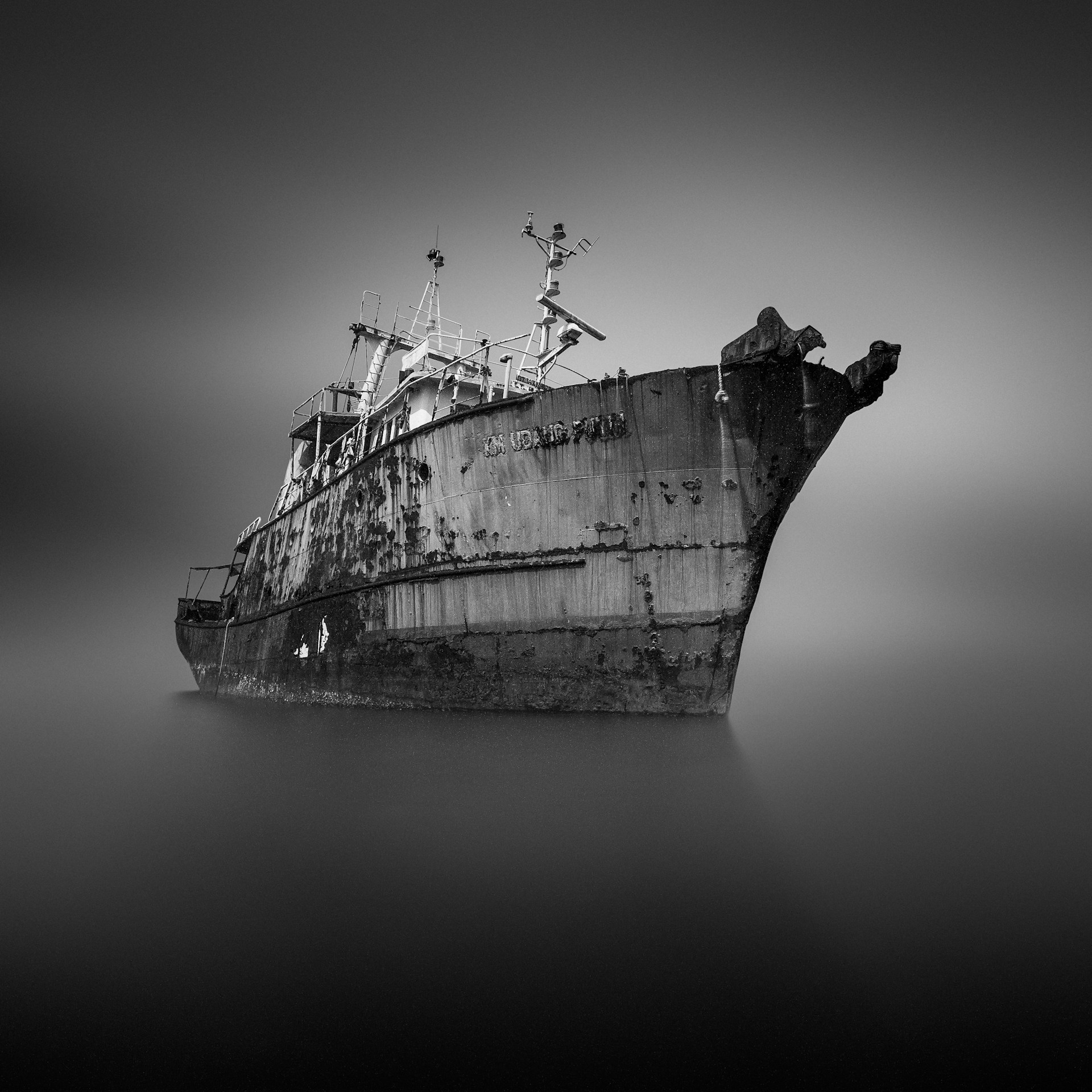
Two weeks out of the Cape of Good Hope, the merchant frigate Alabaster passed its first iceberg. Bound for Antarctica, the weather was changing quickly, and the passengers- a team of geologists- were all but confined below decks. They lay in their bunks most of the day, some seasick in the heaving waters, others bored for lack of activity. A storm had hit from the west, and the seas were very rough, the weather vicious.
“Jesus,” said Ezekiel Roberts, the lead geologist aboard the Alabaster. “The rats.” He lay in his hammock and watched two of the brown-furred vermin scurry along the wall, skidding as the ship rose and fell over waves. “Poor Pastore is sick from them.” One of the other geologists had been bitten by one of the rats and had been laying in the sick bay of the ship.
Roberts pulled his watch and glanced at it- six bells. The closer they got to Antarctica the darker it became and time began to mean less. Three more days’ sail away waited Naust Station on the ice of the Bay of Whales in Antarctica, where the sun would not rise again for nearly three months.
#
Captain Haugen joined the geologists at the evening meal on their last night at sea, with the boat due to dock at Naust Station early the following morning, and the Captain- an imposing man with a full beard and thick chest- sat at the head of the table.
“I’ve an update on Pastore,” Haugen began. The bowls of stew slid on the table as the boat rocked. “He’s dead.” The small room fell silent.
“What from? The rats?” Roberts asked. Haugen nodded.
“We believe it was typhus.”
“The damned rats!” shouted another geologist, Anthony Furtado. He slammed his fist on the table and silverware jumped and clattered.
“Stroud just let me know he’s passed away. There’s a makeshift morgue at Naust Station. He’ll stay there until the next outbound boat.” Stroud was the first mate of the Alabaster and the only one with any medical training. The table was ringed with anxious expressions.
“We don’t need to worry,” Haugen said. “We have antibiotics to treat typhus. Pastore likely died because he delayed reporting that he was bitten. Has anyone here had a bite?” No one spoke.
“It’s a miracle none of us is dead too,” said Furtado. “We’re trapped down here with those rats, we can’t go topside with the weather!”
“Focus,” Haugen said, ignoring the complaint. “I expect a quick unloading when we arrive at Naust Station. Temperatures with the wind chill are as low as -60, and we don’t want delays.” With that he took a spoonful of stew and fell into a ruminative quiet.
“Did you know him, Ezekiel? The dead man?” Furtado asked the leader quietly. Roberts nodded. “It’s an ill omen,” Furtado said. “I don’t know much sailing lore but that can’t be a good sign. Pastore could be our albatross.”
#
Unloading the boat took four hours. Two men handled the sled teams- eighteen Huskies held in the lowest storage compartments, unaffected by the cold through their thick hides. They were taken to an enclosed shelter behind the Station.
The storm that had been raging for three days did not let up as the Alabaster was emptied out. Wind whipped snow and ice almost parallel to the white wasteland of Antarctica, and the men raced to empty the Alabaster. At minus sixty degrees Centigrade, no clothing is sufficient to keep a man warm.
Finally, thirty-eight men gathered in the large central room of Naust. Breezily referred to as the atrium, the room was warmed by four large fireplaces at each compass point. Brandy was served to the new arrivals, and Captain Haugen met with the station commander. The death of Pastore ran through the room like wildfire.
“Your expedition may be delayed,” said Captain Haugen, re-entering the atrium. “Commander Hart will not authorize you to depart until this storm abates. You won’t get far in this weather. Now that you’re onshore, you answer to Commander Hart in the station and Ezekiel Roberts in the field.” He rolled his head, stretching out his thick neck. “That is all.”
#
The storm continued to rage. Hersh nearly blew over when he stepped outside the station, and was immediately chilled to the bone despite the fur suit. The Huskies all perked up when he came into their building. Crazy dogs, he thought, at home in the cold like this! They howled and leapt at the fencing of their enclosure.
“Settle down, you crazy mutts! It’s coming!” Hersh went to the stack of tin bowls and began filling them from the sacks of kibble. He emptied the bag he carried, stuffed with expiring and trimmed ends of food. Snippets of meat and vegetables tumbled into the bowls while the dogs rioted in anticipation. “Quiet! God, I don’t know how the radio man got the job as dog wrangler,” he muttered.
Before Hersh knew what happened, a shadow fell over him and then everything was dark.
#
“This isn’t typhus,” Dr. Springer said. The body of Giorgio Pastore lay on the examination table. Naust wasn’t equipped for intensive medical care, rather emergencies, but the autopsy was underway. Springer had insisted when hearing Pastore died within twenty-four hours of symptoms. Typhus usually took two weeks to kill a man.
The body stank on the table, steaming, and its left arm lay slack with the cutaway from the V-cut draped over it. The arm was almost fully black in a tight pattern of radiating lines, jolting outward from a small bite on his hand.
“What is it, then?” Stroud asked. It had been he who listed the cause of death. Typhus was a reasonable assumption given the man’s symptoms.
Springer tilted his head, the reflector on his forehead shining a beam of light through Pastore. Below the incision on the ice-white of the man’s stomach lay the bloody scalpel, the bone saw that split his sternum tilted against his side, drawing a red line on his pale flesh.
“I have no idea. Typhus affects the lungs, the kidneys. Intestines. I don’t see any typical presentation of what usually kills typhus patients. Look here.” Stroud and the other witness leaned in. The other was Station Commander Lockwood Hart, both curious about what had happened to the man. “You can see here, and here,” the doctor said, pointing with the scalpel lifted from the man’s stomach, “black rot. I don’t even know what to call it. It’s almost like an extremely advanced case of gangrene, or possibly frostbite, but this isn’t a typical case of that either.” Wherever Springer pointed, there were blackened strips of flesh where healthy organs should have been. “I have no idea what to tell you. I’m recommending that a second autopsy be performed in an actual hospital. And we need to have a meeting with all hands to make sure this is an isolated incident.” Hart nodded and left with Stroud to roust the men. Haugen stayed in the infirmary as Springer reached for a thick curved needle and black thread.
#
Haas’s leg was sore. A dull ache, punctuated with lightning jabs of pain, radiated from mid-calf. Haas didn’t think much of it at first, but when the pain didn’t subside after a few minutes, he rolled up his pantleg and looked. In the flesh of his leg was a wound that hadn’t been there last he’d seen, something that looked like a bite mark. There was a thin line of blood, dried at the site, and around it was a deep redness, purpling like a bruise. Black lines- black rot- zigzagged out from the mark, darkening his ankle and past his knee. He’d felt- and ignored- a small pinch in his leg as they’d unloaded the Alabaster.
“Martin,” Haas called to one of his shipmates and motioned the man over. “Look at this. What do you make of it?” Martin stooped and examined the wound, his eyes widening.
“What happened?” he asked, incredulous.
“I don’t know,” Haas lied. “Does it look infected to you?”
“If that’s not infected, I don’t know what would be. You need to see the doctor!”
“He’s busy with Pastore.”
“Still. I wouldn’t wait. Those lines are worrisome.”
Haas, limping slightly, made his way to the infirmary. He pushed the door open and saw Dr. Springer tying off the thread he’d used to sew the autopsy V-cut on Pastore, Captain Haugen watching. The doctor looked over his glasses at Haas.
“Can I help you?”
“You can take a look at my leg. I’ve got a wound of some kind.” Haas’s eyes drifted to Pastore, knowing the man had died of a rat bite. Typhus, Stroud had said. Springer motioned him to sit on the other examination table, and dragged a white sheet up over the dead body. “It’s really sore, doc. I don’t know what happened.” The doctor slid Pastore’s body off the table and into a metal door in the wall
“How long since the wound occurred?”
“Not sure. I think I done it unloading the boat. Maybe the last half hour I’ve noticed it. It didn’t hurt until then.”
Springer crouched and Haas twisted his leg so the doctor could see. The doctor’s eyebrows knitted together.
“Just now, you say?”
“More or less.”
“It’s a bite,” Springer said. “You can see the teeth marks, the punctures.” He paused. “When were you bitten?”
“I don’t know, but vermin swarm that ship.”
“This is identical to Pastore’s wound,” Springer said. “In an hour or so you’ll end up like him.”
“What?” Haas said, alarmed. “He had typhus. I won’t die in an hour from typhus!”
“It’s not typhus. I just autopsied him and it’s nothing I’ve ever seen before.”
“Plague? What is it?” Springer shook his head.
“I don’t know. Some sort of mutated bacteria, I’m guessing. And no matter what happened, bite or otherwise, rat or no, you shouldn’t be this bad.” Springer pushed firmly to lay the sailor flat on the bed, and produced a pair of shears, cutting at the pantleg rolled up above the wound.
“Hey! What are you doing, doc?”
“You need treatment, now,” Springer said. He glanced at Haugen. “I may need you to restrain your man.”
“What?” Haas sat back up, fast, in a panic. “What do you mean?”
“I’m a general practitioner when I’m home. Every one of my colleagues, and myself, were trained as battle surgeons because of the war, but I ended up at the bottom of the world instead.” He glanced over at Haugen, then back to Haas on the table. “I’m going to have to amputate your leg.”
“What? No!”
“It’s spreading, and fast! Whatever is inside you is going to kill you if we don’t stop it.” Springer went to the storage cabinet and pulled out a bottle of ether. Haas’s eyes widened. He leapt up from the table, nearly crumpling over his bad leg, and pushed Haugen out of the way as he fled the infirmary.
Haas bolted down one of the offshoot hallways, through one of the ice-slicked doors that led to the howling outside, blinded by panic. The wind hit him full in the face and he immediately stopped, instinctively wrapping his arms around himself. The cold got the better of him, and he started to go back inside out of the bitter Antarctic night.
Before he could turn, he spoke his last words.
“Pastore?”
#
Commander Hart called a meeting and all the men gathered in the atrium, clustered around the fireplaces. Outside, the storm continued to rage, winds buffeting the sturdy walls of
the station, freezing cold to the touch despite heavy insulation.
“I count thirty-six men,” Stroud said quietly. The others continued chatting before the meeting began in earnest. At the head of the room, Haugen, Hart and Springer counted as well. “Thirty-six. Who is missing other than Haas? Is there anyone who is posted in the outbuildings? Any errands, anything?” Hart shook his head.
“No. Everyone should be here.”
“We need to find Haas,” Haugen said. “The meeting can wait while we find him. If he’s outside, he’ll freeze to death.” Terrified for the poor Haas, he organized the men to search for the stricken man.
“What are our chances of finding him alive?” Hart asked Springer, pulling the doctor aside.
“In this storm? Even bet, I’d say. He’s been outside seven or eight minutes now.”
“Jesus,” Hart muttered and walked off towards his office.
#
In a matter of minutes, three figures emerged from the door through which Haas had left. The storm made it hard to open the door, but the fully-wrapped men came out into the teeth of the wind and cold. The short alleyway that led towards the outbuildings was rapidly drifting with snow.
They shuffled to the entrance of the dog pen, the closest building to the door. As the men entered, the Huskies began baying and howling in their fenced-off pen. Other than the excited animals, the place was deserted.
“Haas!” Anthony Furtado, one of the others, called. There was no answer but the howling of both the storm and the sled teams.
“Someone was sent to feed the dogs a little bit ago,” Roberts said. Aluminum dog bowls lay scattered on the floor, pebbles of dog kibble spread around with kitchen scraps. “Looks like he was interrupted. Could that be Haas?”
The Huskies began thrashing and screaming, flinging themselves against the fence with new ferocity! The men looked to the door, hoping to see Haas, but in the door was a form that was largely hidden by snow. Mostly a shadow, it looked like a man but it was impossible to tell who.
“Hey!” Roberts called, and the man darted away from the door, back into the storm. “Hey, come back!”
The three burst out into the blistering weather, stumbling along in the deepening snow. Already the footprints the man left were filling in. They saw him round the corner of the building ahead and gave chase, slow in their furs. Was the man… naked?
Rounding the corner, they saw the door to the inside of the station was open and went inside. Pulling the fur hoods down, the three searchers saw chaos! Two sailors had been just inside the door and the man was attacking them, slashing at the men with bare hands. He was indeed very naked, his flesh whitened, crusted with frost and snow.
Unthinking, Roberts leapt at the man to pull him off the sailors. He wrapped his arms around the man and hauled as hard as he could to separate him from his victims, who were down and both bleeding. He made a horrible, feral noise unlike anything Roberts had ever heard!
Finally Roberts managed to pull the attacker off, and as he was dragged away from the victims, his hand grasped and sunk into the side of a victim’s head and pulled all of the skin off half of his face. Gore and white bone showed and the screaming only grew.
Falling backwards with the attacker, Roberts felt his hands, on the man’s torso, sink deeper into him. As the others arrived, horror clear on their faces, Roberts rolled away from the thrashing attacker and scrambled to his feet. He stood as sailors and crewmen and even some of Roberts’ own geologists attended the victims and fell on the attacker.
Horribly, he saw that the naked man attacking was Giorgio Pastore. The dead man from the Alabaster. Roberts’ hands had sunk into his hollowed torso after his autopsy, into what looked like a charred tomb, a doused firepit inside the man.
#
Roberts made his way to the infirmary. In the stark white light he looked around and saw a man thrashing on one of the examination tables, blood flying from a puncture in his neck, and another dead on the floor.
“What’s happened?” Springer asked, struggling to staunch the bleeding. Outside the infirmary, the atrium and nearby hallway was chaos and blood.
“There’s been an attack,” Stroud said. “We have three dead, including Pastore. Four other men are missing.”
“Pastore? Was that really him?” Roberts asked, heart in his throat.
“Yes. We don’t know what’s happened. Haugen is checking for other men who may have been bitten by rats. The doctor thinks that this is a new type of infection.”
“One that reanimates the dead?” Roberts groaned and rubbed at his temples. On the table, the bleeding man’s struggles had slowed, the floor slick with rotten black blood.
“It seems to.”
“Haas? Any sign?” Stroud shook his head sorrowfully.
“He’s infected. Springer was going to amputate, but he fled.”
“Could it be the same thing as Pastore? If Haas dies, will he reanimate?”
“No way of knowing until he shows up, alive or dead.”
“I’m going to see Commander Hart and have him unlock the station armory,” Roberts said flatly, and left the infirmary.
#
“I don’t see why you want the rifles,” Hart said, leading Roberts down the hall to the armory. “It seems that the man is quite dead.”
“Yes, but at least one other has a similar wound and two other men are unaccounted for. We need to be prepared.”
“We only have four rifles. We have a skeleton crew here, Roberts, and we’re not exactly prone to invasion. Besides, if Pastore was actually dead, come back to life, how much will these help?” He unlocked the cage and pulled the weapons out.
“Better safe than sorry. The men beat him to death in the hall. He hasn’t risen from that.”
“Stands to reason that if fists will kill him, bullets will too, I suppose?”
“I believe so. We need to have a meeting with the Captain. I’m afraid we may be in serious trouble here.”
“Pastore is dead. The attack is over. And if the other man shows up in the same state, he’ll be dealt with easily enough.”
From down the hall, screams began to sound. Roberts, chilled by the sound, recognized the animalistic noises that Pastore had been making as he tried to restrain him, his hands sinking into the empty chest cavity. His eyes met Hart’s. Following the sounds, the two men raced back to the atrium.
#
Outside of the radio room there was a fracas, screaming and grunting sounds. Fighting noises. Haugen closed and locked the door against the terror. Hersh, the station radio operator, had not returned from feeding the Huskies outside an hour earlier, and Haugen knew he needed to try to get help.
He had a terrible feeling. He’d sent Carlton, his Alabaster First Officer, to the boat to start the engines to let it begin to thaw. It was important that the Alabaster was ready to go as soon as possible. With a lump in his throat, Haugen keyed the radio button.
“McMurdo Station, come in. Come in, McMurdo. This is Naust Station.” He leaned close to the radio to hear any response. The frequency crackled and he repeated the call. After what felt like an eternity, a voice came back over the radio.
“Go ahead, Naust.”
“McMurdo, this is Captain Rasmus Haugen of the Alabaster, anchored at Naust Station,” he said, as calmly as possible. “We need immediate assistance. Repeat, immediate assistance. S-O-S. Help!”
Behind him, through the door, boomed the sound of gunshots.
#
The atrium was a bloodbath.
Roberts and Hart emerged from the armory into a wild scene of blood and violence. There were three men that they could see, attacking anyone within their reach! Their eyes were wild, hands bunched into dagger claws, the men reduced to savages. Black lines of rot radiated from the wounds on the attackers’ bodies. Roberts raised his rifle to his eye and drew a bead on whatever had become of Haas, and fired. The bullet went through his chest in a red spray. He fell to the ground.
“We’ve got to help these men!” Hart screamed over the din. They wandered in, and to their terror, they saw several men down on the ground, grievously wounded. Hart, matching Roberts’ shot, fired at another attacker and didn’t miss. His heart exploded out the back of his chest and he dropped dead, landing beside a mangled man on the floor. “Where’s the doctor?”
“Infirmary. We need him and the Captain! We need a plan!” They ran to the infirmary and pounded on the locked door, holding the guns to ward off any attackers. “Good God,” Roberts said, pointing.
The man that Hart had shot fell dead next to his victim. The man on the floor was covered almost entirely in black-red blood, his throat torn out; but as Roberts and the commander watched, he slowly got to his feet.
“They’re spreading it,” Hart yelled and pounded on the door again. “Springer!” He shouted. “Let us in!”
The infirmary door opened behind them and Roberts and Hart practically tumbled into the room with Springer. He slammed it behind them, sliding a heavy bolt across the door.
“What in the hell is going on out there?” Hart asked wildly. “Jesus, Springer—”
“I don’t know, I don’t know!” the doctor screamed at the commander. “I don’t have the equipment to be able to tell! How many are there? How many attackers?”
“A growing number,” Roberts said, watching Springer’s face drain of color. The man was ashen. “The victims are getting up off the floor, attacking others. How can this come from rat bites, doctor?” Roberts asked. Springer flinched at his voice.
“Rats wiped out half of Europe with the Black Death.”
“But when someone died of plague they stayed dead. Why are these men not doing the same?” Springer didn’t answer, only shook his head.
“Look!” Roberts shouted and the doctor flinched again. Across the atrium and its festival of violence, Rasmus Haugen and Abbas Stroud walked, wearing furs. Each man swung a fire axe, carving a path through the madness! Roberts unbolted the door and leaned out, pushing Springer out of the way and waving wildly at the Captains.
“Hey! Here! Heeeere!” he called at the top of his voice. Stroud noticed him and the two ran, axes in hand, towards and into the infirmary. Several others followed, alive, and once they were in the infirmary, Springer slammed and re-bolted the door.
In the atrium, no one was left alive. Just rat-bitten reanimated men, streaked and filmed in gore and black rot, remained.
#
“Eleven?” cried Stroud. “Eleven men remaining of thirty-nine?”
“That’s all.”
Most of the survivors were bleeding and injured in some capacity, but in relatively minor ways. Cuts, scratches, but no visible bite marks.
“We’re trapped in here,” Stroud said.
“I called McMurdo Station. The Americans are on their way.” Haugen had one of the station’s portable radio units slung over his shoulder.
“How long?” asked Furtado.
“An hour.” There was a near-wail of desperation in the room. “The Alabaster is warming up. I sent Carlton to start it up so we could make a quick getaway.”
“And where is he?” Springer asked. The Captain looked down.
“He hasn’t returned,” he said. “He’s been gone an hour.”
“We have to assume he’s dead.” Haugen nodded.
“Okay, okay. So we need to figure a way out of here,” Hart said after a moment. “We can’t rely on the Americans. We need a plan, and we need to know how many of those things are out there. We know there are almost thirty dead, but how many are actually dead?”
“I count ten of the reanimated,” Haugen said, looking out the window. “Give or take.”
“Okay. Ten. That’s not that bad.” Hart was finally in his element, being in charge. “We have four rifles and eleven of us. We need a distraction to clear a path out of the infirmary.” He turned to Springer. “First thing, you need to patch up these men. We don’t need cures, we need bleeding staunched, we need men able to move. Otherwise, do you have anything explosive in here? Flammable?”
“Plenty of ether,” he said. “But how—”
“Once we get the distraction set, we’ll burn it behind us,” said Hart. “Take most of those damnable things out in one shot. We’ll make for the boat.”
“What will we use for the distraction?” Furtado asked, nervously fingering the rifle in his hands. The others looked amongst themselves. They couldn’t set the ether on fire until after the distraction, otherwise they’d be trapped.
“I’ve got it!” Roberts shouted. “Commander, you said the radio man was dead, he’d gone to feed the dogs?” Hart nodded. Roberts turned to Springer. “How far is it to the dog enclosure from here?”
“Maybe a hundred yards, outside,” the doctor said. “In that storm.”
“Is there any other way out of the infirmary?”
“There’s the chute,” Springer said. He pointed at a metal door on the wall. “It’s about eight feet long. It’s there, theoretically, to remove bodies without taking them through the station. I sent Pastore through there to be taken to the morgue. What are you thinking?”
#
Moments later, Roberts was gone, crawled through the chute. He wore Haugen’s fur suit but was unarmed. Everyone had their assignments- the Captain, Stroud, Furtado and Hart had the rifles. Springer was rapidly bandaging the wounded. Once the distraction was in place, everyone was to get the furs and put on as many as they could. The doctor had filled a satchel with medication, bandages, antiseptic. When the distraction hit, they’d burst out of the infirmary and head directly to the Alabaster in as straight a line as possible. Three, four minutes exposed to the ceaseless storm- it would be uncomfortable, but not fatal. Straight to the boat and shove off. Even if they couldn’t get all the way to open water until the boat was fully thawed, as long as the reanimated things couldn’t get on with them, they’d be fine.
“Roberts has been gone a few minutes now.” Furtado observed nervously.
“We can only hope this will work, otherwise we would have sacrificed Roberts for nothing. And we’ll need a new plan on top of it,” Springer said.
Haugen turned back to the window just in time to see one of the reanimated men smash into the glass right in front of him! Haugen screamed, stumbling back a step. A silver crack glinted in the glass and the thing on the far side sneered blindly, grunting and gurgling.
“Jesus,” Hart said. “Do you think they know we’re in here?”
“Unknown,” Springer offered. “They seem to be largely instinctual. Like animals. Whatever humanity they had seems to have died when they did, and what reanimated is no longer the men we knew.”
Another head smashed into the glass. A second thin crack spidered across the window.
“Whatever Roberts is doing, let’s hope he does it fast,” said Stroud. Furtado, next to him, nodded. The men gripped their rifles tight.
“Get away from the door,” Springer warned, and the Captains and the others fell back into the room. The door buckled slightly, the wood bulging in the frame, and more of the reanimated began to wander towards the door.
“Come on, Roberts,” Furtado said quietly, raising his rifle.
Then, from the atrium, a huge roar of new, terrifying sound. The bloodied faces that had been in the window fell away, and Commander Hart looked out.
The distraction! The Huskies, starving, had been loosed from their kennels by Roberts and were attacking the reanimated! They smelled blood and the wolf-like dogs let their primal instincts guide them to the walking dead in the atrium. The Huskies leapt at the things, fangs bared, and they fell to the ground wrestling with the hundred-pound sled dogs.
“Springer!” Hart shouted. “Get the ether ready- everyone get set to move!” The atrium was chaos, the growling and shrieking of the dogs deafening alongside the guttural noises of the dead. They began to fall away from the infirmary door.
“Here we go!” yelled Stroud, and the infirmary door opened.
#
Ninety seconds passed and each survivor were at least partly wrapped in furs, rifles raised and ready, and had two sacks of supplies. Ether bottles had been splashed around the atrium. The Alabaster awaited at the edge of the ice, warm and hopefully ready to sail. As the men fled through the atrium, the Huskies, half-mad and starving, were viciously laying into the dead who they outnumbered nearly two to one.
“Springer!” Hart shouted as the last of them exited into the maelstrom outside. “NOW!”
The doctor, in the lee of the door out of the worst of the wind, had made a makeshift Molotov cocktail with a rag stuffed into the neck of an ether bottle. He lit the rag and lobbed it into the atrium, and ran away from the opening of the building.
The shock of the explosion blew out the few windows of Naust Station. Chimney caps blew into the black sky, propelled upwards at incredible speeds by jets of brilliant orange flame. The survivors ran, the blast of heat from the ether bottles strewn about the atrium pushing them like a flat-handed shove in their backs; they staggered and fell. The flames leapt and for a moment, even in the Antarctic storm, they were warm.
#
“Captain!” Ensign Anderson, aboard the American corvette the USS Morgantown, pointed. “Look! To starboard!” Captain Charles needed no direction from the ensign- the explosion of Naust Station lit the night sky in brilliant orange.
“Head for the ice,” Charles barked. “They need our help!”
#
In the new orange glow on the ice and snow, the masts of the Alabaster were clearly visible ahead. Two hundred yards and they’d be onboard.
Body parts from the explosion fell like burning rain around the men. They were all focused strictly on what lay ahead, the boat, and freedom, and were convinced that nothing could have survived the end of Naust Station. That is, until Springer, slower than the younger men around him, was caught from behind! One of the reanimated had somehow survived the blast!
“NO!” He screamed. His voice was nearly lost in the continuing smaller explosions from the station and the harsh crackling of the fire, but Haugen heard him. Turning, he saw the doctor under attack. The Captain raised the rifle and fired, blowing off half of the dead man’s head. He and Roberts returned to pick up Springer, sloughing the reanimated man off of him.
As the man fell aside, finally dead to stay, a slash- unseen until then- in Springer’s stomach slid open and the doctor’s entrails flopped onto the ice. They immediately began to melt into the frozen ground.
“Shoot me,” Springer said, blood pouring from his mouth as he spoke. Haugen and Roberts glanced at each other. Springer’s loss would be felt sharply. “Don’t let me be one of those.”
Regretfully, Haugen shot the doctor through the head. Roberts stooped and picked up the satchel of medical supplies Springer had carried, and they chased after the other men heading towards the Alabaster.
They were so close to the safety of the ship. The lights of the American ship grew brighter in the glow of the burning station. The sound of the diesel engine churned in the endless night, a siren song leading the survivors to the Alabaster. They reached the gangplank and scrambled aboard, Haugen raced to the controls of the boat, barking at the men.
“Get below decks!” he yelled over the din. Two remaining sailors took up their positions to lift anchor and cast off. Haugen wondered dimly what had befallen Carlton- he’d at least successfully warmed the boat. “Get beneath and we’ll be away!”
Roberts led the non-essential personnel to the belly of the boat, feeling warmth radiating from below decks. He lifted the doorway to access the interior and Carlton stood inside the door. Roberts froze for just a second, staring at the man’s eyes, until he realized that they were lifeless. He saw, horrified, that the man’s face and neck were torn and shredded by small wounds, surrounded in a maze of black lines of rot.
Rat bites.
Carlton lunged and Roberts flung himself aside; the reanimated man fell on Anthony Furtado, who dropped the rifle he’d held. Blood gouted as Carlton dug his dagger fingers into the man’s neck, and Furtado shrieked in terror and pain! Roberts scrambled to his hands and knees, and before he could act, another gunshot split the night. Carlton’s head burst into a red mist with shards of bone, and the man fell dead over his victim. Roberts finally looked up to the sterncastle where Haugen stood by the wheel of the boat, a smoking rifle in his hand. Roberts watched as the color drained from the Captain’s face, and followed his gaze over top of the dead man.
Looking down the stairwell, he saw rats. Dozens of them. They were partially thawed, the ones killed earlier still trailing blood and entrails, shattered skulls held together by tendrils of muscle and frost. Live ones that had been left to freeze clambered across the backs of the slower, wounded ones.
“No,” Roberts’ knees wobbled. All this way, and all was lost.
“Abandon ship,” Haugen screamed. “All of you, get off the boat! NOW!” Most of the men followed his orders directly, going back down the gangplank. Stroud and Roberts stood by the gaping stairwell. “Close those doors!” The other Captain and the geologist slammed the doors back down, cutting one of the rats’ heads off as they did so. The head thrashed and snapped on the deck, and Stroud flattened it with his boot. “Abandon ship!” Haugen screamed again.
“Anchors up, Captain,” shouted Martin, one of the last surviving sailors. “Shall we drop them again?”
“Negative. Abandon ship. Get off the boat, now.” Haugen turned and picked up the radio he’d carried. It was still on the same frequency he’d radioed McMurdo. “GO,” he urged the men. “Remove the gangplank when you’re off and get clear.” The sailors hesitated, but left. Roberts and Stroud were the last two off the Alabaster. Haugen cranked up the engines and the boat began slowly to back away from the ice out to open water.
“USS Morgantown,” he said into the radio at his hip. “American ship, come in. This is the Alabaster.” Static crackled for a moment and a Boston-accented voice came on.
“Go ahead, Alabaster.”
“Fire on this ship,” Haugen said, a tear freezing on his eyelash. “The Alabaster is contaminated, repeat, fire on this ship!”
“Alabaster, this is Captain Charles of the Morgantown,” came a different voice. “Clarifying, you want us to sink your ship? Please respond. Over.”
“Yes, yes!” Haugen shouted. “The men on shore can explain. But you must destroy this ship. If not, we will all die! Repeat, destroy this ship!”
#
There were seven men remaining, fleeing away from the slowly departing Alabaster. A huge roar shredded the frozen night as they ran, the forward guns of the Morgantown opened fire on the Alabaster; debris flew into the night, flames towered and black smoke billowed. In mere moments, the Alabaster was sinking into the depths of the Bay of Whales.
Knocked flat from the explosion, Roberts looked back at where the boat had been. Diesel fuel burned in the churning sea. Pieces of wood and canvas, some still slicked with ice, floated in the churning waters where the Alabaster had gone down. Chunks of flaming wreckage burned on the ice. Haugen had sacrificed himself to save them all.
Glancing over at the American ship, grey smoke pouring from the barrels of her heavy guns, Roberts saw small lifeboats lowering. They would pick them up, warm their frozen bodies and dress their wounds. Return them back to the Cape of Good Hope.
Stroud and Hart helped him to his feet. In the brutal cold and the glow of fire the survivors awaited their rescue.
Nathan Poole Shannon is an emerging writer of the strange and macabre. From crawling shadows to cryptic specters, from generational curses to quiet everyday horrors, he exposes darkness to light without flinching. He lives in Ottawa, Canada, with his spouse and a small menagerie of pets who are decidedly not creepy- but from time to time, inspire something that is.